The Real Cost of AI in Marketing (Hint: The Subscription Is the Cheap Part)
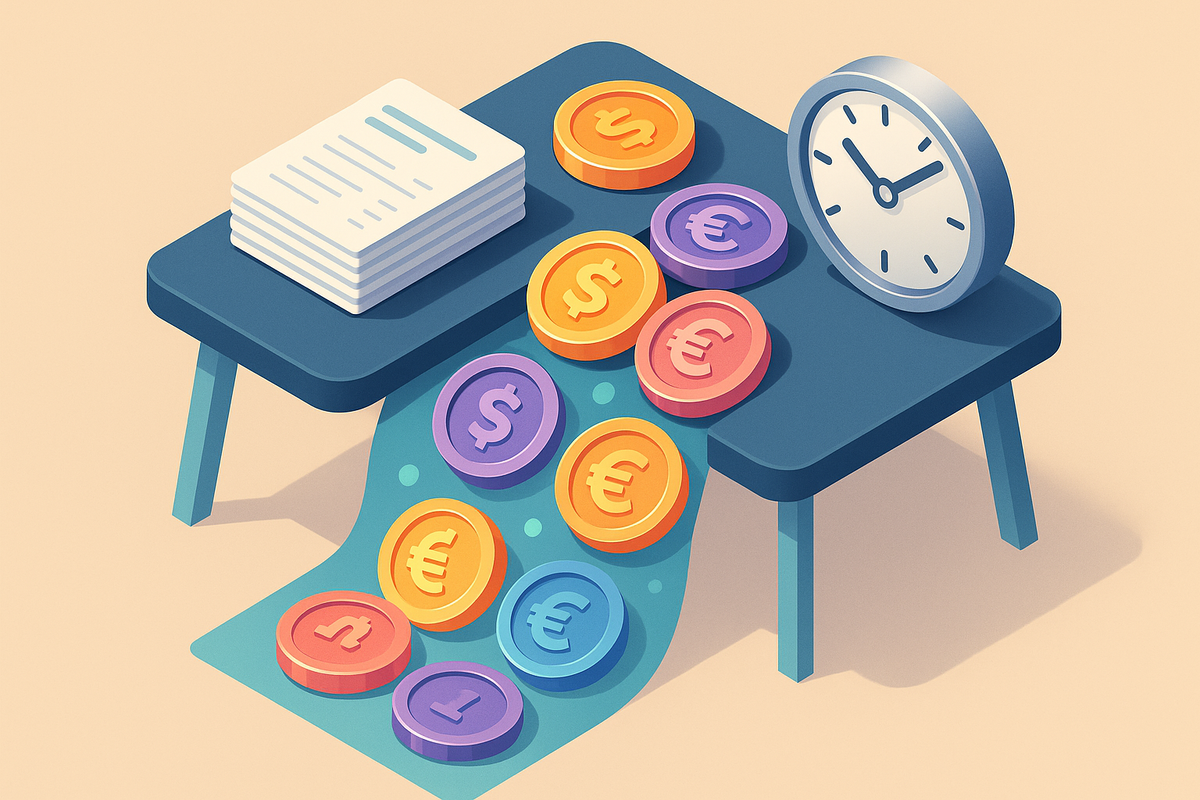
CMOs now put 15.3% of their marketing budgets into AI, according to Gartner's 2026 CMO Spend Survey of 401 marketing leaders. Only 30% say their organizations are ready to scale it. The gap between the invoice and the true cost hides in three places: usage overages, verification labor, and overlapping subscriptions. Audit all three before your next renewal.
I want to walk through where that money actually goes, because the sticker price on your AI stack is quietly the least interesting number in the whole equation. The interesting numbers are the ones that never make it onto a procurement slide.
The budget didn't grow. It got cannibalized.
Start with the part that explains everything else. Marketing budgets are flat at 7.8% of company revenue in 2026, per the same Gartner survey. That's 18% below where the four-year average used to sit. So the 15.3% going to AI isn't new money. It's coming out of something else, and the something else is mostly traditional martech: MarketScale's breakdown notes martech's share of budget has slid from 26.6% in 2021 to 19.4% in 2026 while the AI line grew.
One wrinkle I keep coming back to. The organizations Gartner rates as most AI-ready spend more, not less: 21.3% of budget versus the 15.3% average. The better you get at this, the bigger the line item gets. Which is the exact opposite of the pitch every AI vendor made in 2024, when the whole story was cost reduction.
My read: AI in marketing behaves like cloud computing did a decade ago. Nobody's cloud bill went down as they got good at cloud. It went up, because usage followed capability. The teams that matured just got more value per dollar. If your CFO is still holding the "AI will shrink the budget" expectation, that conversation is worth having this quarter, not at renewal time when the numbers force it.
Fake unlimited, casino chips, and the 22% monthly tax
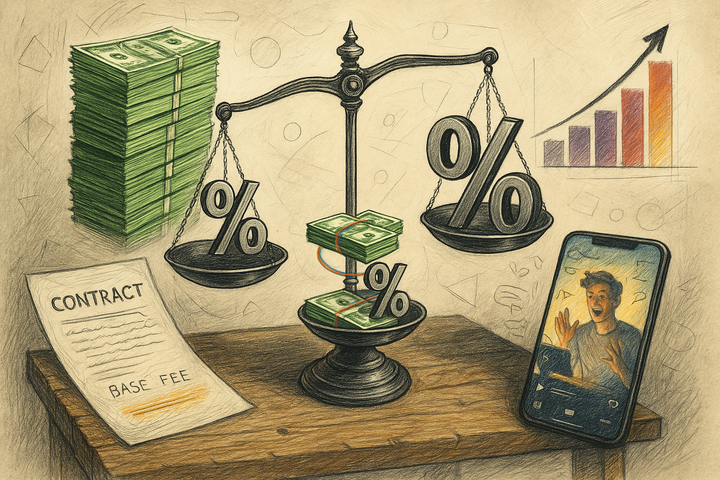
Now the vendor side, because the pricing mechanics deserve more scrutiny than they get. Toolvern's 2026 pricing study analyzed 1,099 B2B AI tools and the findings are rough. Monthly billing runs an average of 22% above the annual rate, and in the worst cases up to 60%. Over 92% of tools advertising "unlimited" usage enforce fair-use caps, typically somewhere between 50,000 and 150,000 words a month. Tools reselling model access mark up raw API token costs by 600 to 1,200%.
And then there are credit systems. Toolvern found the supplementary credit packs carry 40 to 80% premiums over the base rate. Credits are casino chips: the conversion from dollars into an abstract unit exists so you stop doing the math. Once you're thinking in credits instead of dollars, a top-up feels like a small operational decision instead of a purchasing one.
Two more mechanics from the same study that catch teams off guard. First, the free tier is mostly gone: only 20% of AI software still offers a genuine perpetual free plan without a credit card, while 80% has moved to 7-to-14-day trials with auto-billing on the back end. If your team signed up for six "trials" in Q2 and nobody kept a list, some of those are billing right now. Second, 18% of vendors don't publish pricing at all anymore; you have to book a sales call to find out what anything costs, which is usually a sign the number depends on how well-funded you look. Neither of these is illegal or even unusual. They're just designed for buyers who aren't paying attention, and most marketing teams, to be fair, are busy doing marketing.
The subscription price is the marketing. The overage schedule is the business model.
If I were auditing a stack this week, I'd pull the last three invoices for every AI tool and compare actual spend against list price. From what I've seen, anything running more than 30% over list means you're in overage-by-design territory. Two moves from there: negotiate annual pricing on the tools that have survived 90 days of real use, or check whether direct API pricing plus a general assistant covers the same job. Given those 600 to 1,200% resale margins, it often does.
Three days a week of babysitting never shows up in the martech line
The bigger leak isn't on any invoice at all. TechRadar reported on survey data showing marketers spend up to three full working days a week verifying AI-generated content and manually pulling together the insights their tools were supposed to surface. Same research: 88% of senior marketing leaders push their teams to use AI, and 81% of those leaders admit budget is being wasted on tools that aren't fit for purpose. Both numbers, from the same people, at the same time.
Run the labor math once and it gets uncomfortable. A marketer with a $70,000 salary costs roughly $45 an hour loaded. Two days a week of verification is around $32,000 a year of skilled labor spent supervising output from a tool that costs maybe $600 a year. On paper the tool looks like a bargain. In the actual P&L, the tool is the cheapest part of a fairly expensive workflow, and honestly, most teams have never added those two numbers together.
Adoption stats hide this well. Salesforce's 2026 State of Marketing data (cited in the same MarketScale piece) has AI adoption at 75% of marketers, yet 84% are still running generic, unchanged campaigns. High adoption, flat output. That gap is verification time and rework, mostly.
The benchmark I'd use: track verification hours for one week, multiply by your loaded hourly rate, and compare against the tool's monthly cost. If the human cleanup costs more than three times the subscription, either the workflow is wrong or the tool is. We built our own verification workflow for AI competitor research for exactly this reason, and the honest version is that the checking step is where most of the effort lives.
The renewal audit: three columns and one kill rule
Half the market has already figured out that AI vendors need active management. Per Chief Marketer data referenced by MarketScale, 50% of organizations using consumption-based tools keep renegotiating contracts to avoid cost spikes, and 41% have implemented real-time usage controls. Treating an AI vendor like a fixed-cost SaaS subscription is the mistake; it's a variable cost that trends up unless someone owns it.
The audit itself fits in a spreadsheet with three columns per tool:
- Actual 90-day spend, from invoices, not the pricing page. Include credit top-ups and add-ons.
- Weekly cleanup hours, the human time spent verifying, editing, or redoing what the tool produced.
- The general-LLM test: what breaks if you replace it with ChatGPT or Claude for one week?
That third column matters more than it looks. A roundup of the big AI marketing communities on Reddit observed that practitioners in r/marketing and r/PPC name ChatGPT and Claude constantly, while dedicated "AI marketing platforms" barely come up, and AI sales tools mostly get roasted. When the people who spend all day in these tools quietly converge on the general assistants, that tells you something about how thin many of the wrappers are. The kill rule: if a $20-a-month general assistant does 80% of a specialized tool's job, cancel the specialized tool at renewal. Consolidating onto fewer tools also fixes half of the voice and quality problems we covered in scaling AI content without sounding like everyone else, because every extra tool in the chain adds its own flavor of generic.
A prediction, with a number attached: by mid-2027 I think the average marketing team's AI stack shrinks from around eight tools to three, and total AI spend still rises, because the survivors are consumption-priced and usage keeps climbing. The waste gets cut. The category doesn't.
Quick answers for the budget conversation
How much should a marketing team budget for AI in 2026?
The Gartner benchmark is 15.3% of the marketing budget, with AI-mature organizations at 21.3%. On top of whatever the invoices say, plan for another 30 to 50% in real cost from overages, credit packs, and integration time. Budgeting to the sticker price is how teams end up renegotiating mid-contract.
Why do AI tools cost more than the advertised price?
Four mechanics, per Toolvern's analysis of 1,099 tools: monthly billing premiums averaging 22%, fair-use caps hiding inside "unlimited" plans, credit packs marked up 40 to 80%, and mandatory add-ons that can push a $49 base plan to $150 to $300 a month in some categories.
Is it cheaper to just use ChatGPT or Claude directly?
For content, research, and analysis, usually yes, sometimes dramatically so given the token markups on wrapper tools. For deep integrations like CRM automation or bid management, a purpose-built tool still earns its seat. Run the one-week replacement test before assuming either answer.
I don't think the takeaway here is "spend less on AI." The mature teams are spending more and getting more. The takeaway is that the invoice was never the cost. The cost is the invoice plus the overages plus the babysitting, and only teams who can see all three numbers get to decide anything on purpose.
Notice Me Senpai Editorial