ChatGPT Ads Are Here. The Early Data Says Boring Wins.
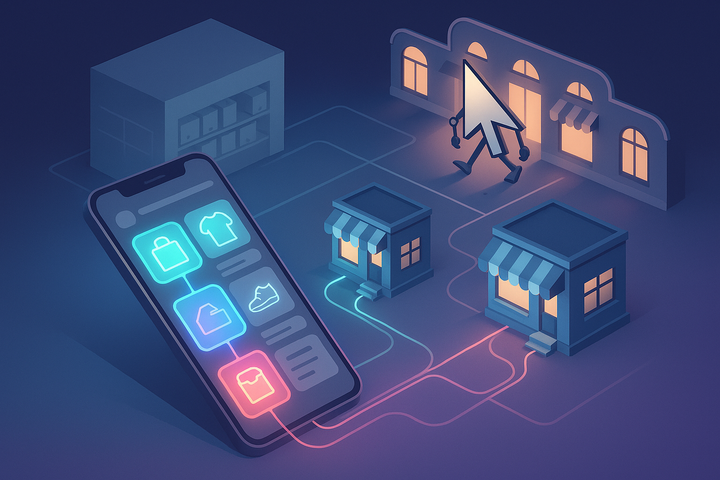
ChatGPT ads went live for US users in February 2026, and the first cross-channel benchmarks are out. Early click-through rates land between 0.3% and 1.5%, and CPCs index at roughly five times Meta's. The advertisers getting acceptable returns share one habit: their ads read like answers to the conversation, not promotions dropped into it.
Some context before the numbers. OpenAI confirmed it was testing ads in January, started serving them to US users in February, and opened a self-serve Ads Manager in late July with Best Buy, Lowe's, and VistaPrint already running campaigns. This month the platform expanded to the UK, Japan, Brazil, Mexico, and South Korea. That is a fast rollout for a company that spent years insisting it did not want an ad business, and Forbes put the reason plainly: the compute bills are enormous and the ad money was sitting right there. We covered the auto-bidding default change last week. This piece is about the performance data, because the first real benchmarks have dropped and they cut against most of the launch-week hype.
The benchmark numbers, stripped of the launch narrative
The most useful public dataset so far comes from Booyah's indexed benchmarks, which compare OpenAI's placement against channels media buyers already know. With the index baseline set at 100, OpenAI's click-through rate lands at 95. Meta sits at 142, Reddit at 105, and Performance Max non-brand at 56. So on clicks per impression, ChatGPT ads perform worse than social feeds and meaningfully better than non-brand PMax inventory.
In raw terms, Lapis's benchmark study pegs early click-through rates between 0.3% and 1.5%, and argues that range is normal and healthy for this format. I think that framing is right. There is exactly one sponsored card per response, it sits below the answer, and the user is mid-task. Nobody is scrolling past forty of these a session. A quick metric note, because these get conflated: the index figures are relative comparisons across channels, and the raw percentages are per-impression click rates. A 1% click-through rate on a conversation-matched card is a different animal from 1% on a social feed impression, because the person clicking just finished describing their problem in paragraph form.
One honest caveat. OpenAI itself maintains there are no reliable cross-advertiser benchmarks yet, and everything public right now comes from agencies with early access and something to sell. From what I've seen, the numbers above are directional, not gospel. Useful for planning, dangerous for forecasting.
ChatGPT clicks are scarcer than social clicks and cost about five times more. The entire game is what happens after the click.
Why plain copy keeps winning the sponsored card
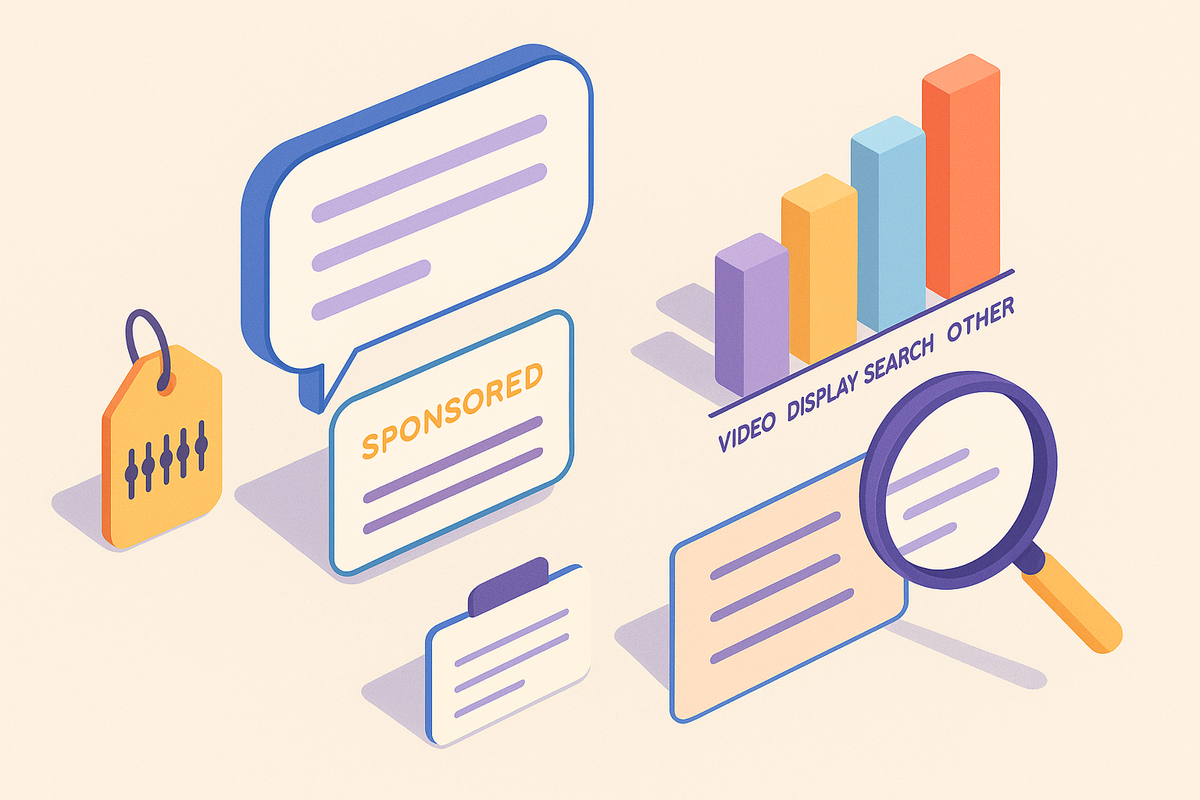
The mechanism explains the creative pattern. There is no demographic targeting and no behavioral profile. According to Pacvue's breakdown of the platform, the system reads three things: your ad copy, your landing page, and plain-language context hints you write to describe the conversations you want. It matches those against what the user is actually discussing. The format itself is tiny: a headline around 16 characters, a description around 32, one square image, a Sponsored label.
This placement works less like a billboard and more like a reference librarian sliding one index card across the desk after you've explained your whole problem. Nobody wants the card to shout. They want it to match the question.
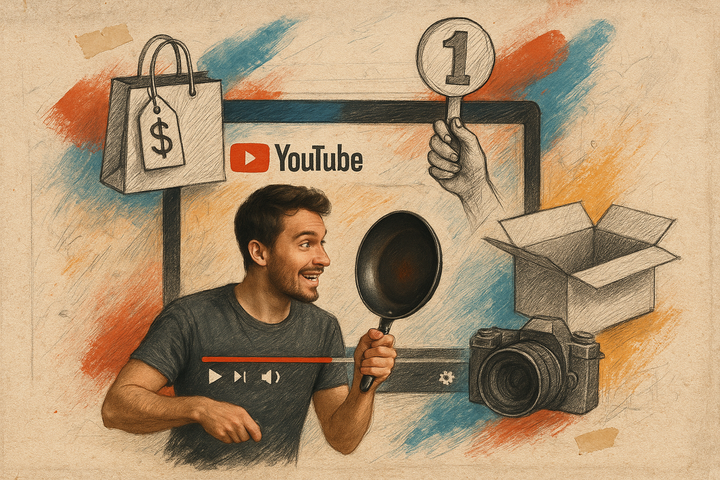
Pacvue's early-campaign guidance backs that up: write copy like you're answering a question, keep visuals clean with no text baked into the image, and expect promotional messaging to underperform. AdVenture Media's early benchmark report lands in the same place, recommending specificity over hype for users who just spent ten minutes doing sophisticated research with an AI. Discount language and urgency hooks, the muscle memory of a decade of Meta creative, seem to read as noise here.
Personally, I find this a little funny. The industry spent years optimizing thumb-stopping creative, and the first genuinely new ad surface in a decade rewards the least glamorous skill in paid media: plain, specific, descriptive writing. The boring ads winning right now got there on purpose, through specificity.
The action here is concrete. Rewrite your headline as the shortest accurate answer to the question your buyer actually asks ChatGPT, then watch one number: if your click-through rate sits under 0.3% after your first few thousand impressions, Lapis's floor for normal, your context hints or copy are mismatched to the conversations you're being served into. Fix the match before you touch bids.
You're paying five Metas per click. Sometimes that's fine.
Now the uncomfortable column in Booyah's data. On cost per click, indexed at 100, OpenAI comes in at 238. PMax non-brand is 134, Reddit 71, Meta 43. Per click, this is the most expensive mainstream placement you can buy right now, more than five times Meta's rate.
The bull case is intent quality. Pacvue cites OpenAI's own figure that roughly 20% of ChatGPT conversations carry shopping intent, and the person who clicks your card arrives having already described their requirements in detail. Early adoption is strongest in high-research categories: software, education, professional services, and considered purchases where people interrogate an AI before spending.
Agencies keep calling this an arbitrage window, and I flinch at the phrase, because it is what people said to sell every new placement ever. To be fair, early Meta and early TikTok did have real windows. The pattern is not invented. It just tends to close faster than the case studies get published, and the case studies are usually the sales pitch.
My prediction: as ad load increases and more countries come online, the CPC gap versus Meta compresses by at least a third within two quarters. If I'm wrong, it will be because OpenAI kept ad load deliberately low to protect the product experience, which restricts supply and keeps clicks expensive indefinitely. Either way, judge this channel on cost per acquisition and downstream lead quality, never on CPC. On CPC it will always look terrible, and that is not the number that decides whether you stay.
A 30-day test that produces an actual answer
If you're going to test, structure it so day 30 gives you a keep-or-kill decision instead of a shrug.
Budget first. Pacvue reports most brands starting at $10K to $25K per month. You do not need that to learn something. Given the CPC levels, I'd guess $3K to $5K over 30 days buys enough clicks to judge match quality in most B2B and considered-purchase categories, though in cheap-CPC verticals you could go lower.
Build ad groups around conversation themes, not audiences, and keep brand and non-brand separate. Write context hints the way you'd brief a colleague, in plain sentences about what the user is trying to solve. Then treat the landing page as a continuation of the conversation: open with the problem the user described, get to comparison-level detail fast, and cut form friction. This channel punishes generic landing pages harder than search does, because the visitor arrives more informed than a keyword ever made them. If you're generating landing copy at scale with AI, the voice problem compounds, which is a thing we've written about separately.
Tag everything with UTMs on day one. Native reporting is still thin, and you want your own analytics to carry the attribution weight. Then judge the test on one comparison: cost per acquisition against your non-brand search campaigns, not against social. If CPA lands within about 20% of non-brand search with equal or better lead quality, keep it running and scale the winning themes. If it is double your search CPA after 30 days and the leads are not obviously better, kill it and re-test in two quarters when prices have moved.
Questions marketers keep asking about this
Do ads change what ChatGPT says? No. Per OpenAI's help documentation, ads run on systems separate from the model, advertisers cannot shape or rank responses, and the card is labeled and visually separated below the answer. Whether users believe that over time is a different question, and probably the biggest long-term risk to the whole program.
Who actually sees these ads? Users 18 and older on the Free and Go plans in supported countries. Plus, Pro, Business, Enterprise, and Edu accounts see none. Sit with that for a second if you sell B2B: the exact people most likely to pay for AI tools are structurally invisible to this channel. Your ICP on a Pro plan will never see your card.
How do I buy it? Self-serve through OpenAI's Ads Manager, with CPM buying for reach and CPC on a second-price auction for clicks. No agency pilot program required anymore.
I don't think the early winners on this channel will be the brands with the biggest budgets or the cleverest creative. It will probably just be the teams who figured out, a couple of quarters before everyone else, that the ad is the answer to a question someone already asked. That skill transfers. The cheap-ish clicks won't last, but that will.
Notice Me Senpai Editorial