Adobe's 393% AI Retail Traffic Jump Is Mostly Invisible in GA4

AI traffic to US retail sites grew 393% in Q1 2026 versus the year prior, based on Adobe Analytics data covering over one trillion visits. Separately, a Workshop Digital study of 181.6 million GA4 sessions found 22% of ChatGPT sessions and 32% of Perplexity sessions land in a "(not set)" medium, which usually dumps them into "direct." Fixing this takes one GA4 custom channel group and roughly 20 minutes.
The Adobe number is the headline. The bucketing is what keeps you from acting on it.
Adobe's Q1 2026 retail analysis, reported by TechCrunch, put a lot of numbers on the table at once. Traffic from generative AI tools to US retail sites was up 393% year over year for Q1, and up 269% in March alone. Conversion rate for AI traffic was 42% higher than non-AI traffic in March 2026. Revenue per visit (RPV) from AI traffic was 37% higher. Engagement was up 12%, sessions were 48% longer, and AI visitors browsed 13% more pages.
For context on how fast this flipped: in March 2025, AI traffic was converting 38% worse than regular customers. Twelve months later it is outperforming them. That is one of the largest swings in channel quality I have seen in a decade of looking at these reports, and it lines up with what retailers reported during Adobe's holiday 2025 tracking, where AI traffic jumped 693% YoY and RPV was up 254%.
The awkward part: most marketing teams looking at their own GA4 cannot tell you any of these numbers for their site. The traffic is arriving. Their analytics stack is just not labeling it as AI.
22% of ChatGPT traffic and 32% of Perplexity traffic disappear into "(not set)"
Workshop Digital analyzed 181.6 million GA4 sessions across 22 high-volume B2B and B2C clients over 12 months. The published breakdown is blunter than most attribution studies I have read. Roughly 22% of ChatGPT sessions and 32% of Perplexity sessions show up in GA4 with a medium of "(not set)." Claude and Gemini came through correctly as "referral" almost every time, but the two platforms sending the most AI traffic are also the two most likely to go missing.
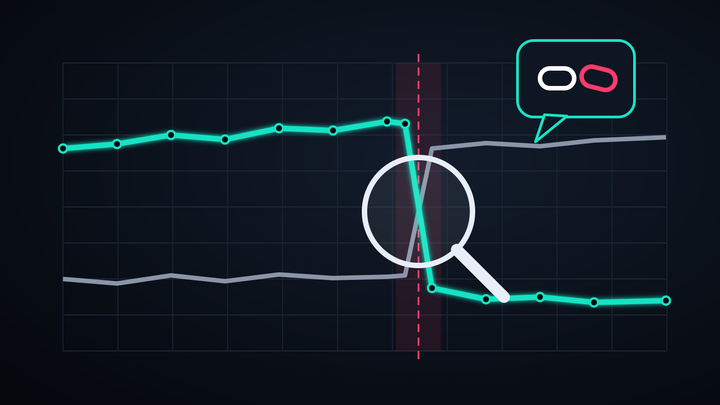
"(not set)" is GA4's way of saying it could not find a source, so the session defaults to "direct" in most Channel Groupings. If you have been watching your direct traffic drift up quarter over quarter with no corresponding branded search increase, this is probably part of the answer. The drift is almost certainly AI sessions that GA4 could not source-tag, and they are being credited to whatever direct means in your reporting (usually loyalty or type-ins).
The Workshop Digital numbers also set a rough benchmark. Peak month (July 2025) had known AI sources at around 1.1% of total organic traffic. Q4 2025 settled closer to 0.3 to 0.4%. If your site is well under that and you sell anything consumer-facing, the likely answer is not that you do not get AI traffic. It is that it is sitting somewhere else in your reports.
Why GA4 strips the signal in the first place
MarTech's breakdown of Perplexity Comet and ChatGPT Atlas explains the mechanism clearly. AI apps and AI-native browsers often sandbox outbound clicks and strip the HTTP referrer. When GA4 receives a session with no referrer and no UTM parameters, the default processing rule buckets it as direct. Perplexity's browser currently passes perplexity.ai as a referrer more often than ChatGPT's Atlas does, which is part of why the Perplexity miss rate is higher in raw percentage terms but smaller in absolute volume. Atlas tends to obscure the referral entirely.
None of this is new behavior, to be fair. The same thing happens with iOS in-app browsers, email clients, and any traffic that gets laundered through a privacy proxy. What is new is the volume. When the lost channel is 0.1% of your traffic it is a footnote. When it is potentially the fastest-growing source on your site, it is the number your media plan gets benchmarked against next quarter.
The 20-minute fix, with the regex
A GA4 custom channel group with one regex rule covers most of the gap. In GA4, go to Admin, then Data display, then Channel groups, then create a new channel group. Add a new channel called "AI Search" or "Generative AI," and use this rule:
Source matches regex: (perplexity|chatgpt|claude|openai|searchgpt|gemini|copilot|anthropic|you\.com)
Place that channel above "Direct" in the ordering so matched traffic gets classified before falling through to direct. Apply the new channel group in your default reports, or use it in a Looker Studio dashboard if you do not want to overwrite your historical reporting structure. That is the whole fix for referrer-based attribution.
Two things it does not solve. It cannot recover "(not set)" sessions, because those literally have no referrer to match on. For those, you are relying on UTM parameters, which most AI tools do not attach, or on cross-referencing behaviors (landing page patterns, unusually long sessions, deep product-page entries) to estimate the volume. And it will not retroactively recategorize old data. Everything before you save the rule stays labeled the way GA4 originally processed it.
It is still worth doing today rather than next month. A quarter of dirty data is a quarter you cannot use for bidding, for LTV calibration, or for the meeting where someone asks why retail peers are quoting huge AI conversion numbers and you are not. Teams with a working direct-response engine usually benefit first, because the lift shows up in Meta and Google's conversion reports a few weeks later when the source dimension starts carrying real signal.
Benchmarks to compare against, now that you can see it
Once the channel is wired up, the Adobe data gives you a rough scorecard for whether your AI traffic is performing in line with the category. Revenue per visit for AI sources should be running 30 to 40% higher than non-AI traffic if your product and checkout experience are similar to the rest of the retail set. Conversion rate should be meaningfully higher, not lower. Engagement should be up, not flat. If your AI traffic is underperforming Adobe's retail benchmarks, that is almost certainly a landing page or product-data problem, not a traffic quality problem, because Adobe's number includes the entire mix of AI sources.
Worth calling out the inventory side too. Adobe's report noted that roughly 25% of retail homepage content is not optimized for LLMs and about 34% of product pages are inaccessible to AI crawlers. I think most teams will overcomplicate the response to that. The practical move is fixing robots.txt, making sure your product schema renders server-side, and writing product descriptions that actually describe the product in natural language rather than SKU-speak. None of this requires a content overhaul. It requires a QA pass.
If you want the longer version of why AI visitors convert differently than search visitors, the Adobe conversion-flip breakdown from earlier today goes into the intent gap. The short version is that AI sessions tend to arrive with the purchase decision partially pre-made, and they tolerate messier funnels because they already have context on the brand.
Where to spend 20 minutes before your Q2 numbers lock in
Three things worth doing this week, in order. First, pull your last 30 days of GA4 direct traffic and look at the landing pages. If a meaningful share are deep product pages, category pages, or long-tail blog posts that nobody would type directly into a browser, that is almost certainly AI-sourced traffic that did not get tagged. Second, save the custom channel group above so the next 30 days of data come in clean. Third, on the paid side, duplicate your top audiences into campaigns that exclude your "AI Search" channel group as a conversion source so you can benchmark the incremental lift rather than letting AI attribution inflate paid numbers.
The third step is the one most teams skip, which is also the one that saves you in the meeting where next quarter's RPV shifts and finance wants to know which channel actually earned the win.
Notice Me Senpai Editorial