AI Search Engines Have Favorite Sources. Your Website Probably Isn't One of Them.
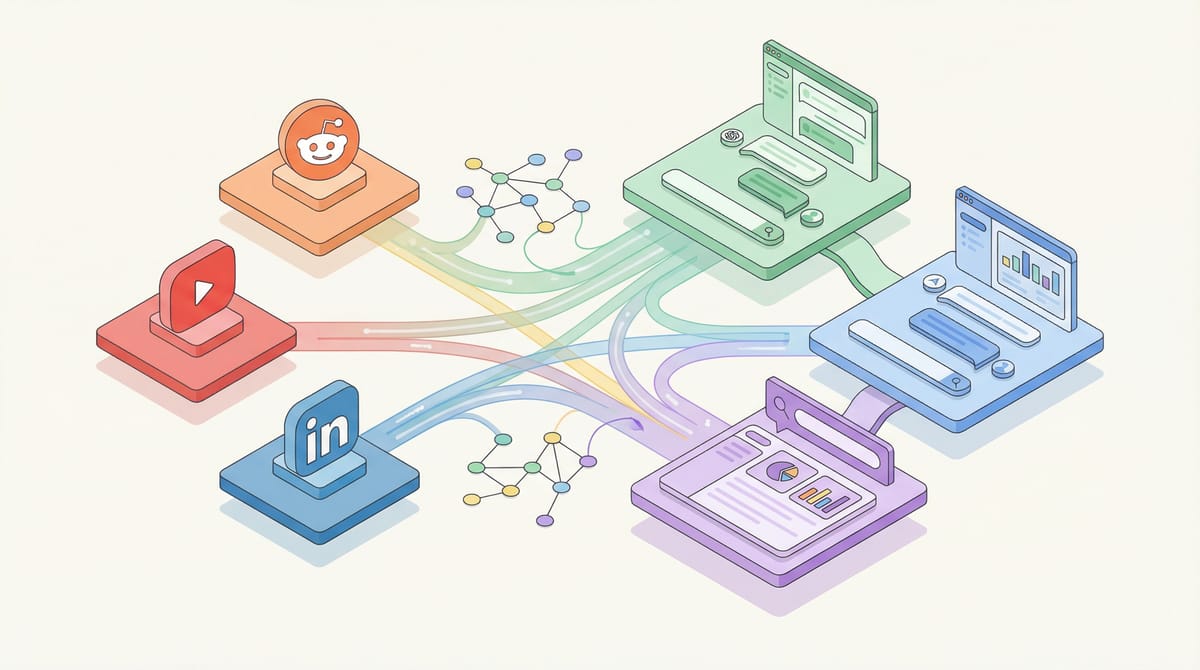
If you've spent the last year optimizing your own site for AI visibility, there's a decent chance you've been aiming at the wrong target entirely. A new study from Peec AI analyzed 30 million citations across five major AI search platforms, and the findings are blunt: Reddit, YouTube, and LinkedIn are the top three most-cited domains overall. Not news publishers. Not brand websites. Not the meticulously optimized pages your SEO team spent six months building.
The study looked at ChatGPT, Google AI Mode, Gemini, Perplexity, and AI Overviews. The full top 10 is Reddit, YouTube, LinkedIn, Wikipedia, Forbes, G2, Yelp, Facebook, Medium, and TechRadar. If your domain isn't on that list, you're competing for the remaining scraps of citation share. And honestly, even if you're producing great content on your own domain, the AI models seem to be looking elsewhere first.
The citation hierarchy isn't stable, and that makes planning harder
Here's what makes this especially tricky for anyone trying to build a strategy around it. These rankings shift dramatically depending on which AI platform you're looking at.
Google's AI Mode and AI Overviews both favor YouTube and Reddit at the top, with Facebook and LinkedIn close behind. Gemini leans heavily on Reddit and Wikipedia. Perplexity loves Reddit and YouTube. ChatGPT is the outlier, gravitating toward what you might call more "editorial" sources: Wikipedia first, then Reddit, Forbes, and TechRadar.
So even within Google's own ecosystem, the citation patterns don't agree with each other. AI Mode and Gemini are different products with different preferences, built by the same company. If you're building one unified "AI SEO strategy," the data suggests that's probably the wrong level of abstraction. You'd need a platform-by-platform approach, which is a much bigger lift than most teams have budgeted for.
Reddit's dominance comes with a serious asterisk
Reddit being the most-cited source across AI search has been confirmed by multiple studies now. An AirOps analysis of 5.5 million AI answers found Reddit appearing in 21 to 22 percent of all responses. A Tinuiti report showed Reddit citations growing at least 73 percent between October 2025 and January 2026. A Semrush study of 230,000 prompts found Reddit in roughly 60 percent of ChatGPT responses before a model update in September 2025.
Then it dropped to about 10 percent.
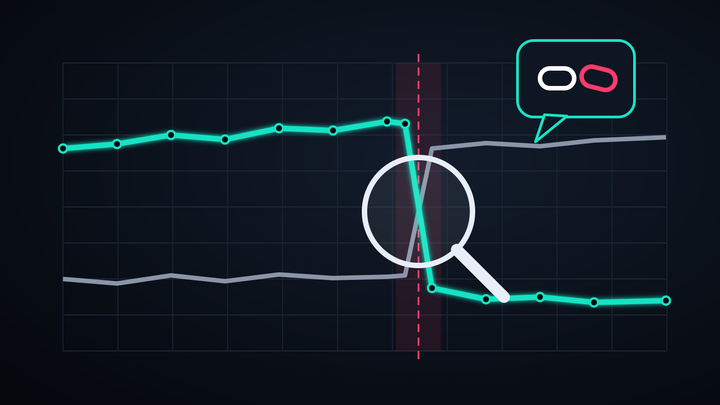
That's the asterisk. Reddit's citation share on ChatGPT crashed by around 83 percent after a single model update. Wikipedia fell from 55 percent to under 20 percent in the same window. The platforms AI search engines "trust" aren't determined by some permanent authority score. They're artifacts of training data, model architecture, and whatever OpenAI or Google decided to weight in their latest release.
From what I've seen, the marketers treating AI citation rankings like Google's PageRank (a permanent, optimizable system) are setting themselves up for a rough quarter. This is closer to social media algorithms than search rankings. Volatile, opaque, and mostly outside your control. I'd estimate at least one more citation shift of 30 percent or larger will follow the next major model update from OpenAI or Google, probably within six months.
LinkedIn is the quiet winner for B2B, and the data is surprisingly specific
The LinkedIn numbers are probably the most immediately actionable part of all this. A Semrush study of 89,000 LinkedIn URLs cited across 325,000 prompts found LinkedIn appearing in about 11 percent of AI responses on average. ChatGPT cites LinkedIn 14.3 percent of the time, Google AI Mode 13.5 percent, and Perplexity 5.3 percent.
What caught my attention: 95 percent of the LinkedIn content getting cited is original. Not reposts, not reshares. Original articles, mostly in the 500 to 2,000 word range. And you don't need a massive following to get picked up. Accounts with 2,000 or more followers make up about half of cited profiles, but smaller accounts get cited too. According to Axios, LinkedIn's citation frequency has roughly doubled since November 2025.
If you're a B2B marketer and you're not publishing substantive LinkedIn articles regularly, this is probably the easiest AI visibility lever you're currently ignoring. The format that gets cited isn't the quick thought post with a hot take and an emoji. It's the 500 to 2,000 word original piece that actually says something specific enough to answer a question.
The overlap between organic rankings and AI citations is thinner than you think
I keep coming back to this point and it gets more uncomfortable each time. We wrote recently about how you can rank first on Google for every product category and still be invisible to ChatGPT. This new data from Peec AI confirms the mechanism. AI search engines aren't pulling from Google's index the way you'd expect. They're pulling from platforms where real people share opinions, experiences, and recommendations in their own voice.
Reddit threads, YouTube videos, LinkedIn articles. These are the formats that register as genuine human signals to the models. Your beautifully optimized product page with structured data and a 95 PageSpeed score? The AI may read it, but it's not citing it.
A Search Engine Journal study found that only about 17 percent of AI Overview citations overlap with the top 10 organic results. That's not zero, but it's far less alignment than most SEO teams are assuming when they say "our organic strategy covers AI too."
We've also covered how the signals that drive AI citations are fundamentally different from Google ranking factors. This platform-level data adds another layer to that picture. It's not just that the ranking signals are different. The sources themselves are different.
What this changes about where you put your content
I think most teams are approaching AI visibility backwards. They're trying to optimize their existing sites for AI citation, which makes intuitive sense but doesn't match what the data actually shows. The platforms that get cited most are the ones with user-generated, authentic-feeling content from real people talking about real problems.
So the practical adjustment, from what I can see, is distribution diversification. Not as a nice-to-have content marketing strategy, but as a core component of how you think about search visibility in 2026. Specifically:
- Publish original, substantive content on LinkedIn. The 500 to 2,000 word range is the sweet spot based on the Semrush data. Write with enough specificity that an AI could pull a direct answer from your post.
- Participate genuinely in relevant Reddit communities. Not the astroturfing play that some agencies are already attempting (and that Reddit is actively cracking down on). Actual useful contributions that happen to reference your area of expertise with real context.
- Create YouTube content that answers the questions your target customers are asking AI search engines. The AI cites YouTube heavily, particularly for non-branded queries where the user is looking for genuine guidance.
This isn't particularly novel advice on its own. The difference is that the data now shows specifically why it matters and puts real numbers behind the intuition. These platforms aren't just distribution channels for your existing content strategy. They're the primary sources AI search engines trust more than your own domain.
Don't overhaul everything based on a single data snapshot
One thing I want to be careful about here. Every time one of these AI citation studies drops, there's a rush to rebuild entire strategies around the findings. The Peec AI data set is large (30 million citations), but we don't know the full query distribution, the exact time period, or how representative it is of the queries that matter specifically for your business.
Tinuiti's report made the important observation that citation patterns vary significantly by vertical. Reddit's citation share ranges from 10 percent in apparel down to 2 percent in logistics. "Reddit is the most-cited domain" is true in aggregate, but aggregates hide the details that actually matter when you're deciding where to spend your next quarter's content budget.
My suggestion: use this data to pressure-test your current distribution approach, not to scrap it. If you're publishing nothing on LinkedIn, Reddit, or YouTube, the evidence says you're probably invisible in a growing number of AI search results. If you're already active on these platforms, the data confirms you're pointed in the right direction. The specific percentage splits will shuffle with every model update. The directional signal (be present where real humans discuss real problems) is probably more durable than any individual citation ranking.
The strangest part of all this, honestly, is that the AI visibility playbook in 2026 looks a lot like marketing advice from 2010. Be on the platforms where your audience hangs out. Post genuinely useful things. Build a reputation in those communities, not just on your own turf. We spent 15 years learning to optimize for Google's algorithm, and now the algorithm is pointing us right back to the forums.
By Notice Me Senpai Editorial