Amazon Cut Affiliate Commissions Up to 50% and Killed the Milestone Bonus

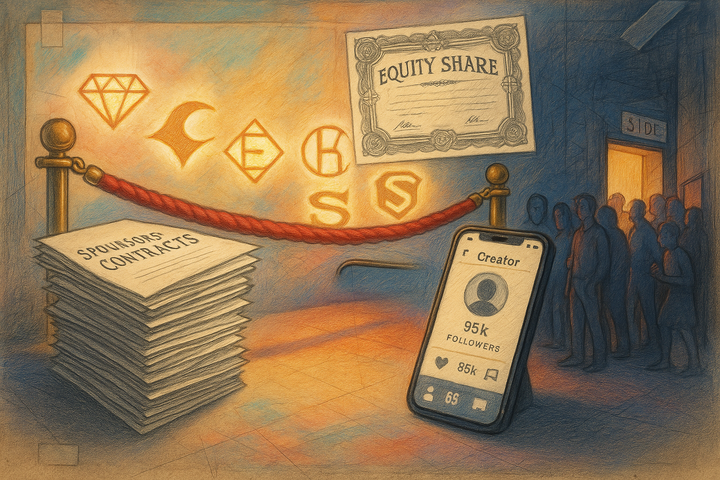
Amazon cut Associates commissions by as much as 50% between late 2025 and March 2026 without announcing the change publicly, and eliminated the milestone bonuses that rewarded top publishers. Adweek confirmed the cuts with seven publishers and partners who learned about them in private account-manager conversations. The audit worth running this week: which of your top SKUs fell into a discounted category, and which alt networks already pay above Amazon's new floor.
Account managers delivered the news one call at a time
Amazon's standard playbook for affiliate program changes is a help-center notice or a blast email to every Associate. This round, the rollout went through individual account-management conversations. It started in Asia-Pacific in late 2025 and reached the U.S. around March 9, 2026.
Seven publishers and partners told Adweek's Mark Stenberg about the changes. None saw a formal announcement. Most found out when monthly earnings reports tilted downward and they asked their reps why. That gap matters because affiliate teams plan revenue against rate tables. If the rate dropped four months ago and your forecast still uses the old number, your Q2 commit is broken right now and nobody outside Amazon told you.
I think a lot of mid-tier publishers will read this story and assume the cuts hit everyone equally. They didn't. The dropoff scales with how much negotiating room you had to keep your old deal in the first place.
This looks like the 2020 cuts with one nastier twist
Amazon ran almost exactly this play in April 2020. Commissions for furniture, home improvement, lawn & garden, pets and pantry dropped from 8% to 3%, and grocery from 5% to 1%, per Search Engine Land's coverage. CNBC covered the 2020 cuts as they landed, and a Change.org petition with thousands of signatures asked Amazon to reverse them. The petition went nowhere. The pattern then was identical: publishers found out from their own earnings statements, scrambled to find alternates, and absorbed the hit because Amazon links still converted at rates other networks struggled to match.
The 2026 version has one structural difference. In 2020, Amazon left the public rate table visible, so at least you could benchmark your loss against the printed number. This round, the rate cuts arrive through private negotiation, and the new floor varies by account. Smaller affiliates seem to have lost more than large publishers with named deals, but nobody outside Amazon knows the actual distribution. That opacity makes it harder to plan around, because you can't easily ask "is my new rate competitive" when there's no visible market.
On top of the rate cuts, Adweek also reports that Amazon degraded the reporting tools affiliates used to optimize campaigns. So you got a smaller payout and a worse dashboard at the same time, which is a useful tell about how much Amazon currently values the long tail of small affiliates.
The milestone bonus death may hurt more than the rate cut
Most coverage focuses on the up-to-50% headline. The quieter change is the elimination of the milestone-based bonuses that paid out when publishers cleared revenue or volume thresholds. For a top-tier affiliate site, those bonuses often added a meaningful percentage on top of base commissions every month. Take that off the table and the effective revenue drop is larger than the rate cut alone suggests, especially for the publishers who built monthly forecasts around hitting tiered thresholds.
The bellwether case is Wirecutter under The New York Times. The NYT acquired Wirecutter in 2016 for a reported $30 million, and the site has run on Amazon affiliate revenue as its core monetization model ever since. AdExchanger's reporting on Wirecutter's post-acquisition strategy made clear how dependent the property is on Amazon link economics. The NYT's Q1 2026 affiliate, licensing and other revenue line came in at $68.5M, with guidance suggesting low-single-digit growth for the full year. That guidance was issued before Adweek broke the cuts story, so analyst models may already underestimate where the affiliate line actually lands by year-end.
On paper, big publishers with custom rates are insulated. In practice, the milestone bonus was rarely renegotiated separately from the base rate, so the bonus death likely cascades up the publisher size curve too. We won't really know until the next earnings cycle.
Two alt networks that pay above Amazon's new floor
Most "Amazon alternatives" lists conflate networks with offers. The reality is that very few networks beat Amazon's new floor for the same physical-product category once you factor in conversion rate and cookie duration. Two that consistently show up in publisher conversations after this round of cuts:
Awin runs roughly 25,000 merchant programs including Etsy, HP, and AliExpress, with rates and cookie windows set by each merchant. The merchant-by-merchant variance means you're not picking a network rate, you're picking individual programs that beat Amazon's new category rate. The work is annoying. The payouts can be 2-4x the equivalent Amazon category for certain merchants.
ShareASale offers cookie windows up to 12 months on many of its merchant programs, against Amazon's 24-hour cookie. That cookie spread is where the math actually flips. A 5% commission with a 90-day cookie can outperform an 8% commission with a 24-hour cookie if your audience needs more than one session to convert, which they almost always do.
For digital and B2B categories, ClickBank and PartnerStack carry offers that range from 20% to 75% per sale, often with recurring revenue. They're not direct replacements for Amazon's catalog breadth, but for any topical site that can credibly recommend digital tools, the per-conversion economics aren't comparable.
I think the most useful frame is this: stop trying to replace Amazon. Replace the categories where Amazon's new rate makes the math unviable. If your top SKU sits in pantry or grocery, the math probably broke months ago. If you're running general product reviews, the impact is partial and the right move is to layer a second or third network for the worst-hit categories rather than a wholesale platform switch. TikTok Shop's affiliate inventory expansion is another lane worth a look for travel and lifestyle creators specifically.
The audit that needs to happen before next month's reports
- Pull your top 20 revenue SKUs by Amazon affiliate commission for the last 90 days.
- Check each SKU's current Amazon rate inside the Associates Central dashboard under Operating Agreement updates.
- Compare against your historical earnings per click for those SKUs to identify which categories took the worst hit.
- For any SKU losing more than roughly 30% in effective commission, build a parallel link via Awin, ShareASale, or a direct merchant program.
- A/B test the alternate links on 20% of traffic for two weeks before fully cutting over.
That last step matters more than people think. The reason 2020 publisher pivots stalled wasn't that alt networks paid less, it was that Amazon's conversion rate was several times higher than most alternates because of the trust premium and the existing Prime cart. The "switch everything to Awin" instinct destroyed more revenue than the rate cut did, in some cases. The data you actually need before pivoting is your conversion rate on the alternative, not just the headline commission rate.
Affiliate revenue is becoming a relationship, not a rate
The most important thing the 2026 cut signals isn't the percentage. It's the shift away from a public rate table toward private, account-by-account negotiation. For two decades, Amazon Associates was a published price list. From this point forward, your rate is whatever you can negotiate with your account rep, and the headline number doesn't apply to you specifically.
That makes the program less of an open marketplace and more like a private buy. If you're in the top tier you'll probably do fine, because you have relationships and leverage that matter to Amazon. If you're below that line, your effective rate is now whatever Amazon decided you were worth in March, and you weren't in the room when that decision happened.
The work for the rest of 2026 isn't picking a replacement network. It's getting on a quarterly call with your Amazon rep and finding out exactly where you stand, because the published rate table is no longer load-bearing for your business. And if your rep won't take that call, that itself is the answer.
Notice Me Senpai Editorial