Amazon Repurposed the Upfront Into a Multi-Year DSP Sales Cycle
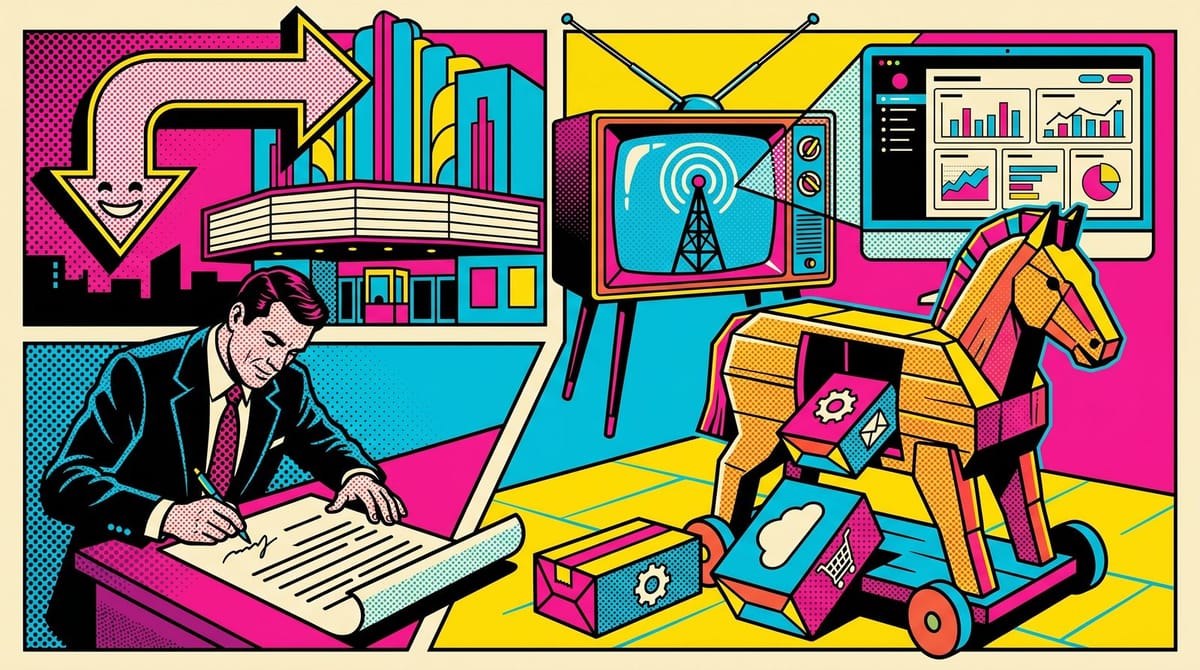
Amazon used its 2026 upfront on May 11 to pitch holdco leaders on DSP, Amazon Marketing Cloud, Rufus ads, and a new unified buying system, not just primetime AV inventory. Ad tech contracts run on multi-year enterprise software cycles, which means the upfront's room of senior agency leaders is the only annual moment those deals can close. The TV money is the Trojan horse for tech share.
Kelly Maclean, VP of Amazon Ads, told Digiday this is a deliberate change: "There's this big shift from these content-first decisions into more of this integrated approach, where you have premium content, deterministic signals and AI-driven technology all activating together." Read that twice. The integrated approach is the pitch. Primetime is the room.
The pitch shifted from inventory to enterprise software
Upfronts have always been about commitments. Networks lock in CPMs, advertisers reserve audience, and the rest of the year fights over scatter. Amazon kept the AV part. Then it bolted a tech sales cycle on top of it.
The integrated approach matters because the buyer changes. Inventory deals get signed by traders and account leads. DSP, AMC, and Rufus contracts get signed by holdco leadership, often on multi-year terms with training, integration, and SLAs attached. Those people are not in the room when most upfront conversations happen. They are in the room on May 11.
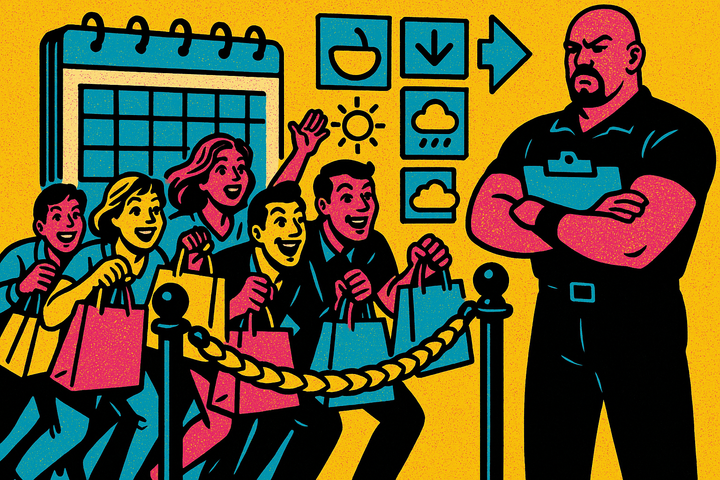
I think the most useful way to read this is as a calendar arbitrage. Holdcos run their software procurement reviews quarterly. The upfront is the only week of the year where you have GroupM, Publicis, IPG, Omnicom, and Havas leadership physically available, distracted by the show, and pre-committed to writing big checks. Amazon picked the cheapest possible distribution channel for an enterprise sales motion and stapled it to a Beacon Theatre stage.
The LinkedIn partnership announced into this same upfront cycle lands in the same logic. Amazon DSP gets B2B audience signals it never had before. Microsoft gets distribution. The deal isn't really about reach. It's about giving Amazon DSP a credible answer to the one question holdco leaders kept asking: "do you cover B2B?" If you missed how that one stitches together, we covered the inventory side in Amazon DSP Now Targets LinkedIn Job Titles on Microsoft's CTV Inventory.
Smart Mode and Expert Mode are the same DSP with different exit ramps
The new Unified Ad System combines DSP and Ads Console into one platform with two modes. Smart Mode is automation-first: the buyer sets an objective, uploads creative, and AI executes. Expert Mode keeps human controls in place, with granular targeting, exclusions, supply path access, and AI as a co-pilot rather than the driver. The Ads Agent sits across both and builds full campaigns from a media plan.
On paper, that sounds like an upgrade. And sometimes it is. But the more honest read is that Amazon just took the agency hour out of the pricing model. If the Ads Agent assembles the campaign, the buyer's value moves up the stack toward strategy, naming, and QA. The hours of trafficking, audience configuration, and budget flighting that filled an agency timesheet are now Smart Mode tasks. Adweek's reporting on Amazon's TV automation pitch confirms the same direction of travel for linear and CTV planning.
Two practical implications for anyone running buys through an agency:
- The upcharge on programmatic activation hours becomes harder to defend in 2026 RFPs. If your retainer prices in DSP setup at agency rates, expect procurement to flag it. From what I've seen, the gap between manual and Smart Mode time-to-launch is roughly 4x, and that gap is the line item.
- The performance number that matters is now incremental ROAS measured in AMC, not platform-reported ROAS. Smart Mode optimizes against Amazon's outcome signal. If you don't have an AMC instance writing into your data warehouse, you can't audit the optimization, and the agency can't either.
That second one is the real story. Amazon is happy to run your campaigns automatically, as long as the measurement layer also belongs to Amazon.
One more thing about the Ads Agent that people are underselling: it builds the campaign, but the buyer still has to approve before launch. In practice, that approval step seems to depend a lot on how complete the media plan input was. Sparse plans (no flighting, vague creative rotation rules) come back with defaults that look fine and are not. My read is that the QA hour the Ads Agent saves on setup mostly migrates into a longer pre-launch review, which is fine, but only if you actually do the review.
The MCP server is Amazon hedging the agency tech fight
The other piece announced into the upfront cycle: the Amazon Ads MCP server is now in open beta. Maclean's framing was telling: she described some holdcos as "really bought in on a centralized system for their own tech," and said Amazon's job in those cases is to "make it as easy as possible for them to connect to our MCP server."
Translation: Amazon does not need agencies to use Amazon's UI. It just needs the spend to flow through Amazon's pipes. MCP server access lets GroupM Nexus, Publicis Epsilon, or any in-house engineering team query and trigger campaigns programmatically, without ever logging into the new console.
That's a meaningful concession from a platform that historically pushed everyone into its own UI. It also makes commercial sense. The fight is no longer "use our DSP." The fight is "can we be the default DSP for whatever agent runtime an agency picks, regardless of whose interface initiates the call?"
What budget owners should change this quarter
A few specific things shift for people running paid ads, not in 18 months but right now.
If you are an in-house team, ask your account manager for paid AMC access, not free tier, before your next budget review. Free AMC has measurement gaps that hide which audiences are pulling weight in Smart Mode. The upgrade pays back if you spend more than roughly $250K/quarter on Amazon DSP, and the underused report is the path-to-conversion frequency view, which lets you cap retargeting before it starts cannibalizing brand search.
If you are an agency, get an MCP server proof-of-concept on the roadmap by Q3. Not because clients are asking yet, in most cases they aren't. But the holdco procurement teams above your client will start asking which programmatic activation is "agent-ready" by year-end. "We're piloting the MCP integration" is a defensible answer. "We'll evaluate it next year" is not.
If you are a CMO sitting in a 2026 upfront commitment conversation, separate the AV line from the tech line in the agreement. Amazon's salespeople will reasonably push for a bundled rate card because that's what made the trip to the Beacon Theatre worth the travel budget. Bundled rates make the AV component look cheap and the tech component look free, and that's the framing that locks you into a multi-year integration you didn't fully scope.
The upfront used to end when the lights came up. This year's ended when the procurement deck got passed to legal.
Notice Me Senpai Editorial