Brita's Singing Shark Made 'Be Unhinged' Look Like Lazy Advice
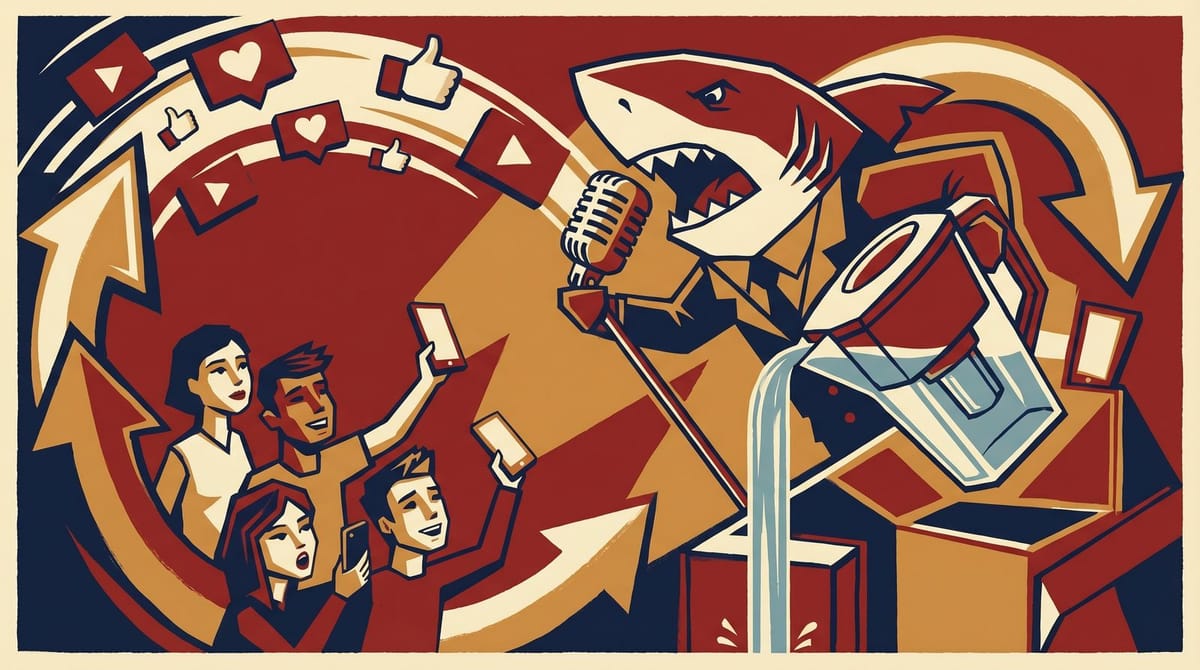
Brita produced roughly 150 pieces of social content per month throughout 2025 and earned 44 million organic views in a single month. The most visible formats feature a cartoon shark singing about hydration, a deadpan robot, and a kawaii kitten anthem. The strategy looks chaotic. The mechanics underneath are closer to disciplined entertainment than random weirdness.
150 Posts a Month Sounds Chaotic Until You See the System
Brita didn't stumble into virality. The brand, owned by Clorox and partnered with VaynerMedia, built a content engine designed to produce volume with a specific purpose: find what the audience responds to, then make more of it.
The Adweek profile of the campaign quotes Rita Gorenberg, Clorox's Senior Marketing Director of Brand Experience, talking about "leaving egos at the door." That phrase gets repeated a lot in marketing case studies and it usually means nothing. In this case, it meant something specific: the internal team stopped requiring brand approval on every post. The social managers got permission to iterate in real time.
VaynerMedia's Chief Creative Officer Rob Lenois put it more directly: "The comments gave us the roadmap... the audience told us what they wanted to see next." The shark character emerged because the audience latched onto it. The robot character survived because comments asked for more. Content that didn't generate comments got quietly retired.
This is the part that most coverage of "unhinged brands" skips. Brita isn't posting random things and hoping something sticks. They're running a high-volume iteration loop where audience response determines what gets produced next. What you end up with is a brand that posts a shark video on Monday, reads the comments Tuesday, and by Wednesday has a follow-up that directly references what people said. It's content development at the speed of social media, and honestly, pretty difficult to replicate with traditional approval chains.
Characters Do the Work That Brand Voice Documents Can't
The Hawke Media breakdown of Brita's TikTok strategy points out something worth sitting with: Brita Shark, Brita Bot, and the Bwita kitten aren't just funny content ideas. They're recurring identities that audiences follow, anticipate, and request.
This matters more than it sounds like it should. A brand voice document tells your social manager what tone to use. A character gives them something to write as. Characters create continuity across posts. People don't follow a brand because the brand has a good voice. They follow because they want to see what the shark does next.
Duolingo proved this years ago with its owl character, driving a 62% year-over-year increase in daily active users. Nutter Butter did it with abstract, slightly unnerving snack content, growing from 3,000 to 700,000 TikTok followers while household penetration among Gen Z rose 15% year over year. What connects these successes is a single structural element: a recurring character that audiences choose to follow.
And the numbers for Brita hold up. A single video hit 3.3 million views. The Instagram account grew past 167,000 followers. Harris Poll named Brita the fastest-growing home-care brand in late 2022 through early 2023, which is roughly when the character strategy kicked in.
Wendy's Showed What Happens When Unhinged Becomes Provocative
Here's where I think the advice gets dangerous for most brands.
"Be unhinged" became the default recommendation for social teams sometime around 2024. It sounds actionable but it isn't, because it describes a vibe without specifying a mechanism. What does "unhinged" actually mean in practice? Post weird things? Be edgy? Take risks without telling legal?
Wendy's has maintained a deliberately snarky social presence for years, and it generally works. Then they responded to a post about Katy Perry's Blue Origin flight with "Can we send her back?" and the reaction was immediate and negative. Campaign US covered the backlash and the broader risks of unhinged brand strategy, noting that there is "a very fine line between relatable and regrettable."
The distinction I keep coming back to: Brita is absurd, not provocative. A shark singing about hydration doesn't risk alienating anyone. It's entertainment. Wendy's crossed from entertainment into commentary, and commentary has a much smaller margin for error.
I'd estimate fewer than 1 in 5 brands that launched an "unhinged" social presence in 2025 will still be running it by the end of 2026. The ones that fade will mostly be the ones that confused provocation with personality.
The Budget Question Nobody Wants to Answer
I don't love talking about this part because it's discouraging, but it matters.
Brita is owned by Clorox, which reported over $7 billion in net sales in fiscal 2024. They work with VaynerMedia. They produce 150 pieces of content per month. They ran a Stephen Curry partnership that generated a 37% lift in brand favorability, which Google reportedly called one of the highest results they'd ever seen for a YouTube creator campaign.
That's a well-resourced CPG brand running a professional content operation. Not a scrappy startup doing it with one intern and a ring light.
The realistic takeaway for most marketing teams isn't "produce 150 TikToks a month." It's this: pick one character concept, give your social manager 90 days to iterate on it without requiring approval on every post, and measure what happens. The volume isn't the important variable. The creative autonomy is.
Clorox tested the same permission structure with Pine-Sol on TikTok and doubled that account's following from 87,000 to 156,000 in under a month. The content volume there was nowhere near 150 pieces per month. What carried over was the structural decision: let the team be weird within a defined character, and let audience response steer what comes next.
The 90-Day Character Test Most Social Teams Won't Get Permission to Run
If you're a brand manager reading this and wondering how any of it applies, here's what I'd actually recommend.
Pick one character or persona for your brand's social account. Something more specific than a tone-of-voice guideline. An actual character with a name, visual identity, and personality quirks. Give your social manager permission to post 3 to 5 times per week as that character for 90 days. No creative brief per post. Set boundaries (nothing political, nothing requiring legal review) but let them iterate freely.
Measure follower growth, engagement rate, and comment volume at day 30, 60, and 90. If growth is flat and comments are sparse by day 60, try a different character. If one format or topic consistently generates comments, lean into it. That's the Brita playbook without the Brita budget.
The uncomfortable reality is that most marketing organizations won't do this. Not because it's risky, but because it requires giving a 26-year-old social media manager more creative autonomy than most brand directors are comfortable with. The brands winning on social right now (Brita, Duolingo, Nutter Butter) all share that one structural advantage. They got out of their social team's way.
Vita Coco proved a version of this with a single TikTok reply that generated 250 million impressions. It wasn't a planned campaign. It was a social manager who had enough creative latitude to respond to a comment in the brand's voice without waiting for approval.
Most social teams don't need permission to be weird. They need permission to be weird consistently, with a character their audience can invest in over time. That's a harder internal sell than following a TikTok trend, which is probably why so few brands actually pull it off.
By Notice Me Senpai Editorial