Alix Earle Wants 6 Brand Partners a Year, and Equity in Them
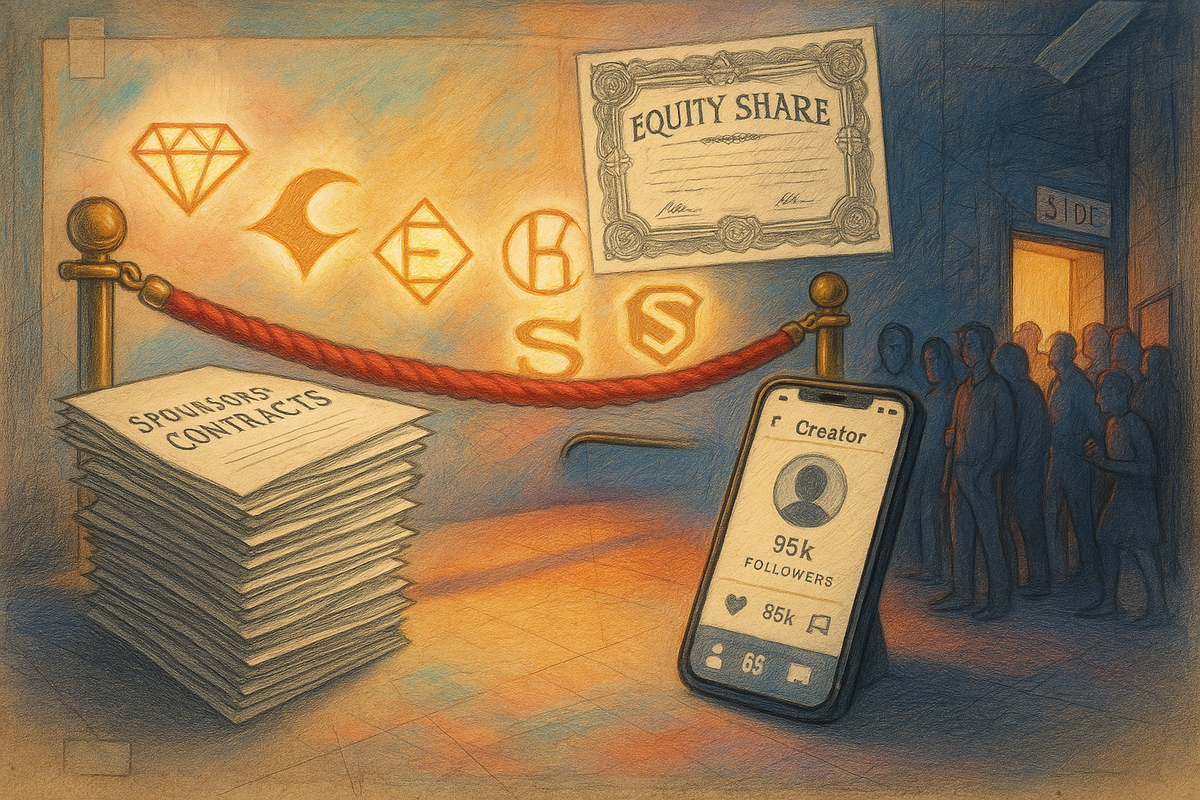
Top creators are cutting the number of brand deals they take and asking for equity, creative control, or executive titles instead, Digiday reported on October 9, 2026. Alix Earle (14 million combined followers) says she would rather work with five or six brands a year than 100. For most marketing teams, that means one-off sponsored posts with big names get scarcer and pricier, while multi-month mid-tier deals get relatively cheaper.
I'd read this as a supply story first and a celebrity story second. When the top of a market decides to sell less inventory, the price of what's left goes up, and the buyers who were relying on that inventory have to go somewhere else. In creator marketing, "somewhere else" is mostly the middle tier. And honestly, that's where a lot of brands should have been spending in the first place.
What Earle, Howlett and Cooney are actually asking for
The Digiday piece has three versions of the same move. Earle is negotiating equity arrangements where she shares creative direction and upside, which she describes as a joint venture where creators "take charge and take the lead." Jordan Howlett went further and became Chief Content Officer at Blenders Eyewear, complete with office space, input on product design (the "Jordan proof" glasses with reinforced hinges came out of that), and a commercial he directed featuring Method Man.
Kevin Cooney, with over 4 million followers, is the one I'd pay the most attention to. He turns down campaigns where he isn't confident about performance and, according to Digiday, points those brands toward smaller creators. Read that again. A top creator is actively routing brands to micros because he'd rather protect his audience than take a check that might flop.
NowThis editor-in-chief Michael Vito Valentino put the logic plainly in the same piece: "Really we're buying the audience." One partnership that reads as a sellout move can cost a creator more in trust than the fee was worth.
There's a useful pushback from Stefani Stamatiou, North American CEO at HYDP, who drew a line between "sweat equity" and celebrity endorsements. Her view, roughly, is that creators should earn ownership through strategic or operational work, not by lending their face. I agree with that, and I'd add something less polite: most brands do not have a real role to offer a creator, so they shouldn't pretend they do.
Why creators can afford to say no now
On paper, brand deals look like the backbone of creator income. The survey data says otherwise. The Influencer Marketing Factory's 2026 Creator Economy Report, built on a survey of 1,000 US creators with HypeAuditor, found brand partnerships made up just 12.7% of reported creator income sources. Ad revenue share came in at 21.6%, and product sales plus affiliate combined for 21.2%. The same report found 44.9% of creators value stability and deeper brand alignment over one-off campaigns.
So the bargaining power has quietly shifted. If a creator's platform payouts and their own product line cover the rent, a mediocre sponsorship becomes optional. It also helps explain why Aspire's 2026 pricing survey of nearly 1,200 creators found 70% "always" or "often" get offers below their standard rates. Brands are still lowballing like it's 2021, and creators with options are simply ignoring them.
Meanwhile, the money chasing creators keeps growing. IAB puts US creator ad spend at roughly $44 billion for 2026, though PPC Land rightly notes that figure isn't independently audited. More budget, fewer willing top-tier sellers. You don't need an economics degree to guess where rate cards go.
Think of it like concert tickets. When the headliner cuts their tour from 100 dates to six, the six get expensive and the opening acts suddenly get booked a lot more.
The top tier just shrank its inventory. Your budget didn't shrink with it, so it has to land somewhere.
The mid-tier ambassador play (before the rates catch up)
This is where I'd actually move money. Chasing equity deals with the Earles of the world is, for most brands, a fantasy anyway. Multi-month contracts with creators in the 50,000 to 500,000 follower range whose rate cards haven't absorbed the scarcity yet look like a much better use of the same dollars.
A few practical pieces, in rough order of importance:
- Sign for three to six months, not one post. The creators who say they want stability (that 44.9%) are telling you what they'll trade for it. A retainer with a guaranteed volume usually buys a lower per-post rate than a one-off, and it gives the creator room to make content that doesn't feel like an ad read.
- Price exclusivity on purpose. Toptal's 2026 negotiation benchmarks put category exclusivity at roughly 20% to 35% on top of the base fee for 30 days, 50% to 75% for 90 days, and 100% to 150% for 12 months. If your legal team's template asks for 12 months of category exclusivity on a two-post deal, you're paying for it whether you realize it or not, usually in the form of the creator walking.
- Write paid usage into the contract from day one. Running the content as Meta partnership ads tends to be where the real return shows up, so negotiate the rights up front instead of bolting them on after a post performs.
One caveat on that last point, because the hype around partnership ads gets a bit loose. An Agentio analysis of roughly $130 million in ad spend found partnership ads beat licensed UGC on CTR by 19% and CPA by 5% overall. But CPMs ran 19% higher, and in Stories placements CPA was actually 25% worse. Search placements were the standout, with CPA 63% lower. So the format works, mostly, but it seems to depend a lot on where Meta puts it.
A renewal test that keeps you honest
Long-term deals have one real failure mode: inertia. You sign a six-month ambassador, the first post does fine, and nobody checks again until the invoice shows up in month five.
Here's the benchmark I'd use. After a creator's first three posts run as partnership ads, compare their blended CPA to your licensed UGC or brand-handle creative over the same window. If they're within about 10% to 15%, renew and give them more creative room. If they're more than 25% worse and the content isn't driving something else you can measure (branded search, code redemptions, comment sentiment), cut it at the next break clause. Build that break clause in. Creators who want long-term deals generally accept a 90-day check-in, in most cases I've seen discussed by agency folks anyway.
And measurement here is messier than it looks. We covered why promo codes miss most influencer-driven sales, and if you're working through an intermediary, it's worth checking how much of your creator budget an agency keeps before you decide a creator "didn't perform."
Where this goes by mid-2027
My prediction: by the end of Q2 2027, at least three more creators with over 5 million followers will announce a formal operating or equity role at a consumer brand, and mid-tier ambassador retainers will be up 20% or more from today's typical rates as brands pile into the same middle. Call it an educated guess, since I don't have a model behind it. But the incentives all point the same way.
To be fair to the brands that will end up overpaying, this isn't entirely new. Creators have always preferred fewer, better partners. It just used to be a preference, and now enough of them have other income that it's a policy.
If I were running a creator budget this quarter, I wouldn't spend much energy trying to become one of Alix Earle's six. I'd spend it finding the 15 creators who'll be that selective in two years, and signing them while they still answer the email.