Exploding Topics Caught the AI Shopping Trust Gap: 31% Won't Authorize a Cent
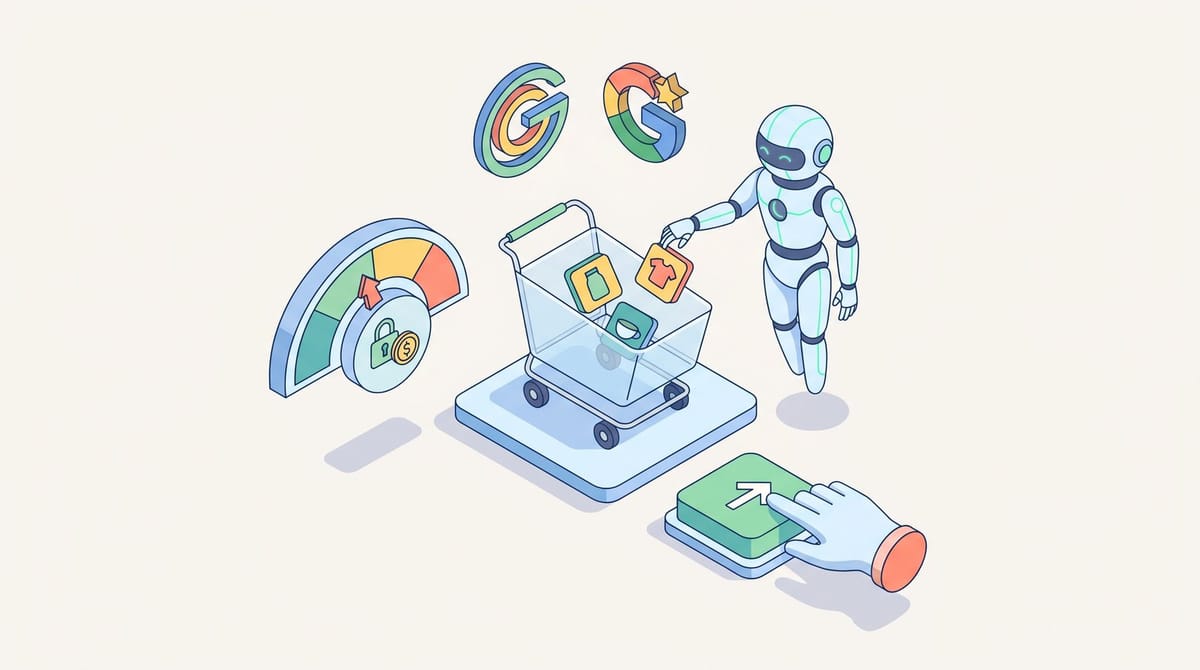
Exploding Topics surveyed 1,009 US consumers in April 2026 and found that 77.6% used AI to shop in the past six months, while 31.21% would not authorize a single dollar of autonomous AI spending. The mode autonomous spending cap is $0. The median is $50. The gap means agentic commerce stacks should design around the human-confirm step, not around eliminating it.
Why the 77% adoption number is sturdier than usual survey hype
The headline data point is real shopping behavior, not aspirational. 77.6% of respondents used AI to help shop in the past six months, according to the Exploding Topics study reported by Search Engine Land. 43.21% use AI shopping tools weekly or more. 39.1% said their usage went up "much more" over the same window. Those are usage stats from a 1,009-person survey conducted this month, not vendor-marketing claims.
Capgemini's broader 12,000-consumer study from late 2024 already showed 71% of consumers want generative AI integrated into shopping. The Exploding Topics number is the same trend, twelve months further along, with the US cohort closer to 78%. So you can stop arguing about whether AI shopping is mainstream. It is. The question worth fighting over is what shoppers will actually let AI do.
And that is where the survey gets interesting.
The buried metric: a $0 mode cap on autonomous spend
The number almost nobody is quoting is the autonomous spending cap. The mode is $0. The median is $50. 31.21% of respondents would not allow AI to spend a single dollar on their behalf. Another 17.45% capped it at $20. Another 20.74% capped it at $50. So roughly 70% of consumers cap autonomous AI commerce at $50 or less. The thesis behind agent-to-agent buying just hit a price ceiling well below the average ecommerce order value, and that is a problem nobody is sizing.
The agent-commerce infrastructure rolling out this year all assumes the trust will eventually arrive. Magnite shipped a buyer agent that bids on Disney inventory. AdRoll's agent queries PubMatic's SSP directly. PayPal wrapped 400 million verified buyers into an ad ID and priced it at zero. Every one of those moves assumes consumers will trust agents to transact at amounts that matter. The Exploding Topics data says, today at least, they trust agents to recommend and not to transact. The gap between those two roles is most of the conversion funnel.
Personally, I think this is the single most important number in the report. And it is the one being underplayed because it complicates the agent-commerce story most platforms are selling.
ChatGPT holds a 19-point lead inside the AI shopping funnel
Among AI shoppers, 77.56% use ChatGPT. 58.21% use Google Gemini. Fewer than 1 in 5 use Claude for shopping. That distribution matters because most of the "AI in marketing" coverage I read treats AI as a single channel when it really is not one. ChatGPT dominates, with Gemini second, and the rest fighting over the long tail.
If you are spending on generative engine optimization this quarter, the practical takeaway is to optimize for ChatGPT product visibility first and let everything else fall out of that. We saw the same shape when QSR brands like Little Caesars and Starbucks hit ChatGPT first with their app integrations. Strategic preference had little to do with it. The reason was traffic distribution, and the second-place gap is bigger than people think.
Digiday's 2025 consumer-AI-shopping roundup showed the same ChatGPT-Gemini-everyone-else hierarchy emerging twelve months ago, just at lower absolute volumes. So this isn't a one-survey artifact. It's a pattern hardening across multiple datasets. If you are doing GEO test budgets in equal splits across model providers, the data says you are overweighting the wrong ones.
51% won't let AI hold a card. That is where the conversion loses.
Three numbers from the comfort section of the survey deserve to be on every checkout team's wall this quarter. 51.45% of respondents are uncomfortable with AI storing their card details. 41.08% describe themselves as skeptical of autonomous checkout. 33.10% say they are suspicious of AI completing purchases. Those are not soft directional sentiments. They are stated buyer objections that show up at the highest-stakes point of the funnel.
The implied path of "AI assistant, then stored card, then autonomous checkout" loses about half the addressable audience at step two. The path of "AI assistant, then recommendation, then human-confirm checkout" keeps them, which lines up with other 2026 surveys consistently showing the recommendation-versus-purchase split. From what I have seen on agent-rails pitches this quarter, most of the proposed flows skip the recommendation layer and try to compress the funnel. The data says compressing the funnel is what is killing it.
The checkout flow worth building this quarter
If you are shipping an AI shopping feature in the next 90 days, here is the order of operations:
- Make the buy button the human's. Even if your assistant fully reasoned through the cart, the button copy should read "I'll confirm" or "Place order" rather than "Agent will check out." This is a UX-copy fix worth maybe two hours of work, and on the data above, it pays back well beyond that on conversion.
- Add a "confirm each purchase" toggle to any stored-card flow. Default it on for users with low-trust signals (new account, no prior purchases, mobile-first). About half the audience wants this and most checkout flows hide it three menus deep.
- Surface a price comparison alongside any AI recommendation. 55.19% of AI shoppers use AI to find the best price. They will trust the recommendation more if you show your work.
- Pull refund and dispute flows inside the assistant, not into a help-center link. Trust closes faster when the failure mode is visible and reversible from the same surface. Autopay and one-click buy already taught us this in adjacent categories, and the same shape applies here.
Roughly that. None of these are heroic engineering. They are conversion-design defaults that read the data and stop optimizing for the agent's autonomy at the expense of the buyer's comfort.
The five-year trust curve, and what actually closes it
55.83% of respondents expect AI to play a bigger role in shopping within five years. So the trust gap might shrink. From what I have seen in adjacent categories like autopay, one-click buy, and stored-card flows, trust closes when two things are true at once: the agent has memory of prior good outcomes for that specific user, and the failure mode is reversible without a phone call. Platforms that nail the second part first will be the ones that earn the autonomous-spend revenue everyone is pricing in.
I don't think the winners here are the brands with the biggest agent budgets. From what I've seen, they are the ones who ship the cancel button before they ship the checkout button. That is the order of operations the survey is screaming about, even if the press coverage only quoted the 77%.
By Notice Me Senpai Editorial