Land O'Lakes and Getty Caught Brands Using Rural Clichés on 46M People
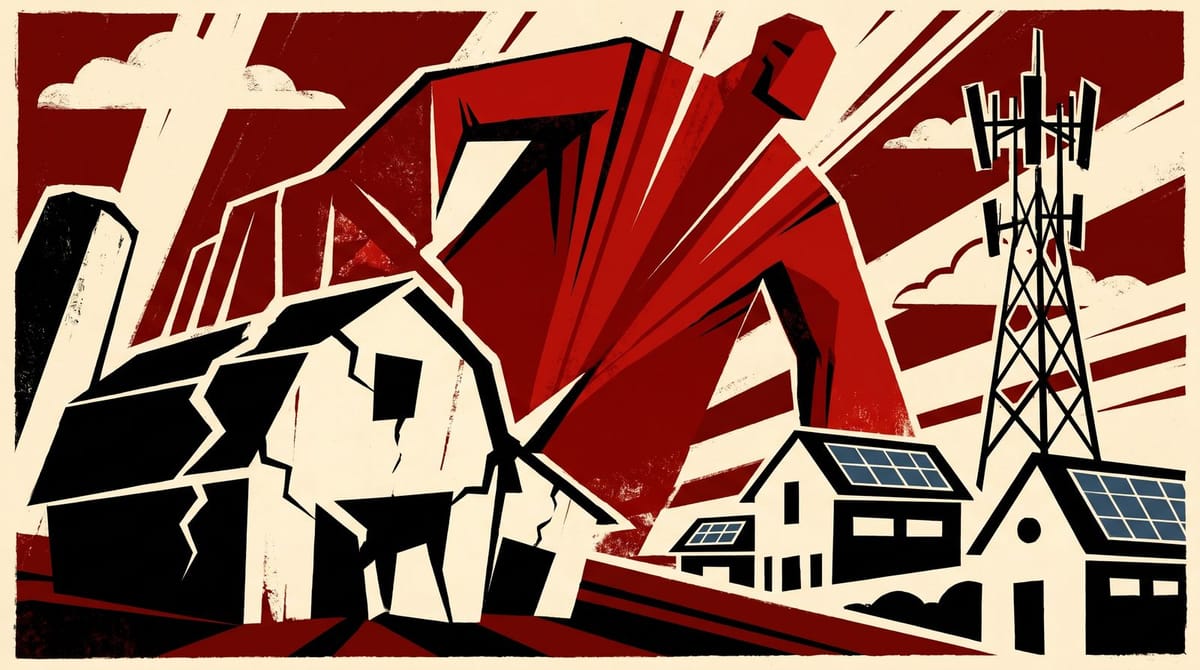
Two-thirds of rural Americans say advertisers don't understand them, according to Getty Images' VisualGPS panel, while only 5% of popular ad visuals are actually set in a rural place. That gap sits on top of 46.2 million people: 14% of the US population spread across 72% of the country's land area, per USDA Economic Research Service data. The Repicturing Rural playbook from Land O'Lakes and Getty is the first piece of public ammunition for closing it.
The 5%-against-14% gap is bigger than it sounds
Getty's VisualGPS tracks what creative buyers actually search for and license. Searches for rural visuals were up 22% in 2024 and another 8% so far in 2025, which means demand from agencies and brand teams is rising. The supply that gets selected for finished ad creative has not caught up. The rural-set portion of popular ad visuals is still 5%, even though 87.4% of US land is rural and roughly 20% of the population lives in or around it.
The 46.2 million figure comes from the USDA's most recent population release, which logged nonmetro counties at 46.2 million residents in July 2024. That works out to 14% of the country across 1,958 counties. Worth labeling clearly: nonmetro is the federal definition of rural and includes recreation counties, exurban counties adjacent to metros, and the small towns that are growing again after a decade of decline. Treating those people as if they all wear denim overalls in front of a sunset-lit barn is, statistically, the work of a stock library that hasn't been updated in fifteen years.
Where the cliché tax actually shows up
The Adweek piece that surfaced this work points at YouGov data: 66% of rural dwellers think Hollywood and the broader media present a stereotyped view of rural America. That number doesn't drop when you walk it across the hallway from entertainment to advertising. Most agencies pull from the same handful of stock libraries, the same handful of search terms, and the same handful of moodboards that have been rotating since the early 2010s. Rural shows up as: weathered hands, gravel roads, rusted pickup, John Deere caps, gold-hour pasture. Sometimes a flag.
What rural America actually looks like in 2026, according to USDA migration data, is more inconvenient for creative directors. Migration has been net positive into nonmetro counties since 2021, adding 974,379 people between 2020 and 2024. 69% of that migration was domestic, meaning urban and suburban Americans choosing to leave metros for nonmetro counties. The fastest-growing nonmetro counties are recreation economies and the ones adjacent to metros. Those aren't denim-overall counties. Those are people who took the remote-work pay bump from 2021 and bought a 2.5-acre lot.
I think this is where most national brands quietly leak share. The customer file shows a meaningful chunk of buyers in nonmetro ZIPs. The creative that's being served to those buyers shows them no one who looks like their neighbor. That's not a representation problem in any soft sense. It's a relevance signal that competitors with better-targeted creative will pick up.
Land O'Lakes spent CMO money on a stock-photo problem
The Land O'Lakes press release frames the project around their farmer-owners, which is the part of the brand that actually has skin in this. They convened the Modern Rural Collective, a network with novelist Barbara Kingsolver and the showrunners of Somebody Somewhere (Paul Thureen and Hannah Bos), to widen the storytelling pool past the stock-photo loop.
The Adweek follow-up cites 452,000 image downloads in the first two months of the playbook and 104 million impressions to date for the project's materials. Those are surprisingly large numbers for what is, in form, a stock-image collection plus a guidebook. They tell you what was actually missing: not desire to shoot more rural creative, but a defensible pile of imagery a creative team could grab without flinching at the cliché count. Now the imagery exists. The question is what brands do with it.
The Modern Rural Collective itself is a softer play, and a slower one. It sits closer to the cultural-shift end of the spectrum than the media-buying end. But the playbook plus the Getty library is the part that has direct operational value for a brand running creative this quarter, because it gives a creative director something to point at when an art director defaults to the barn shot for the third campaign in a row.
A 30-minute audit any brand can run this week
Pull your last 50 finished ad creatives. Static, video, paid social, organic, doesn't matter. Count how many show a rural setting that wouldn't look out of place in a contemporary photo essay (so: not a stock barn, not a denim-overall person staring at a sunset, just a recognizably non-metro setting that feels current). If you're a national CPG, retail, finance, telco, or auto brand, the realistic floor is roughly 10-15%, since that's a rough proxy for the share of your customer file that lives outside metros, depending on category. Most teams I've seen running this kind of audit on a Friday afternoon end up at 1-2%.
From what I've seen, when the audit ratio drops below about 3%, it usually correlates with weak performance in non-metro DMAs, which is where the cliché tax shows up first. The fix isn't dramatic. Swap a few stock-set shoots over to actual rural settings. Brief your creative agency to use Getty's curated library or commission a small original shoot. Don't sub in a denim-overall person as a token. The rural Americans surveyed by VisualGPS are pretty clear: they would rather not be in your ad than be in your ad as a punchline.
This isn't the same authenticity problem Columbia solved by dumping a year of rain on two hikers for a single ad spot. That was about beating AI-generated nature footage. This is about beating your own stock library.
Quiet markets are the ones that compound
If you read the playbook as a representation push, it sounds soft. Read as media planning, it's harder. 14% of a national customer base is a lot of LTV to leave on the table because your creative makes the segment feel like an out-group. Heather Malenshek, the Land O'Lakes CMO, framed it as leaving millions of people without a story that feels meant for them, and that's the polite version. The harder read is that a chunk of America has been opted into your competitor's ad set by default, because your ads code as not-for-them.
People who don't see themselves in your creative don't unsubscribe in protest. They just keep choosing the brand whose ads show somebody who looks like their neighbor. That is harder to detect on a dashboard than a sentiment dip, and it costs more to undo once it's set. By the time it shows up as a share number, you've already paid for it twice.
I don't think this flips over a quarter, and the brands that do it well will probably do it quietly. But the data Getty just published made the gap legible enough that it's a measurable shortfall now, not a vibe. That's a useful thing to have in front of you the next time someone slides a creative deck across the table for sign-off.
By Notice Me Senpai Editorial