Manscaped Used AI to Read the Room, Not Write the Ad
Manscaped beta-tested Clamor, an AI cultural intelligence platform built by Consiglieri, starting in summer 2025 to guide a brand pivot from niche grooming humor to mass-market men's care. The AI-informed "Send Face Pics Instead" campaign generated 9x higher engagement and 60 million organic views before any paid media ran. The company simultaneously flipped its marketing budget from 70% lower-funnel to nearly 70% upper-funnel spend.
Most Brands Use AI to Make Stuff. Manscaped Used It to Listen.
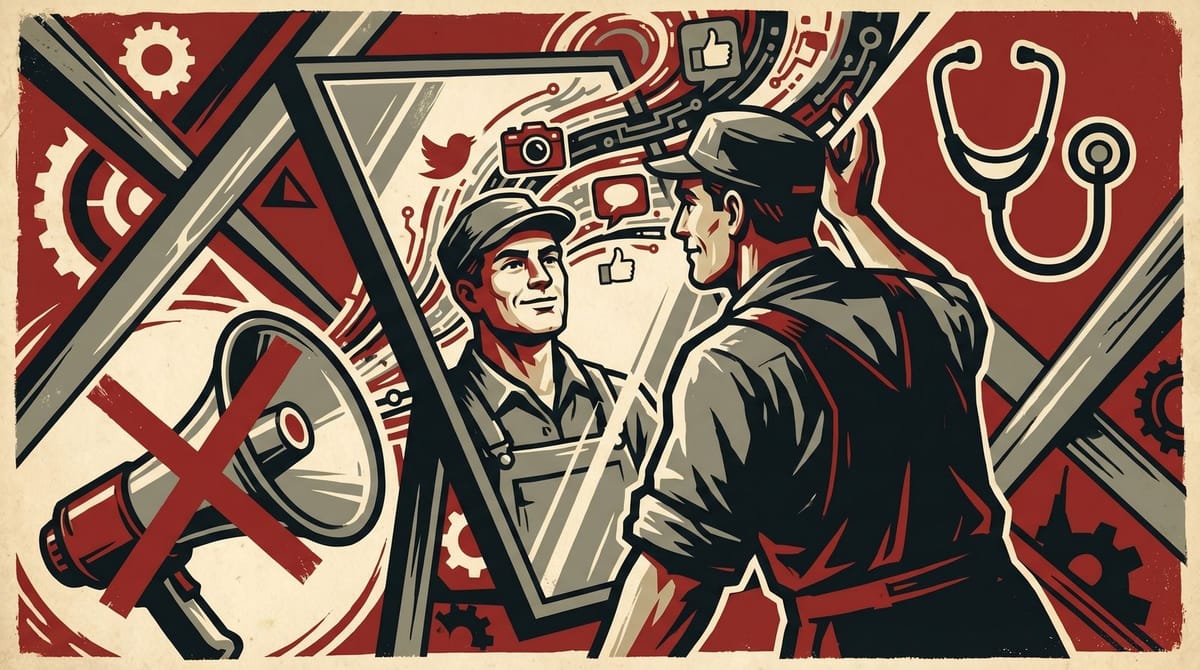
Most brands deploying AI in their marketing stack are using it to produce things. More ad variants, more copy, more landing pages, more of everything, faster. Manscaped went a different direction entirely. They used AI to figure out what to say before anyone on the team started making anything.
It's the difference between shouting louder and listening better. Most marketing AI is built for shouting.
Clamor, the tool Manscaped has been testing since last summer, doesn't write social posts or generate creative. It's a cultural intelligence engine that monitors social chatter across platforms and tries to interpret why people are saying what they're saying. Not just keyword volume or mention counts.
According to Jori Evans, Manscaped's social media director, what made Clamor useful was its ability to parse sarcasm and intent. When someone says a brand is "bad," the tool can distinguish between the literal meaning and the compliment. That sounds minor. But anyone who's tried to pull actionable insight from social listening data knows that sentiment accuracy is where most tools collapse. You end up with a dashboard that tells you volume went up but can't explain whether the spike is a crisis or a compliment.
Consiglieri, the consultancy behind Clamor, positions it as a "cultural intelligence" platform rather than a social listening tool. The distinction, from what I can tell, is that it surfaces signals about cultural shifts and sentiment trajectories, then recommends content approaches per channel. That's where it apparently connected to Manscaped's creative process, informing what campaigns to build rather than building them.
I'm somewhat skeptical of any tool that claims to reliably "understand" sarcasm at scale. Natural language processing has been promising that for years. But the campaign results that came out of this are genuinely hard to dismiss.
The Campaign That Quietly Outperformed a Super Bowl Ad
The surprising part of this story isn't the AI tool. It's what happened after Manscaped actually used the intelligence.
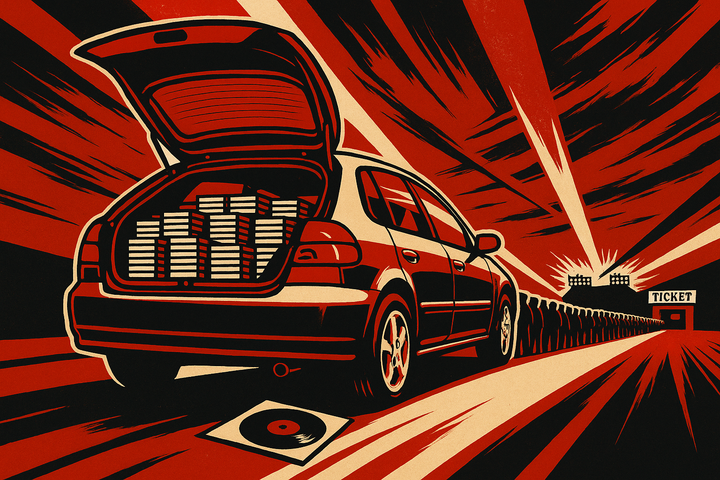
Manscaped ran two major brand campaigns in the past year: the "Send Face Pics Instead" campaign in fall 2025 and their first-ever Super Bowl ad ("Hair Ballad") in February 2026. According to Evans, the social-first campaign outperformed the Super Bowl spot.
The "Send Face Pics" campaign was directly shaped by Clamor's cultural intelligence data. The AI surfaced sentiment shifts around how men engage with grooming and self-image that pointed the team toward face care as the next product category to emphasize publicly. Not because face shavers were new to the lineup, but because the cultural conversation had moved there and the brand hadn't followed publicly yet.
The campaign's creative hook leaned on a study conducted with Kwantlen Polytechnic University, which found men are nine times more likely to get a positive response when they send a face pic rather than photos of other body parts. Manscaped ran with that data to launch OOH installations across Austin, Brooklyn, Chicago, and San Francisco, plus dating app takeovers.
The performance results, per AdExchanger: 9x higher engagement and 95% positive sentiment versus their typical benchmarks. Chief Marketer reported the campaign's marquee video hit roughly 60 million organic views in weeks, before paid media kicked in. Evans called it "one of the most viral videos in our history."
For comparison, the Super Bowl ad was a $7 million+ media buy at the 2026 rate for a 30-second spot. The social campaign that outperformed it was practically free to distribute. The creative cost real money to produce, sure. But the distribution was entirely earned.
This gets at something I think a lot of brand marketers feel right now but haven't quite been able to articulate. The big media buys still generate raw awareness, but the cultural wins keep happening where a brand reads the room correctly and shows up with the right message at the right moment. AI might actually be more useful for finding those windows than for generating the content that fills them.
I'd expect by early 2027 that at least 40% of DTC brands spending over $1M annually on media will be running some version of AI-powered cultural intelligence. The rest will keep producing content nobody asked for, just faster.
The 70/30 Budget Inversion
Manscaped CMO Marcelo Kertesz told Marketing Dive the brand has essentially inverted its media mix. They went from spending roughly 70% on lower-funnel performance marketing to allocating nearly 70% toward upper-funnel brand campaigns.
For a DTC-first company, that's a significant bet. Manscaped built its business on performance media, direct response, and Meta conversion campaigns. The founders probably have ROAS thresholds tattooed somewhere. Flipping to brand spend means accepting that you can't directly measure the return on most of your budget, at least not in the same quarter.
But the logic tracks once you look at where Manscaped is now. They're on shelves at Walmart, Target, CVS, and Best Buy. When you're in retail, brand awareness does something performance ads simply can't: it makes someone grab your product instead of the one next to it. Lower-funnel ads work great when you're the only result on someone's screen. In a physical store, you're competing with eye-level placement and ten years of muscle memory.
We covered how Nike optimized Converse into a 15-year revenue low by over-indexing on DTC and performance metrics while letting the cultural brand erode. Manscaped seems to be reading from the opposite playbook, reinvesting in culture before the retail expansion demands it.
Kertesz also reportedly gives every marketer on the team a portion of their budget earmarked for experiments that aren't measured alongside the rest of their spend. From what I've seen at other companies, that kind of policy almost always produces a team's best creative. Nobody optimizes for a dashboard when the dashboard doesn't apply.
Proving the Ad Was Human Might Have Been the Smartest Move
Maybe the most interesting thing Manscaped did recently had nothing to do with AI tools at all.
When the "Hair Ballad" Super Bowl ad aired, featuring animated singing clumps of body hair, some viewers assumed it was AI-generated. Evans responded by proactively sending behind-the-scenes production footage to meme pages. According to Adweek, the move "changed sentiment almost instantaneously."
That instinct, to immediately prove your creative was made by real people, is a brand reflex that's going to matter increasingly in the next few years. We've reported that AI labels are already cutting ad clicks by 31% on some platforms. The perception of AI-generated content is becoming a liability even when the content itself is perfectly fine.
And the irony is worth sitting with for a second. Manscaped uses AI extensively behind the scenes for strategic decisions. But the moment anyone thought their actual creative output was machine-made, they rushed to correct the record. That's probably the most honest articulation of where AI fits in marketing right now: genuinely useful for thinking, actively harmful when it touches the final product's perception.
Three Things Worth Borrowing From Manscaped's Playbook
If your brand is outgrowing its original positioning (and honestly, most DTC brands that survive past year five hit this wall), here's what transfers:
First, social listening tools that measure volume without understanding intent are handing you noise. If your current tool can't parse whether "Manscaped is insane" is a compliment or a complaint, the data you're making decisions on is wrong. Audit your sentiment accuracy before your next campaign brief.
Second, test whether your organic creative outperforms your biggest paid placement. If it does, your budget allocation is probably backwards. Manscaped found this out with a $0-distribution campaign that beat a $7M Super Bowl spot. The test takes one quarter and one controlled comparison.
Third, if you're expanding into retail, the brand-to-performance budget ratio needs to flip. The math that worked in DTC doesn't survive a shelf where you're one of twelve options and nobody's ever heard of you.
You don't need Clamor specifically. But you probably need something that tells you what people actually mean, not just how many times they said it.