Melted Solids Shot Mamdani to 236M Views. The Brand Version Won't Ship.
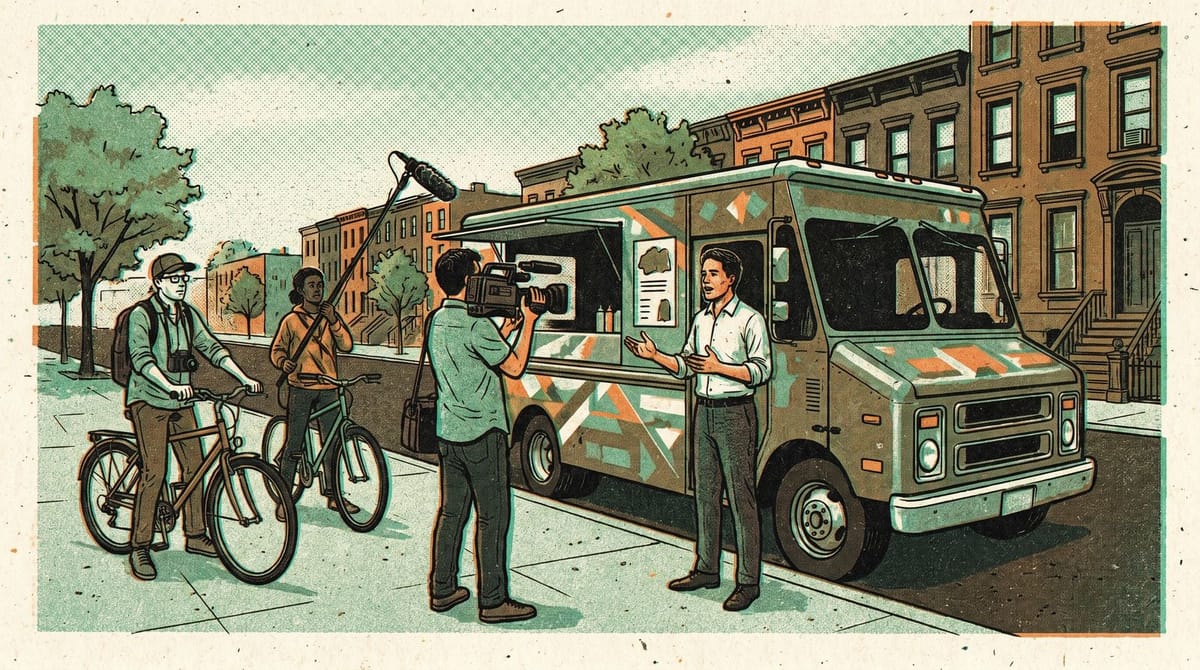
Melted Solids, the two-person Brooklyn agency behind Zohran Mamdani's mayoral primary campaign, drove more than 236 million Instagram views in the final month of the primary alone, with individual pieces like the halal inflation video pulling close to 20 million views on Twitter before crossover. The production ran on a single aging Panasonic GH-5, two full-time staff, and a contract that started at two videos per month. Almost every piece of that workflow violates how brand marketing currently approves, produces, and measures social video.
What two full-time staff and a used mirrorless produced
Melted Solids is not a traditional agency. Debbie Saslaw and Anthony DiMieri founded it in 2019 after leaving Showtime, HBO, JWT, and Digitas, disillusioned by what they described as the industry's waste and hierarchy. Brooklyn-based, two full-time staff, and an early contract with the Mamdani campaign for two videos a month.
The equipment story keeps getting glossed over. According to a detailed Defector profile, DiMieri shot the early campaign on an aging Panasonic GH-5 digital SLR, bicycling between locations. That is the entire capex line. A mirrorless camera that launched in 2017, and a bicycle. By the final month of the primary the team stopped counting and ran flat out, clearing 236 million Instagram views across that stretch.
The point is not that anyone should run a national brand campaign on a GH-5. It is that the output cost, measured in equipment and staff, was a fraction of what a mid-market Reels package usually runs. If anything slowed Melted Solids' output during the campaign, it was not money.
The three things brand legal will never approve
Flip Melted Solids' process into a brand workflow and it breaks in specific places.
First, the deliverables are not locked before the shoot. DiMieri told Adweek, "Don't go in stuck on the deliverables you thought you were going to do. Maybe something appears during the day that is its own video." That sentence alone would kill the project at most brands. Legal wants the concept approved, the talent briefed, and the script red-lined before the camera rolls. A shoot where the final video emerges from whatever actually happened on location is, in procurement language, unscoped.
Second, the interviews are street-level and unscripted. The team pulled policy reactions from real constituents in real neighborhoods, shaped videos around those responses, and ran them without softening. Brand approval processes are built to remove that kind of exposure. Any unexpected response becomes a potential risk flag, not a creative gift.
Third, the format rejects the current orthodoxy. Mamdani's Reels were shot horizontally, not vertically, which most social teams have been trained to treat as a production error. Donald Borenstein, director of video for the campaign, said the horizontal framing was deliberate. It establishes a sense of place, centers the candidate's face for eye contact, and feels like a piece of media, not a platform asset. If a junior creative pitched horizontal Reels at most brand shops tomorrow, the deck would get rewritten before it reached the client.
Why the "manufactured authenticity" version keeps failing
The lesson almost every brand and political campaign is pulling from this is the wrong one.
"The message the Democrats are taking from Mamdani's win is the same one they took after Harris' loss, which is that we need a left Joe Rogan," Brendan Gahan of Creator Authority told The Hollywood Reporter. "They're trying to manufacture and curate everything instead of investing in a grassroots approach."
That diagnosis translates directly to brand marketing. The instinct after a viral campaign is to hire one charismatic spokesperson, lock them into a six-month content contract, and drop a "raw and real" mood board into the brief. The result is almost always the same.
Polished amateurism. Recognizable from the first frame as a brand doing authenticity, not a person being seen.
Cassie Willson, a content creator quoted in the same piece, said Mamdani's online presence was "just the vehicle, not the gas." The policies drove it. Translate that to product marketing and the implication is a little uncomfortable. If your product does not back the narrative the content is selling, virality just accelerates the drop-off curve. People notice faster, and they move on faster. A good analogy: if Melted Solids is a garage band playing its own songs in a small room, most brand social is a wedding cover band performing that garage band's setlist at volume, wondering why nobody is dancing.
What actually transfers (and what does not)
I think most teams will overcomplicate this, so here is the short version.
The portable parts are about cadence, location, and approval. Melted Solids ran a continuous posting cadence across TikTok and Instagram, well past the point most political campaigns declare the content calendar finished. That is not a virality strategy. That is presence. The same logic showed up in Dr Pepper's decade-long fan account bet, where the payoff was a 10-year head start, not a stunt. Consistency compounds. Campaign-length sprints do not.
Real-location shooting is portable too, though it is less cheap than it looks. It requires site permits, insurance riders, and a brand comfortable with not controlling the frame, which is a cost. It is a cost most brands quietly decide against, and then wonder why studio-lit creative keeps underperforming on platforms built for ambient texture.
The part that does not transfer is easy grassroots energy. The Mamdani campaign also leaned on an organic coalition of more than 70 creators with a combined reach above 77 million followers, and that coalition did not form around a product launch. It formed around policy people cared about. Brand equivalents exist, but they look like Dove, Netflix, and Nike treating Reddit as a place to listen rather than broadcast, not like a six-figure creator payout program.
The uncomfortable fix: shorter approval paths, longer contracts
From what I have seen, the brands that get anywhere near this output do not replicate Melted Solids' camerawork or their edit style. They replicate the approval process. Fewer stakeholders per shoot, looser deliverables per day, and a longer contract that lets the team miss with one or two pieces without anyone panicking. The viral moments come out of that gap, not out of a bigger production budget.
One honest aside. Saslaw and DiMieri specifically came from the industry and left. Their bias against polished, briefed-to-death work is not a style choice. It is a career decision. Hiring people who have actively rejected the workflow you are trying to escape is probably the closest thing to a shortcut here, and it is still not a shortcut. It is a hiring move, with all the friction that implies.
If you run brand social and you want to test one thing this week, try this: commit to producing four pieces in a single location over one shoot day, with only a one-line brief per video, and tell your stakeholders you will only share the final cuts on Friday. Budget one day of pain for that. My rough guess, based on how brand approval flows actually work, is that fewer than 1 in 5 of those internal pitches survive intact the first time. The ones that do survive tend to come back with more output per dollar than the previous quarter.
Melted Solids is now pitching brands more directly, according to Adweek. How many of those pitches clear legal is, to me, the question that decides whether this style ever crosses from politics into consumer brand work at scale. Probably not as many as the industry hopes. Which also means the brands that do say yes early are going to look strangely lucky for a while.
Notice Me Senpai Editorial