Nectar's 'Asian Glow Up' Just Branded the Stigma 36% of East Asians Hide
Nectar, the Asian American hard seltzer Jeremy Kim launched in December 2020 with $20,000, ran an AAPI Heritage Month campaign called "Asian Glow Up" that reframes alcohol flush, a physiological reaction in roughly 36% of East Asians, as a brand identity. The category lesson: brands whose product creates a known but unnamed customer side effect can either ignore it or own it. Nectar owned it.
The math behind a campaign nobody else in the category was going to run
If you sell alcohol to AAPI consumers, around 36% of your demographic carries the ALDH2*2 mutation that causes alcohol flush reaction. The number climbs to 30 to 50% in Chinese, Japanese, and Korean populations. In raw count, that is roughly 560 million people globally walking around with a less functional version of the enzyme that breaks down acetaldehyde.
The reaction itself is not subtle. Facial flushing, nausea, headaches, fast heart rate. There is also the part nobody markets toward: per the same Wikipedia summary of published research, ALDH2-deficient drinkers face roughly four to eight times the risk of esophageal cancer of non-deficient drinkers.
For a hard seltzer brand whose product directly targets AAPI buyers with Asian-inspired flavors like yuzu and lychee, this is the elephant in the variety pack.
More than a third of your target audience has a physically visible response to drinking your product. From what I have seen in beverage marketing, the standard play is to pretend that side effect simply does not exist.
What "Asian Glow Up" actually is
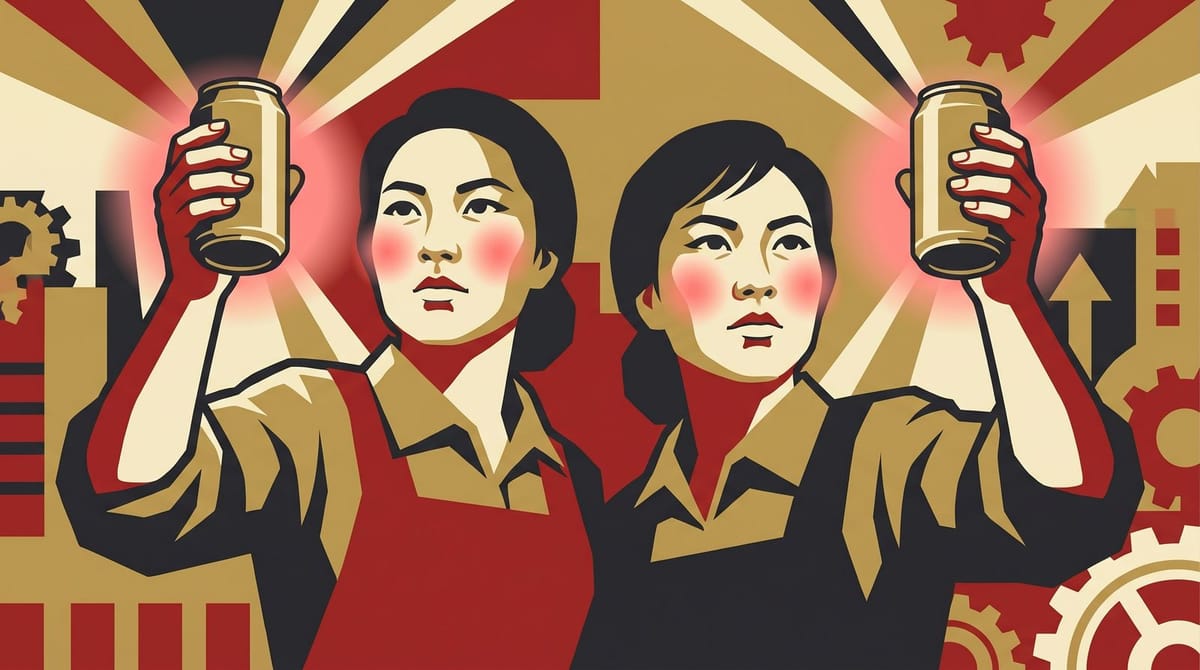
Per Ad Age, the campaign reframes alcohol flush as a positive aesthetic, with creative built in collaboration with creators and makeup artists. The hero imagery features two women holding Nectar cans. It launched in time for AAPI Heritage Month in May, and the name itself does the load-bearing work. "Asian Glow" is the slang most AAPI drinkers grew up self-deprecating about. "Glow Up" is the TikTok-native term for visible self-improvement. Mashing them together turns the side effect into the point.
This is consistent with how Nectar has always run. The brand was built off a viral 2020 TikTok where Kim posted Nectar's origin story along with a number to text for sales info, after roughly 200 LA stores rejected him. Their playbook since has leaned on edgy organic social content rather than traditional media buys.
Why most categories will not run a campaign like this
The default move when your product creates a known friction is to look the other way. White Claw does not run campaigns about post-drinking bloating. Beer brands do not put hangovers in the brief. Energy drinks rarely market the crash. The category convention is to sell the upside and let the downside be the customer's problem.
Nectar's bet is that the cultural ownership of naming Asian flush is worth more than the awkwardness of reminding drinkers their bodies do not process the product perfectly. From what I have seen in cause-adjacent CPG marketing, this calculation only pays out when three conditions are present at the same time:
- The friction is widely known by the audience already (Asian flush is).
- It is rarely named in advertising (it is not).
- The brand has cultural standing to name it without it reading as exploitation. Nectar does, because Kim is the founder and the marketing has played against Asian stereotypes since day one.
Pull any of those three out and the campaign reads as a brand piggybacking on a community pain point. With them in place, it becomes the kind of campaign people share, which is also the lever Nectar's whole growth has run on from the start.
The transferable playbook for non-AAPI brands
Forget "be edgy" or "use heritage months." Try a different question. What does your product do to your most loyal customers that your category refuses to name? A few candidates that come to mind:
- Energy drinks: the 3pm crash. The whole category sells the spike and pretends the trough does not exist.
- Pre-workout supplements: the skin tingle. Half of customers love it, half hate it. Nobody markets to either group.
- DTC mattresses: the off-gassing smell after unboxing. Casper, Purple, none of them put it in copy.
- SaaS onboarding tools: the day-3 dropoff cliff. Most onboarding dashboards still treat day-1 activation as the headline metric.
The exercise is uncomfortable on purpose. If a long-time customer would describe a friction in three sentences and your category never mentions it, you have a candidate. If you can name it and reframe it without lying about the underlying experience, you might have a campaign. We have covered other brands building creative AI cannot fake, and the through-line is the same. Honesty about a real customer experience is the part the model cannot generate for you.
The benchmark to aim for: Nectar grew from $20,000 in starting capital to roughly $2.45 million in annual revenue and 1.6 million social followers without a traditional media budget. That is not from any single campaign. It is from a brand willing to name what most of its competitors will not.
One caveat that matters more than the playbook
The campaign works because Kim is the audience. The marketing strategy, in his own words, was designed to play against Asian stereotypes from the beginning. If a non-AAPI-founded brand had run "Asian Glow Up," it would read very differently, no matter how respectful the execution.
The same logic applies if you try to translate the playbook to your own category. The friction you name has to be one your team has actually lived, not one you discovered in a discovery call. A pre-workout brand can talk about tingle if the founder grew up with it. An energy drink brand can name the crash if the team feels it on Friday afternoons. The closer the campaign sits to lived experience, the less it reads as exploitation. The further it drifts, the more it reads like a marketing meeting that ended badly.
What I would actually take away from this for next quarter
If I were running brand at a CPG company with a niche audience right now, I would write down one sentence: "the side effect of our product that we have never put in copy." Then I would take that sentence to a founder or a long-tenured employee from that audience and ask if it is worth owning. Most of the time, the honest answer is going to be no, because the friction is either not strong enough or the brand does not have standing to name it.
But the times the answer is yes, the campaign tends to write itself. Nectar did not need a holding company brief to land on "Asian Glow Up." It needed a founder willing to name something his target audience already felt and a creative team comfortable working with creators and makeup artists instead of a Super Bowl spot. That is a lower budget than most brands assume.
I would bet at least one mainstream CPG brand runs a "name the friction" campaign in the next twelve months. The downside is small. The upside is owning a category conversation nobody else has been willing to start.
Worth borrowing the framing, even if "Asian Glow Up" itself is not yours to use.
Notice Me Senpai Editorial