OpenAI Is Building ChatGPT Conversion Tracking That Only OpenAI Can Read

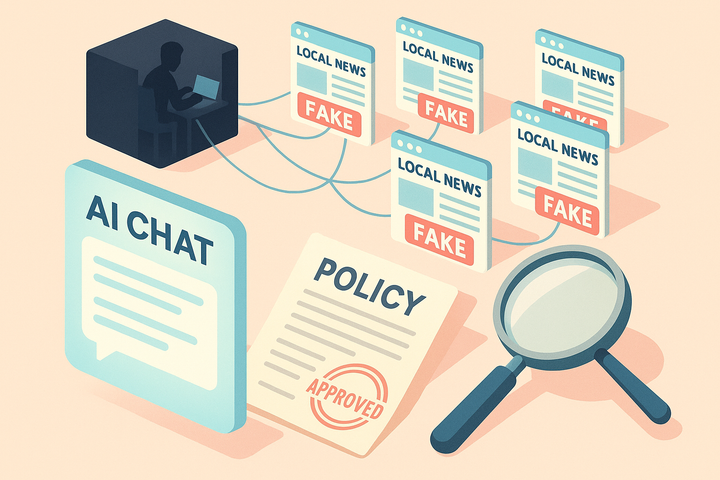
OpenAI has begun wiring conversion tracking directly into its ChatGPT ads manager, according to code discovered by Adweek and follow-up reporting from Digiday on April 16, 2026. Every conversion a ChatGPT ad drives will be measured inside OpenAI's own infrastructure, not piped into an advertiser's MMM or MTA stack. That gives one company full visibility into attribution while the rest of the measurement stack sees aggregates at best.
The code found, and what it implies
Adweek reviewed OpenAI's self-serve ads manager in detail and found infrastructure for conversion-based campaigns, lift study reporting, and multi-touch attribution that does not exist in the live product yet. Digiday's follow-up confirms OpenAI is specifically building the ability to measure whether a ChatGPT interaction led to a purchase, a signup, or another downstream event advertisers actually care about. Today, advertisers only get impressions and clicks. Per the reporting, they will get full conversion visibility within months.
The rest of the live product is still rough. Digiday's earlier walkthrough called the ads manager live but threadbare. No demographic reporting, no dayparting, no reach and frequency caps, no frequency suppression. The piece OpenAI is prioritizing to ship first is not any of the missing table stakes. It is conversion tracking. That order of operations tells you what the team cares about most.
OpenAI wants the ledger closed before budgets force it open
Google Ads integrates with GA4, Ads Data Hub, and every major MMM vendor. Meta integrates with CAPI and most of the Conversions API ecosystem. Those integrations exist because scale advertisers refused to spend on a channel they could not independently measure. The pressure came from CMOs, CFOs, and the MMM layer underneath all of them.
OpenAI has no such pressure yet, because no advertiser has anything close to a meaningful ChatGPT ads budget relative to total spend. Criteo's February 2026 sample of 500 US retailers claims LLM-referred users convert at roughly 1.5x other channels, which is early but encouraging. I would be cautious reading too much into a single internal sample, and it is worth noting Criteo has its own reasons to make that number look good. The point stands either way. OpenAI is shipping its measurement layer before external pressure forces it to be open, which means it will be as closed as they want it to be.
The result will probably look less like Meta's pixel and more like Apple's SKAdNetwork. Aggregated. Privacy-preserving. Probabilistic. Which was fine for iOS, where Apple controlled the hardware. It is a lot less fine for a $60 CPM channel that performance marketers are expected to justify to finance next quarter.
Consider who actually benefits from a closed loop. If OpenAI controls the attribution window, it decides what counts as a conversion, how conversions are deduplicated across sessions, and how view-through is weighted. Those are not neutral decisions. They are the decisions that made Facebook's self-reported ROAS numbers famously optimistic for most of the last decade.
If you let the seller grade their own homework, the grades are always good.
What your measurement stack quietly loses
Three things get weaker the moment ChatGPT attribution lives inside OpenAI.
First, your MMM loses a channel. Marketing mix models need clean spend and outcome data per channel. If OpenAI reports lift from its own lift studies, your MMM vendor is getting marked homework. Analytic Partners and Nielsen cannot audit that. You are trusting the seller's numbers on a channel they are selling.
Second, your MTA model absorbs a black box. Last-click attribution was already generous to Google and Meta. Now there is a new touchpoint that your MTA tool cannot fully see, because OpenAI almost certainly will not pass user-level signals back out. The best you get is a referrer string and maybe a UTM. Which means ChatGPT becomes the new "direct / none" problem. Anyone who has spent a quarter trying to apportion credit to direct traffic knows how that conversation ends.
Third, your incrementality testing breaks down. Geo holdouts, time-based tests, matched market tests all depend on clean exposure signals. If you cannot tell who saw a ChatGPT ad and who did not, you are running an incrementality test on a variable you cannot control. Some MMM vendors will adapt. Most, from what I have seen, will not, at least not for another 12 to 18 months.
The honest read: if OpenAI ships this the way the Adweek code suggests, most advertisers will accept the self-reported numbers. The channel is still small enough that the measurement fight is not worth having. Until it is.
The questions to push OpenAI on before testing
If a rep is pitching you the pilot, do not leave the call without answers to these. Write them down:
- What is the conversion window and can I configure it? A 30-day view-through window will make ChatGPT look like the best channel you have. A 1-day click window will make it look like nothing. Ask what the default is, and whether custom windows are on the roadmap.
- Is there log-level or conversion-level data export? Aggregated reporting is useless for reconciliation against your warehouse. "No" is a real answer here, and it tells you exactly how much you can trust the reporting you do get.
- Will the same conversion show up in my GA4 and in OpenAI's report, and who is right if they disagree? Deduplication rules matter more than attribution models in a closed loop. If OpenAI claims a conversion your Meta retargeting also claimed, which one gets to call it?
- What third-party MMM or measurement partners will you integrate with, and on what timeline? If the answer is "we are exploring" or "not prioritized," you know the plan is closed loop for the foreseeable future.
- What lift methodology are you using, and can an external partner validate it? Self-reported lift studies are the softest form of performance claim. Ask for the methodology document. If there is not one, that is the answer.
If you do not get straight answers on at least three of those, treat the pilot as brand test money, not performance budget. Allocate accordingly. Search Engine Land's reporting from earlier in the pilot already flagged that the first wave of advertisers could not prove ROI on the current measurement surface. The new tools will change the numbers advertisers see. They will not necessarily change what those numbers are actually worth.
Where this fits with the rest of OpenAI's ad build
OpenAI reshuffled its entire ad leadership earlier this month. The ad market itself split three ways with nobody agreeing on what a conversion should even look like across chatbots. Now conversion tracking is coming from OpenAI specifically, on OpenAI's terms. Stack those moves up and the order reads leadership, platform, measurement. It is the standard build order for a new ad network, except compressed into roughly a quarter.
What is missing is the part where advertisers push back. OpenAI is building an ad network on a timeline where the major agency holding companies have not yet developed institutional pressure to demand open measurement. From what I have seen in past channels, that window closes quickly once real budget flows. Right now the budget is not there, the pressure is not there, and the loop is being drawn tight while nobody is fighting it.
The thing worth remembering is that the measurement layer is usually the last part of an ad network to be built, because it is the hardest. OpenAI is trying to get it in early. That is either a signal they are taking performance marketers seriously, or a signal they want to own the ledger before anyone can audit it. Probably some of both. My guess, based on the order they chose to ship things in, is that the second reading is the one that will age better.
Notice Me Senpai Editorial