Salesforce Rebuilt Marketing Cloud for Machines, Not Marketers
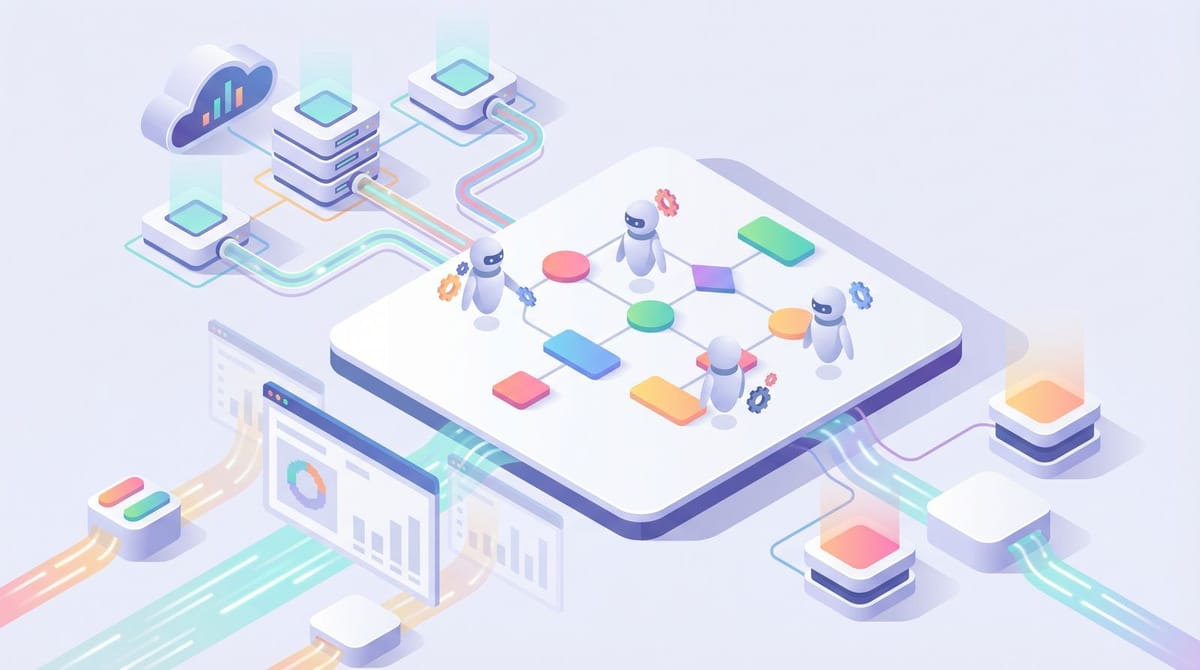
Salesforce launched Headless 360 on April 15, 2026, an API-first architecture layer that lets AI agents execute marketing workflows without a user interface. The announcement completes a strategic pivot from Marketing Cloud to Agentforce Marketing that began at Dreamforce 2025. Only 12% of Salesforce's 150,000+ customer base has adopted Agentforce so far, which means most marketing teams are now running legacy architecture on a platform that's stopped building for them.
The Screen Is No Longer the Product
What Salesforce actually built with Headless 360 is pretty straightforward once you strip away the press release language. It's an API layer on top of Customer 360, Data 360, and the existing Agentforce tooling that lets agents call APIs, trigger workflows, and move data across systems without anyone clicking through a dashboard.
That sounds incremental. It is not.
The shift here is architectural. Instead of designing processes around what a person sees on screen, Salesforce is now designing them around what an agent can access programmatically. Constantine von Hoffman at MarTech described it as platforms that operate as infrastructure rather than interfaces. In practice, that means your Journey Builder flow doesn't need a human to initiate it, monitor it, or adjust it mid-run. An agent can do all three.
If you're running SFMC today, your workflows are built around screen-based interactions. You log in, you navigate, you click. Headless 360 says: stop building like that. Build composable systems that machines can read and execute.
$540 Million in Revenue, 88% of Customers Still on the Sideline
The numbers around Agentforce tell two very different stories depending on which ones you pick.
The bullish version: Agentforce ARR hit $540 million, up 330% year-over-year. Salesforce closed 18,500 deals, with paid customers growing nearly 50% quarter-over-quarter. Production deployments jumped 70% in Q3. The platform has processed over 11 trillion tokens. Salesforce's own internal deployment handled 380,000 support interactions and resolved 84% without a human.
The less flattering version: 18,500 deals across a base of 150,000+ customers means roughly 12% adoption. Salesforce Ben's community surveys show only 30 to 34% adoption among developers, admins, and architects, the people you'd expect to try this first. And of the 18,500 total deals, only 9,500 are actually paid.
I think the second set of numbers is more useful for planning purposes. They tell you that most Salesforce customers haven't started, which means most of your competitors haven't started either. That's a window, not a crisis. But it's a window with a shelf life.
What Actually Changed Inside the Marketing Stack
The Spring 2026 release introduced Conversational Email, which is probably the feature that matters most to working marketers. Instead of do-not-reply broadcasts, Agentforce agents can now read and respond to email replies. When a prospect replies to a marketing email, the agent recognizes intent, answers questions, qualifies interest, or routes to sales.
That capability alone changes how you think about email CTR. The industry baseline sits around 1.4% on broadcast sends. If replies become part of the funnel instead of landing in a void, you're measuring a different thing entirely.
Beyond email, the architecture now supports federated data grounding. In plain English: agents can query your ERP, your SAP instance, your accounting system in real time without replicating that data into Salesforce first. No ETL, no duplication, no stale snapshots. The agent asks the source system directly. The catch (and this one matters) is latency. Querying external legacy systems can introduce enough delay to break the user experience, which is why Salesforce built a Testing Center specifically for validating agent response times.
And then there's the campaign creation piece. Salesforce claims teams can compress campaign builds from 7 to 8 weeks down to significantly shorter timeframes using Campaign Creation, Orchestration, and Activation agents. I'd be cautious with that number. Compressed timelines in vendor demos rarely survive contact with actual brand approval workflows and legal review cycles. But even a 30% reduction would be meaningful for teams running quarterly planning.
The Implementation Gap Is the Real Story
Vernon Keenan, an analyst who tracks Salesforce closely, put it plainly: the implementation skills just haven't filtered down to the mid-tier and smaller organizations. Successful Agentforce deployments require what he called crack teams of experts spanning multiple cloud architectures.
This matches what I've seen in practitioner discussions online. The prerequisite list for Agentforce Marketing is not short. You need Marketing Cloud on the Next, Growth, or Advanced tier. You need Data 360 (which Salesforce describes as highly recommended but is practically required). You need Einstein capabilities enabled, proper roles configured, and clean data governance.
And clean data is doing a lot of heavy lifting in that sentence. If your customer data is fragmented across three systems with inconsistent formatting, an agent querying it in real time will confidently return garbage. We wrote about a similar dynamic with AI ad agents, where the fix turned out to be structured taxonomy rather than better prompts.
Timo Kovala, another voice in the Salesforce ecosystem, made a point that I think is underrated: the real value is in non-conversational, headless agents, not the chatbot demos. The agents running background processes, auditing data quality, flagging anomalies in campaign performance. Those are the ones that justify the architecture change. The chatbot is the sizzle reel. The headless agent doing overnight data reconciliation is the steak.
Everyone Else Is Making the Same Bet
Salesforce isn't making this move in isolation. Microsoft and Publicis announced their own agentic marketing initiative earlier this month. Braze and Iterable are both retooling their architectures to support agent-based orchestration. The consensus forming across the industry is that the next generation of marketing platforms will be agent-operated infrastructure, not marketer-operated dashboards.
At the current 70% quarterly growth rate in production deployments, Agentforce will probably cross 25% customer penetration by the end of 2026. That still leaves three-quarters of the base on the old architecture, which tells you this is a transition measured in years, not quarters.
If you're evaluating your martech stack this year, the question isn't whether your platform has AI features. Every platform has AI features. The question is whether your platform's architecture lets agents do real work, or just answer questions about the work a human already did. Those are two very different products.
The 30-Minute Inventory That Tells You Where Your Org Stands
If you're running SFMC, there's a quick inventory worth doing this week.
First: is Data 360 connected to your org? If not, most of the agent capabilities are effectively gated. Second: pull up your Journey Builder flows and count how many require a manual trigger versus firing on a data event. If more than half still need someone to press go, you're running a workflow pattern that Salesforce is actively moving away from.
Third (and this one is free): open the Agentforce Testing Center and run one non-critical flow through it. Not to deploy it. Just to see what the agent does with your data. The gap between what you expect and what actually happens will tell you more about your readiness than any vendor demo.
The teams I'd worry about aren't the ones who haven't adopted Agentforce yet. 88% of the customer base hasn't, and that's fine. The ones in an awkward spot are the teams building new SFMC workflows right now using the same screen-based patterns they used in 2023, on a platform that just publicly committed to a future where those patterns are legacy. You don't need to adopt Agentforce tomorrow. You probably do need to stop building things that assume a human is always going to be in the loop.