Subway Takes Hit 265 Million Views by Refusing to Optimize Anything
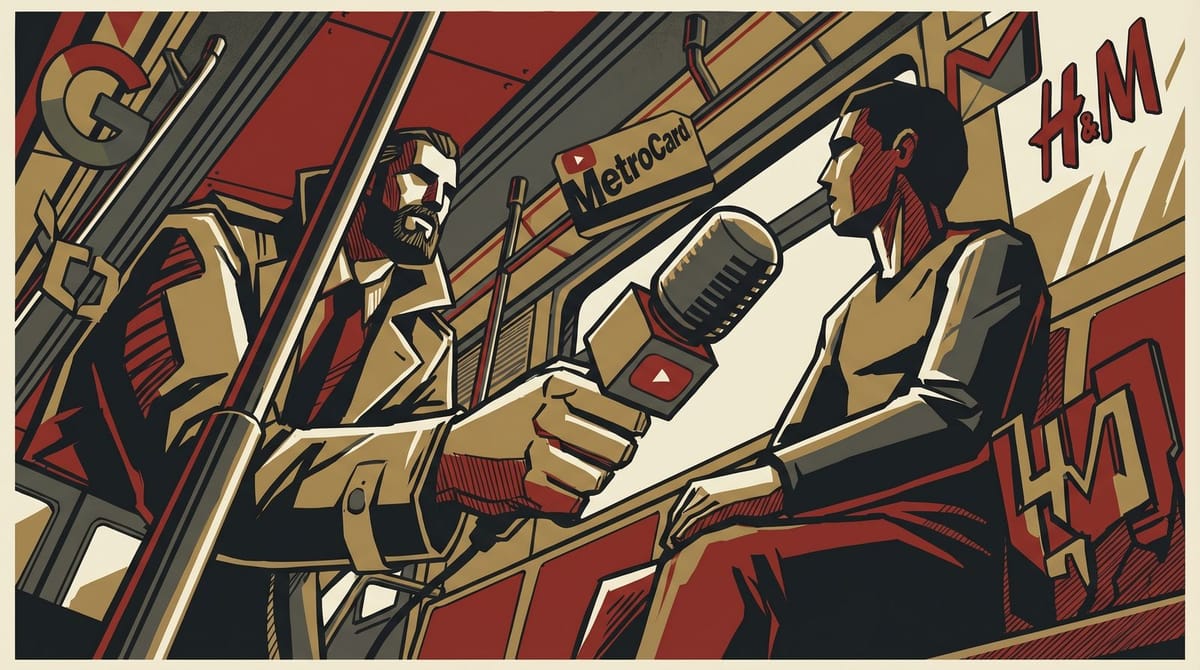
Subway Takes, the NYC subway interview series created by Kareem Rahma, has accumulated 265 million YouTube views and over 2 million Instagram followers since launching in July 2023. The show costs roughly $2,000 per episode to produce and has landed brand partnerships with Google, Microsoft, H&M, and Hulu. The growth strategy: refuse to change the format, regardless of what the algorithm suggests.
The premise is almost offensively simple. Rahma boards a New York City subway car with two cameramen and a microphone clipped to a MetroCard. He asks someone, “So, what’s your take?” They give their take. He responds “100 percent agree” or “100 percent disagree.” That’s the show.
There’s no guest booking team. No studio. No set. The production crew is two people plus Rahma. And this is the part that should probably bother anyone who’s ever pitched a content strategy to a CMO: the show has produced over 300 episodes in two years, scaled from two videos a week to four, expanded to Chicago as “L Takes,” and launched a podcast spinoff. All while keeping the format exactly the same.
A $2,000 Episode That Outperforms Studio Content
Rahma self-funded Subway Takes at $2,000 per episode when he started. For context, a polished brand video on YouTube typically runs $15,000 to $50,000 per minute of finished content once you factor in agency fees, production, and post. Subway Takes shoots four episodes a week for what some studios spend on lunch.
The production economics explain why the format survived long enough to compound. Most creator content strategies die in month three when the budget runs out or the novelty wears off. Rahma could afford to keep publishing because the cost of each episode was low enough that a bad week didn’t kill the project. Format consistency works a bit like a restaurant menu. Nobody walks into their favorite spot hoping it changed overnight. They come back because they know what they’re getting.
The numbers back this up beyond Subway Takes. Buffer’s 2026 analysis of 4.8 million social media accounts found that creators who posted in 20 or more weeks out of a 26-week window saw roughly 450% more engagement per post than creators who posted in four weeks or fewer. The gap wasn’t explained by content quality. It was explained by showing up.
Format as a Growth Moat
The conventional social media playbook says optimize constantly. Test thumbnails, A/B test hooks, chase trending audio, adjust to algorithm changes. Rahma did roughly none of that.
“I’ve been always pushing against changing the show,” Rahma told Adweek. He rejected a collaboration with DJ Tiësto because it didn’t fit the format. His filter for decisions isn’t engagement metrics. It’s simpler than that: “Am I having fun?”
That sounds naive if you’re used to looking at dashboards all day. But there’s a strategic logic buried in it. A rigid format creates a recognizable container. Viewers know exactly what they’re getting before they click. That predictability is, from what I can tell, what algorithms reward at scale, because watch time and completion rates trend upward when the audience already knows the structure.
It also creates an interesting selection effect with guests. Subway Takes receives all guest requests inbound, zero outreach. Cate Blanchett, Kamala Harris, Tim Walz, Jane Goodall, Lil Nas X. They all came to the format. The format didn’t bend to accommodate them.
Most media properties reshape themselves around their biggest guests. Rahma does the opposite: the format is the draw, the guest is a variable. From what I’ve seen with brand content, that inversion is where the moat actually lives. When the format is the star, you can’t be replicated by hiring the same talent.
Why Brands Pay for a Show That Won’t Change for Them
The brand partner list reads like a media buyer’s dream: Google, Microsoft, Hulu, StreetEasy, H&M, Urban Outfitters, J. Crew, and Totino’s Pizza Rolls. These aren’t small creator-fund payouts. These are integrations with some of the largest advertisers in the world.
The deal structure is worth paying attention to. Rahma described his approach to Adweek as “It’s either do it or don’t do it. Don’t do it halfway.” Brands can integrate with the “100% agree/disagree” format or co-develop a series (UPS funded a “Business Trips” spinoff). But they can’t rewrite the show.
That constraint actually makes sponsorships more valuable, not less. When a brand appears inside a format the audience already trusts, the audience extends that trust to the brand. Papa John’s sponsorship worked because it fit inside the hot take format naturally. Compare that to a typical influencer integration where the creator stops mid-video to read an ad script the audience skips. The format does the selling.
“Brands are the only people who have money,” Rahma said, and there’s a pragmatism in that quote worth sitting with. Creator sustainability depends on brand money. But the creators who maintain format control get better deals, because they’re selling access to a loyal format audience, not just renting their follower count. It’s a similar dynamic to what Vita Coco discovered when a single TikTok comment turned into 250 million impressions: the authentic format is what made the moment stick.
The Uncomfortable Math for Content Teams
Most brand content teams produce highly optimized, frequently changing content and get middling results. Subway Takes produces the same thing every time and has 48.8 million TikTok likes and a YouTube Brandcast 2026 appearance to show for it.
The guest composition is deliberate, too. Rahma caps celebrities at roughly 10% of appearances. The rest: 50% comedians, 30% indie entertainers, 10% regular people. That ratio keeps the show feeling accessible rather than aspirational, which is probably why the completion rates stay high. Audiences don’t tune in for celebrity access. They tune in for the format.
Buffer’s data supports a broader version of this. The top 10% of social media performers post more frequently and more consistently than median accounts across all platforms. The gap is widest on X and LinkedIn, but the principle applies everywhere. I’d estimate that 80% of brand content series that launch this year won’t survive past month three, mostly because they’ll keep reinventing themselves instead of repeating what works.
If I were building a brand content strategy from scratch, I’d probably spend less time optimizing individual posts and more time figuring out what the repeatable container is. What’s the thing you can produce cheaply, publish multiple times a week, and sustain for two years without burning out? That’s the question Subway Takes answered. Most content teams still haven’t asked it.
Rahma put it more directly in a Rolling Stone interview: “There’s never going to be a day when that show is like Fallon or something.” He’s not scaling into something bigger. He’s committed to making the same $2,000 show every week until it stops being fun. Ten brand sponsors deep and counting, it looks like that could take a while.