A TikToker Pulled $23M in Pledges to Buy Spirit Airlines in 48 Hours
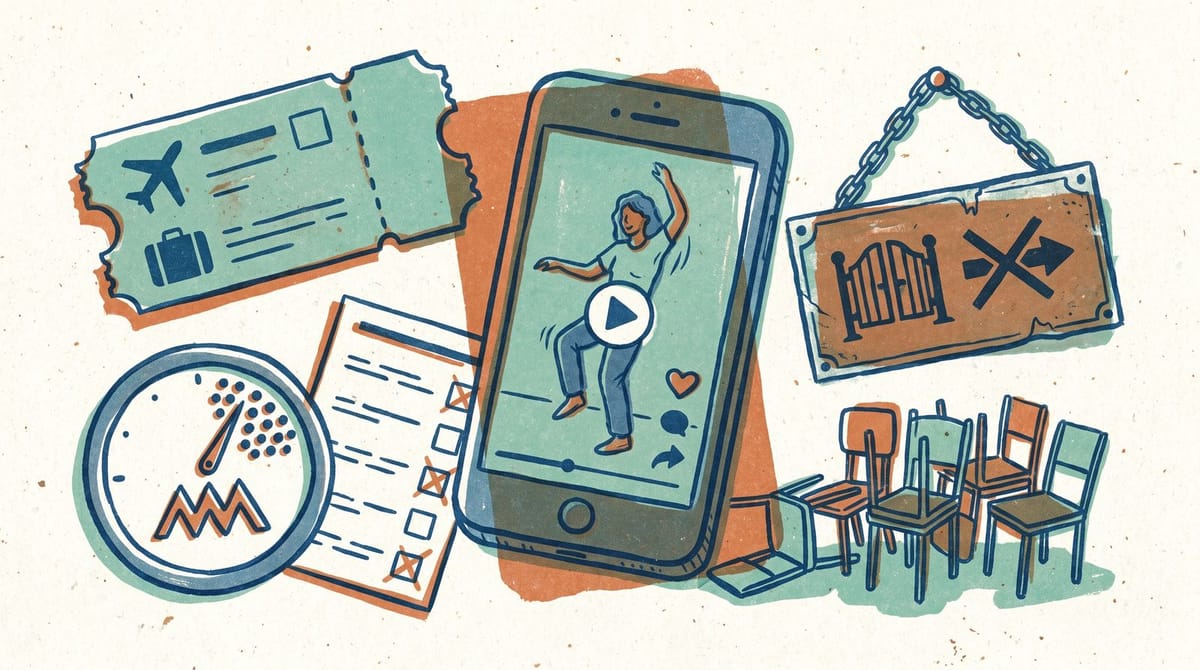
Hunter Peterson, a voice actor, posted a TikTok on May 3 asking 20% of US adults to chip in a Spirit fare and buy the airline. By Sunday, 36,000 people had pledged nearly $23 million, his site crashed, and a new Instagram account hit over 100,000 followers in 48 hours. The pledges aren't binding. The campaign is the most brand work Spirit has gotten in years.
Spirit had finished an orderly wind-down on May 2, putting 17,000 people out of work and leaving ticketholders stranded. NPR's reporting on the shutdown makes clear how fast it moved: workers got an hour's notice. Then the TechCrunch story on Peterson's "Spirit 2.0: Owned by the People" went up Sunday. By the time most marketing teams sat down at desks Monday, the campaign had already done the kind of numbers a paid media plan would have spent quarters chasing.
The numbers Spirit's own media buyers never produced
Peterson's original TikTok pulled around 2.8 million views by Sunday, per Moneywise's coverage. The dedicated Instagram account he stood up alongside the website crossed 100,000 followers in roughly two days. Not bot followers, real people opting in to a brand that does not exist. None of this required a media plan, an agency, or a brief.
For comparison, Spirit's own social channels accumulated their followings over more than a decade of paid promotion, fare announcements, and customer service. A voice actor with a half-coherent premise produced a meaningful slice of that audience in 48 hours, with a domain name and a phone camera.
The Hellmann's billboard story from earlier this week is a useful contrast. Hellmann's spent meaningful money to put ranch dressing on a billboard in the UK because British shoppers won't try it. That worked. It also took a brief, an agency, a media buy, and weeks of approvals. Peterson's campaign is the same shape of "give people a participation moment they want to repost" without any of the infrastructure. The infrastructure was the thing that made Hellmann's work feel earned. It is also what slowed it down enough to get out-paced by a TikTok.
The premise was the campaign
Most brand campaigns fail at the door because the premise is small. "Buy our thing." "Try our thing." "Notice our thing." Peterson's premise was big enough to swallow the whole story: own the airline that just stranded you. He even imported the Green Bay Packers ownership structure as the mental model, which gives the bit a shape people already understand. One vote per member, no big shareholders, all of America as a board.
That is not a real corporate structure. The Packers can do what they do because they were grandfathered in before the NFL banned community ownership. A new airline cannot copy it. From what I have seen, this part does not matter for the brand outcome. The premise is the work. The structure is a prop that lets the premise hang together long enough to get reposted.
The lesson here is one most B2C marketers know and ignore. A campaign that asks people to do something tiny and weird ("pledge $0, click this button, become a founding patron") will outperform a campaign that asks people to think positively about the brand. Pledges look like ownership without being ownership. A follower count looks like a movement without being one. Both are extremely cheap to give, which is exactly why they convert.
Where the bit runs out of runway
It is not a viable acquisition vehicle. The actual cost of buying and relaunching an airline runs into the billions, not millions. Peterson said as much himself. As CNBC's reporting on the failed Trump bailout makes clear, even a $500 million cash infusion was not enough to convince Spirit's creditors. Twenty-three million in non-binding TikTok pledges is not in the same conversation.
It is also not a repeatable template for most brands. The story works because Spirit just died, the death felt unfair to a lot of people, and Peterson is not the brand. A live brand running this exact playbook would feel desperate, which is why most agencies will pitch a watered-down version that misses what made the original work.
And it almost certainly is not the start of a real airline. The most realistic outcome is that the Spirit IP gets bought at auction by another carrier, the Spirit 2.0 movement becomes a footnote, and Peterson keeps a 200,000-follower Instagram account and a TV deal offer or two. That is still a much better outcome than most viral marketing produces.
The pattern actually worth stealing
Here is the part you can do something with this week. Audit your brand for a participation moment a stranger could turn into a campaign without asking your permission. Most brands have nothing. Spirit had "we're dead, here's an emotional vacuum." Most live brands have, at best, a referral program nobody finishes.
A few questions that surface this kind of moment:
- Is there a number, threshold, or membership tier customers can announce to other customers? "Founding patron" is one. "1 of 1,000" is another.
- Is there a piece of brand identity people would willingly tattoo, screenshot, or set as a profile photo? Most brands fail this test.
- Is there a story your customers can finish for you in their own words, without you handing them a script?
If the answer to all three is no, your brand is going to keep losing the upside surface area to whatever stranger decides to do it for you. Sometimes that is a TikToker like Peterson. Sometimes it is a competitor's customer. The Coors Light goal-call ambush from two weeks ago is the same pattern from a brand that paid for it. Either way, the budget that built the moment is not yours to control.
The win condition for the next quarter is small. Pick one customer-facing artifact (a product card, an email footer, a checkout confirmation, a packaging insert) and add a participation hook. A name they can claim, a number they can compare, a tier they can join. Test it for two weeks against the version without it. The lift from a working hook is almost always larger than the lift from another round of creative testing on paid social.
What Peterson is teaching us before he disappears
The Spirit 2.0 site will probably go offline. The pledges will stay non-binding. The Instagram followers will mostly forget what they followed. None of that changes the lesson, which is that a domain name and a single video out-performed a publicly traded carrier's entire marketing history in two days. The infrastructure required was a phone, a premise, and a willingness to ship something half-baked while everyone else was still in a planning meeting.
— Notice Me Senpai Editorial