Why a Creator's Copyright Filings Turned 12 Meta Ads Into a $600K Risk
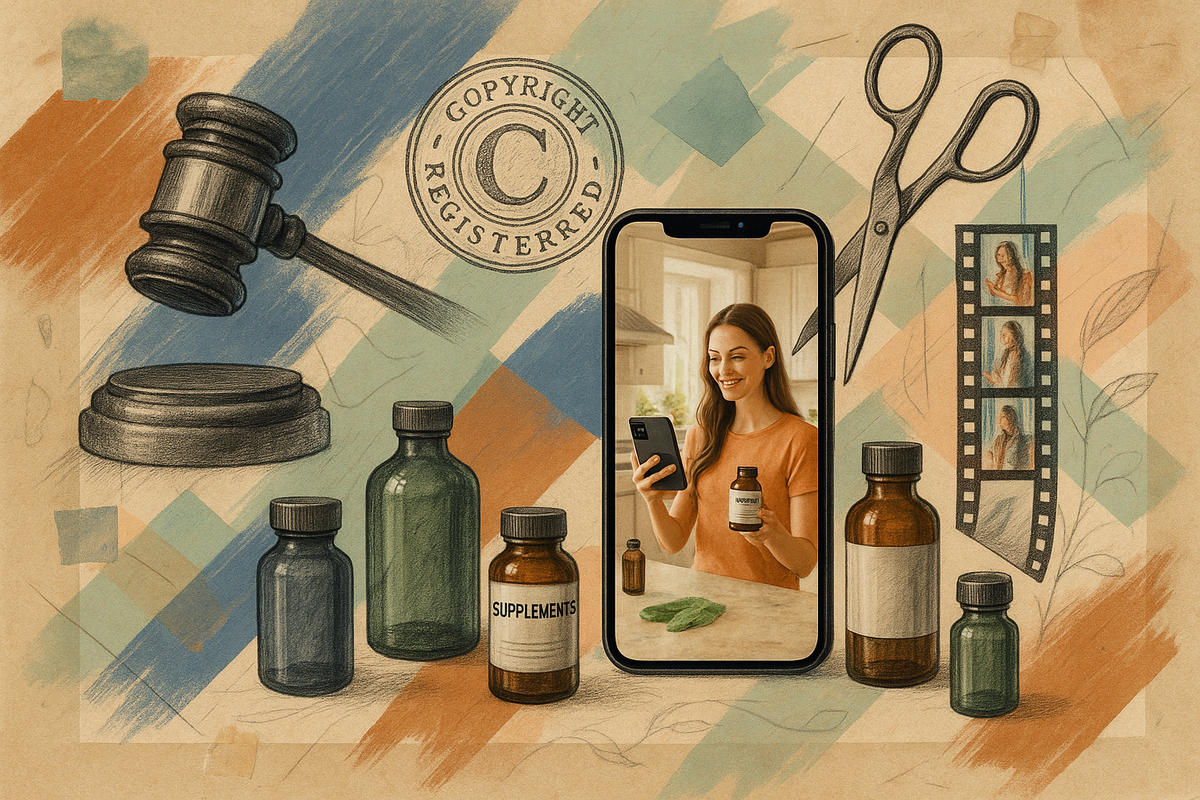
Content creator Amber Jordan Holston sued R5 Brands LLC, which sells supplements as True Nutra, on October 9, 2026, alleging the company ran at least 12 paid Meta ads built from four of her videos. She registered all four videos within three months of publishing them. That timing lets her seek statutory damages of up to $150,000 per video if a court finds the infringement willful.
On the surface this looks like a small case. One creator, one Wyoming supplement brand, a nine-page complaint with a typo in the ZIP code. But I think it's a pretty clean preview of where UGC-heavy ad accounts are about to get uncomfortable, especially anyone running supplement, beauty or home-goods creative at volume going into Q4.
What the complaint says (and what it conveniently doesn't)
The case is Holston v. R5 Brands LLC d/b/a True Nutra, filed in the Western District of North Carolina. According to PPC Land's breakdown of the filing, Holston runs bargain-hunting accounts (@amber.coupons, @ambergenxugc and @amberfindsdeals) and made the four videos "herself for a client" to promote a different company's supplement. She says she kept all copyright interests.
True Nutra was not that client. The complaint alleges the brand used the videos in at least 12 active Meta ads anyway, and that those ads create "the false impression that she endorses Defendant and its products." There are three counts: federal copyright infringement, misappropriation of name and likeness under North Carolina law, and unfair and deceptive trade practices, which carries treble damages in that state.
What's missing is almost as interesting. No ad IDs, no run dates, no spend figures. Only one ad screenshot appears in the complaint (a "True Nutra Health" sponsored post with a "Shop now" button). It doesn't explain how True Nutra got the footage, and Meta isn't a defendant. So I'd be careful about assuming this was some deliberate rip job. It could have been a freelance editor, an agency's "inspiration" folder, or a creative vendor who sold footage they didn't own. The complaint doesn't say, and honestly, from a legal standpoint, it may not matter much.
The registration dates are the part I'd underline
This is the detail most marketers will skim past. The videos were first published June 29 and 30, 2026. Holston registered one on August 25 and the other three on September 2.
Under 17 U.S.C. § 412, statutory damages and attorney's fees are generally off the table for infringement that started before registration, unless the work is registered within three months of first publication. She hit that window on all four. For a creator, that's the whole ballgame. Without registration, she'd be stuck proving actual damages, which for a few UGC clips might be a licensing fee in the low thousands. With it, PPC Land's math puts the range at $3,000 to $120,000 for four works, and up to $600,000 if willfulness is proven. (That's their calculation from the statute, not a number in the complaint.)
Plus attorney's fees. Which is the bit that changes who is willing to take these cases on.
Think of an unregistered UGC clip as a parking ticket and a registered one as a tow, an impound fee and a court date. Same car, same spot. The creator decides which version you get, and they decide it weeks before you ever see the footage.
I suspect a lot of working UGC creators don't know this yet. The ones who do, and who start registering their best-performing videos as a habit, will be the ones sending demand letters next year.
Swipe files, freelance editors and the provenance problem
Most performance teams keep some version of a swipe file. Competitor ads pulled from the Meta Ad Library, saved TikToks, a shared Drive full of "winners." Studying those is fine. The trouble starts when the footage itself migrates from the inspiration folder into a live ad set, usually via someone downstream who didn't know where it came from.
And the Ad Library cuts both ways. It's public, it needs no login, and it shows the actual creative. That's how you find a competitor's hooks. It's also how a creator finds her own face selling a product she's never used. Meta has spent the last year or so telling the market it cares about reused content, from penalizing accounts that repost other people's work to an IP reporting process that covers ads specifically and says valid reports are typically handled within a day. A takedown is the cheap outcome, though. A federal complaint is the expensive one.
Brand social teams have been dragged into court over uncleared content before. Sony Music sued DSW in 2025 over music in social posts. The difference here is the plaintiff. A record label has a legal department. A coupon creator in Huntersville, North Carolina, apparently now has two law firms, one of them out of Newport Beach.
Paying for the UGC doesn't automatically clear it
The flip side matters just as much, maybe more, for brands that did pay the creator.
The default position is that the creator owns the copyright when they make the video, even when a brand commissioned it. Influentials' usage-rights guide treats paid ads (Meta, TikTok) as a separate channel from organic social, and whitelisting (running ads through the creator's own handle) as its own permission on top of that. So a contract that says "brand may post to its social channels" may not cover a $40,000 Advantage+ test. One demand-letter firm lists "organic to paid" usage as a common violation and claims creators can recover a 2-5x premium over the organic rate for it. That's a law firm marketing its services, so take the multiplier with some salt, but the direction seems right to me.
Term limits are the other quiet one. The same firm lists 30, 60 and 90-day license periods as typical. Ads don't expire on their own. Which means a clip that was properly licensed in June can be an unlicensed clip by October, still spending in an evergreen ad set nobody has touched since summer.
We covered how creator agencies keep a big slice of influencer budgets without brands seeing it. Same theme, different leak: the paperwork lives with whoever negotiated the deal, and the media buyer running the ad usually has never read it.
A 48-hour creative provenance audit
This is the part I'd actually do this week, before Q4 budgets push more spend through creative nobody has checked:
- Export every active ad with a human on camera. In Ads Manager, filter to delivering ads and pull the creative list. For most DTC accounts I'd guess this lands somewhere between 20 and 150 assets.
- Match each one to a signed license. The license needs to name paid usage, the platform (Meta specifically, not just "social"), and a term end date. Whitelisted ads need a separate whitelisting clause.
- Set the benchmark at 100% for anything spending. Not 90%. Any face-on-camera ad without a paper trail gets paused within 48 hours, even if it's your best performer. Especially if it's your best performer, since those run longest and are the ones a creator is most likely to stumble on in the Ad Library.
- Flag expiry dates. Put license end dates in the ad name or a shared sheet so the buyer can see them. A 90-day license on a June asset is already done.
- Ask vendors one question in writing. "Do you hold paid-media rights to every clip you've delivered to us, and from whom?" Freelance editors and creative shops that can't answer quickly are the likeliest source of footage nobody cleared.
On paper this sounds like busywork. In practice it's maybe two afternoons for a mid-size account, and it's a lot cheaper than one demand letter.
Where I think this goes next
R5 Brands hasn't responded publicly, and a personal jurisdiction fight seems like the obvious first move given the complaint doesn't point to any North Carolina-specific sales. The case could easily stall or settle quietly. That's fine. The filing itself is the signal.
My prediction: at least five similar creator-versus-advertiser copyright suits over paid social ads get filed in U.S. federal courts before the end of Q1 2027, most of them against supplement and beauty brands, because that's where UGC-style creative runs hottest and where reused footage is easiest to spot. I could be wrong about the count. I don't think I'm wrong about the direction.
And to be fair to the brands, the whole creator economy built this mess together. Everyone treated UGC like stock footage with better hooks, and the contracts never really caught up. Holston registered four videos, waited, and checked the Ad Library. Plenty of other creators could do the same thing this afternoon.