Walmart Now Owns the TV Screen and the Cash Register. The Measurement Promise Is the Part Worth Watching.
Walmart didn't spend $2.3 billion on a TV company because it needed more screens to sell ads on.
That's been obvious since the VIZIO acquisition closed in late 2024, but the strategy just became tangible. Walmart Connect's Ad Center now shows VIZIO as a selectable media type in a new Publishers & Social beta tab, sitting right alongside Meta, TikTok, and Disney. Retail media buyers can activate CTV campaigns through the same interface they use for Walmart search and display. Same login, same dashboard, same audience segments.
Most of the early coverage has focused on the inventory angle. Walmart now has connected TV supply to sell. That's true, but it's the least interesting part of the story. CTV inventory isn't scarce. Amazon has Prime Video. Every major DSP offers CTV through Roku, Samsung, and LG partnerships. What Walmart has that nobody else does is a closed-loop measurement claim connecting what people watch on their TV to what they buy at the register.
The pitch Walmart is actually making
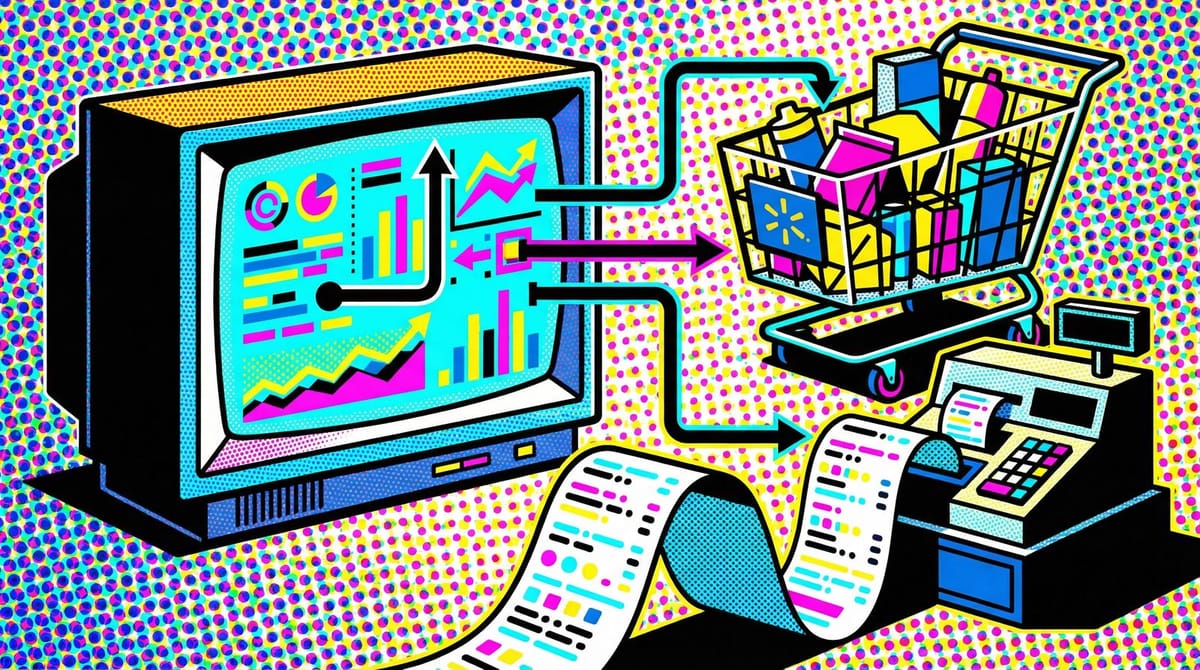
Here's how the system is supposed to work. A shopper watches a CTV ad for a cereal brand on their VIZIO TV. Two days later, they buy that cereal at Walmart. Walmart can (in theory) connect those two events because it owns both sides of the transaction: VIZIO's automatic content recognition data tells them what the viewer watched, and Walmart's first-party purchase data tells them what they bought.
Think of it like a toll road operator who also owns the only gas station at the exit. They can see every car that passes the billboard and whether it stops to fill up. The billboard companies can track eyeballs. The gas station can track purchases. But only the company that owns both can tell you which billboards actually drove someone to pump gas.
No other company can make that exact structural claim right now.
Amazon comes close with Prime Video and its own retail data, but Amazon's measurement only covers what people watch inside Amazon's ecosystem. Walmart, through VIZIO's Inscape ACR technology, can see viewership across cable, streaming, gaming, essentially anything displayed on the VIZIO screen, regardless of input source. Paired with transaction data from 150 million weekly Walmart shoppers, the potential data asset is genuinely unique.
At the IAB NewFronts in late March, Walmart reported that 65% of surveyed customers said CTV ads helped them discover new products, and campaigns through Walmart Connect delivered a median 44% view rate. A Café Bustelo campaign generated 98% incremental household reach beyond linear TV.
Those are polished numbers from a stage presentation. But they're directionally interesting, and the view rate in particular is high enough to suggest the inventory quality isn't garbage.
A $6.4 billion business growing six times faster than retail
Walmart's advertising operation isn't a side project anymore. Global ad revenue hit $6.4 billion in fiscal year 2026, up 46% year over year. Walmart Connect specifically grew 31% in Q1. To put that growth rate in perspective, Walmart's advertising is growing six times faster than its retail sales.
They're still a distant second to Amazon's roughly $68 billion ad operation. But the gap in CTV is narrower than the overall revenue numbers suggest, and this VIZIO integration is clearly designed to close it further. The unified login experience Walmart is rolling out for new VIZIO OS TVs and onn. TVs will let customers use their Walmart account to set up the TV, creating a deterministic identity link between the viewer and the shopper that probabilistic matching can't replicate.
That's the part the programmatic world has been chasing for years. Deterministic cross-screen identity, without cookies, without device graphs. Walmart is claiming they can do it with a single account login.
Early results are honest-to-god mixed
I'd be giving you half the story if I stopped at the pitch. Digiday reported that early incrementality results haven't been impressive. An agency executive, speaking anonymously, said their team had to build a custom analysis to track point-of-sale impact from VIZIO campaigns. The results, in their words, "didn't show a huge impact."
More telling: Georgia-Pacific was reportedly in talks for a Walmart-VIZIO CTV experiment earlier this year and the campaign never materialized. Digiday's reporting suggests the measurement gaps cost Walmart at least one brand's business.
This is the uncomfortable reality beneath the NewFronts deck. Walmart is selling the promise of closed-loop CTV measurement, but some brands that tested it are waiting for better data clean room capabilities before committing real budget. The infrastructure exists in concept. The proof in practice is still catching up.
And to be fair, I'm not sure any retail media network has truly cracked incrementality measurement for CTV yet. Walmart is just the one doing it most publicly, which means they're absorbing the scrutiny that should probably be spread more evenly. We've written before about how retail media growth has partly been an accounting exercise, with trade budgets getting relabeled as media spend. The pattern here is similar: the promise runs ahead of the measurement, and the measurement runs ahead of the proof.
The competitive angle most coverage is skipping
What makes this worth watching despite the measurement gaps is the structural advantage Walmart is building. When Amazon runs a CTV campaign through Prime Video, they can only attribute within Amazon's ecosystem. They know you watched the ad and then bought the product on Amazon.com. That's a clean loop, but it only covers one purchase channel.
Walmart's proposition is broader. They're saying: we can see what you watched on any app, any streaming service, any cable channel displayed on your VIZIO TV. And we can connect that to purchases at Walmart, both online and across 4,700 physical stores. For CPG brands especially, that's a fundamentally different data set. If you sell laundry detergent, the Walmart shopper base is probably more relevant than the Amazon Prime subscriber base. Different demographics, different purchase patterns, different basket sizes.
And if Walmart can actually prove that CTV exposure in the living room drove a purchase at the register, the CTV measurement problem gets closer to solved for a very specific, very high-value category of advertisers.
Running a test before the measurement catches up
If you manage paid media for a brand that sells through Walmart, here's what I'd do right now.
Request access to the Publishers & Social beta in Walmart Connect's Ad Center. It's listed under the Display tab. VIZIO shows up as a selectable publisher alongside the social platforms.
Don't shift budget yet. Run a test with a small, isolated SKU where you can track point-of-sale lift cleanly. Something with a defined purchase cycle and a clear Walmart sales baseline. Use a 30-day window minimum. CTV attribution needs time to capture the delayed purchase signal that makes TV fundamentally different from search.
Ask your Walmart Connect rep about data clean room access and timing. The ability to match VIZIO viewership data against your own first-party CRM data is where the real value will eventually live. By Q3 2026, based on Walmart's NewFronts roadmap, those capabilities should be significantly more mature.
Compare results against whatever CTV you're running through Amazon DSP, The Trade Desk, or direct publisher buys. The question isn't whether Walmart's CTV works. The question is whether the closed-loop measurement gives you insight you can't get anywhere else.
From what I've seen with early retail media CTV tests across other networks, the brands getting useful data are the ones running narrow, controlled experiments rather than broad awareness campaigns. One product, one geography, clean holdout groups. The measurement will improve. Your initial test design determines whether you can actually use those improvements when they arrive.
The $2.3 billion bet is on identity, not screens
Walmart didn't buy a TV company. They bought a deterministic identity layer connecting what people watch to what they buy, without relying on cookies, device graphs, or probabilistic matching. Whether that bet pays off depends entirely on whether the measurement can withstand real scrutiny from brands spending seven figures on TV without clear purchase attribution.
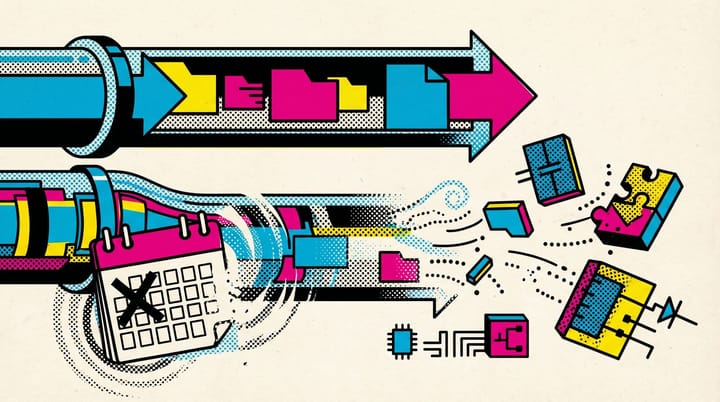
Right now, I'd say the plumbing is maybe 60% built. The pipes are connected but the water pressure isn't there yet. If they can get the data clean room story right by mid-year, the conversation shifts from "interesting beta" to "where does this fit in the media plan." And at that point, they're not competing with Amazon's retail media business. They're competing for linear TV budgets. That's a $60 billion market in the US alone, and most of it still runs on reach estimates and brand lift studies that would embarrass anyone who's worked in performance marketing.
The brands that run controlled tests in the beta now will have 90 days of data when that conversation starts. Everybody else will be starting from scratch.