Meta Lookalikes in 2026: Where They Still Beat Advantage+ and Where They Do Not
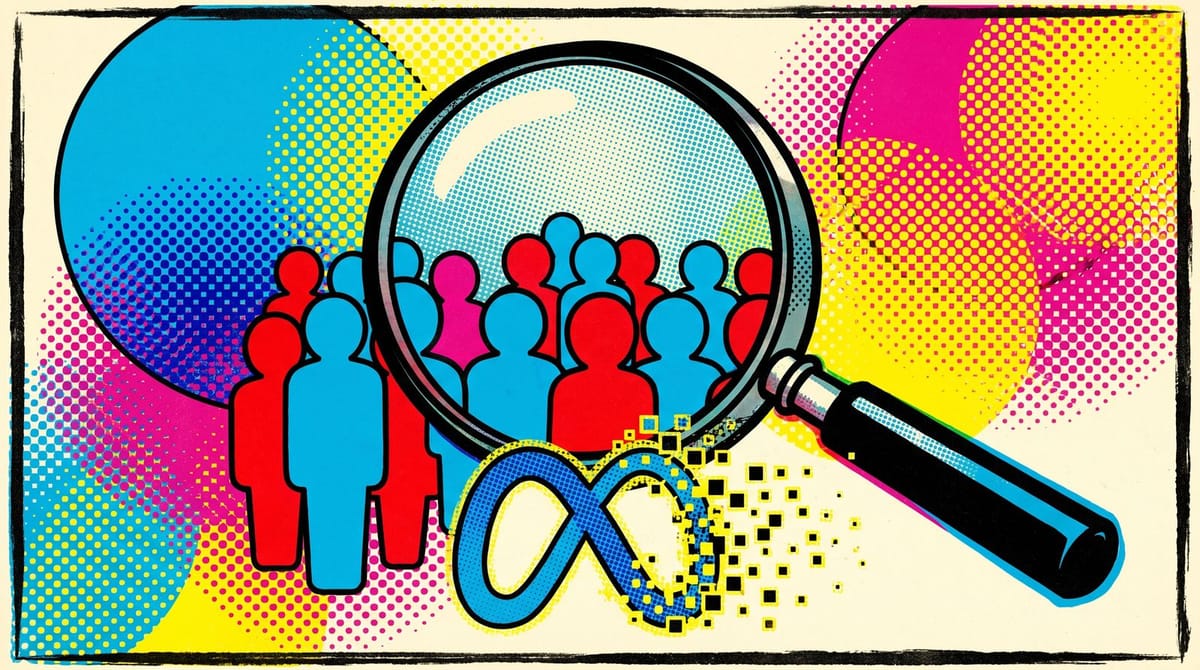
Meta lookalike audiences still exist in 2026, but their role has narrowed sharply. Meta's own help docs now point advertisers to Advantage+ audience as the default, and accounts running Sales, Leads, or App Promotion objectives can no longer remove audience suggestions, meaning delivery expands past the lookalike anyway. The practical question isn't whether lookalikes work. It's whether they earn their slot against a broad Advantage+ campaign that already builds dynamic lookalike-style expansions on its own.
What actually changed (and what Meta isn't saying loudly)
Meta hasn't deprecated lookalikes in any formal sense. The Marketing API still supports creating them, and the Business Help Center entry remains live. What changed is the surrounding architecture. Under Andromeda, Meta's new ranking and retrieval system, the algorithm pulls from a much larger candidate pool and weights creative signal more heavily than any audience definition you build on top of it. The lookalike isn't ignored. It's just one input among many, and not the loudest one.
The clearest signal of how Meta now sees this stack: in Advantage+ Sales, Leads, and App Promotion campaigns, you can add lookalikes as audience suggestions, but you can't remove the option for Meta to deliver outside them. Jon Loomer walked through this in detail: the suggestion is a hint, not a hard boundary. If you build a 1% LAL of past purchasers and stick it in an Advantage+ Sales campaign, Meta will use that LAL as a starting point and then test outside of it.
This matters because most of the "lookalikes are dead" takes online are reacting to the wrong thing. The lookalike itself still does what it always did. The campaign type wrapping it just decides how much weight to give it. If you want the lookalike to actually constrain delivery, you have to use a non-Advantage+ campaign objective. That's the part most playbooks skip.
Where lookalikes still beat Advantage+ in 2026
Performance data here is genuinely mixed, and I want to be careful with it. Meta's own benchmarks claim Advantage+ Audience cuts CPA by up to 32% versus manual targeting. Lebesgue's analysis of accounts running under Andromeda found broad targeting delivered 49% higher ROAS than lookalike targeting in their dataset. Both numbers come from advertiser-side aggregators with their own incentives, so treat them as directional, not gospel.
From what practitioners are reporting, lookalikes still pull ahead in a few specific cases:
- Strong first-party data, small budget. Accounts under $5K/month with a real customer list (let's say 5,000+ matched purchasers) still see better early performance from a 1-3% LAL than from broad Advantage+. The algorithm hasn't seen enough on-platform conversions to outperform your own data yet.
- Lead generation with weak conversion signal. When your conversion event fires fewer than 50 times per week per ad set, broad Advantage+ tends to drift toward cheaper leads that don't convert downstream. A LAL of high-intent past leads (form submitters who became MQLs) keeps the prospecting tighter.
- New market entry. If you're launching in a country where you have no pixel history, a value-based LAL seeded from your strongest existing market gives the algorithm a starting point. Broad targeting in a cold geo with no signal mostly just spends money.
- Specific verticals with narrow buyer profiles. Categories like luxury, B2B SaaS, and certain regulated industries (alcohol, firearms, supplements) often see Advantage+ deliver impressions to obviously wrong segments. A LAL keeps the bleed contained.
If your account doesn't match one of those profiles, the honest read is that Advantage+ probably wins on volume and the lookalike fight isn't worth your time.
One pattern I keep seeing in account audits: teams running 8-12 different lookalike percentages (1%, 2%, 3%, 5%, 10%) layered into separate ad sets, hoping to find a sweet spot. Under Andromeda, this mostly just fragments your conversion signal across ad sets that never exit learning phase. If you're going to test lookalike sizes, run 1% and 3% only. Anything wider behaves more like broad targeting with extra steps, and Advantage+ already handles broad better than a 5% LAL ever did.
The source size problem nobody mentions
The standard guidance on lookalike source size hasn't been updated for what privacy changes actually did to your data. Most guides still recommend 1,000 to 50,000 source records. That's the right ceiling and a useless floor.
In a post-ATT, post-iOS 17.5 world, your pixel-based source audiences are leakier than the raw count suggests. A "purchase" event from your pixel in 2026 might miss 30-40% of actual purchases on iOS devices because of signal loss, conversion modeling lag, and consent gates. The 5,000-row purchaser audience in Meta's Events Manager is closer to a 7,500-row reality. The seeds Meta uses to build the LAL are thinner than they look.
This has two practical implications. First, prioritize a strong Conversions API setup with high event match quality before you worry about lookalike percentages. A LAL built from a CAPI source with EMQ above 8 is meaningfully better than one built from a pixel-only source at the same row count. Second, use customer lists (uploaded CSVs with hashed email, phone, address) as your LAL seed whenever you can. Server-uploaded data isn't subject to the same signal loss as pixel events.
For most accounts in 2026, the order of seed quality looks roughly like this: customer list with rich match keys > CAPI-tracked conversion event > pixel-only conversion event > engagement-based audience. Don't build a LAL off video viewers and then wonder why it doesn't convert.
How to actually use lookalikes inside Advantage+ campaigns now
If you're running Advantage+ Sales (and most ecom advertisers should be, at least as a test), the lookalike's job isn't to define your audience anymore. It's to feed signal.
The setup I'd actually recommend testing, with the caveat that every account is different:
- Build 2-3 lookalikes from your strongest first-party sources: a 1% value-based LAL from past 180-day purchasers, a 1-3% LAL from your highest-LTV customer list, and one LAL from recent high-intent traffic (added-to-cart in last 30 days, time-on-site over 2 minutes).
- Add them as audience suggestions in an Advantage+ Sales campaign. Don't fight to remove the suggestions for objectives where Meta blocks it.
- Let it run for at least 7-10 days with a budget that can actually exit learning phase. Sub-$50/day budgets don't generate enough conversion signal to give the algorithm room to work.
- Check the delivery breakdown after two weeks. If most spend is landing inside or near the suggested audiences, the LAL is doing useful work. If Meta has expanded broadly and ROAS is holding, the LAL was a starter, not a steerer, and you can let it go on the next iteration.
One thing worth saying out loud: do not run an Advantage+ Sales campaign and a manual lookalike campaign side by side targeting the same product. Meta's auction will mostly just cannibalize the cheaper one, and you'll spend three weeks arguing with attribution. Pick a structure per product line.
When to stop building lookalikes entirely
There's a point at which lookalike maintenance becomes pure overhead. For accounts running primarily Advantage+ Sales with $250K+/month in spend, strong CAPI implementation, and a creative testing cadence above 10 new concepts per month, I think most teams will get nothing measurable from continuing to refresh lookalikes. The algorithm has more signal than the LAL can add. You're optimizing a feature that's been demoted to a tiebreaker.
The harder case is the middle. Accounts spending $20K-$100K/month with decent but not great first-party data sit in the awkward zone where lookalikes might still help, but the test cost is real. My loose rule of thumb: if your Advantage+ Sales ROAS is within 15% of your best lookalike-targeted ROAS over a 30-day window, drop the lookalike. The complexity isn't paying for itself. If the gap is wider, keep the lookalike and figure out why your broad performance is lagging (usually a creative quality or CAPI signal problem, not an audience problem).
This is the part where the pillar piece on Meta Ads strategy after Advantage+ gets specific about how to restructure account architecture without burning two weeks of learning phase. Worth reading if you're at the point of consolidating campaigns.
The short version
Meta lookalike audiences in 2026 are a tool that used to do most of the targeting work and now does a much smaller, more specific job. They still help small accounts with strong first-party data. They still help in lead gen with weak signal. They still help in cold geos. Everywhere else, they're competing with an algorithm that builds lookalike-style expansions automatically, and that algorithm is winning more of the time.
If you build them, build them off your cleanest sources, treat the source size guidance as a ceiling instead of a target, and use them as steering inputs inside Advantage+ rather than trying to wall the campaign off to a 1% LAL that Meta is going to bleed past anyway. The lookalike isn't dead. It's just a smaller piece of a bigger machine, and a lot of accounts are still building like it's 2021.
Notice Me Senpai Editorial