Amazon Now's 11-City Rollout Is a Retail Media Move Disguised as Delivery
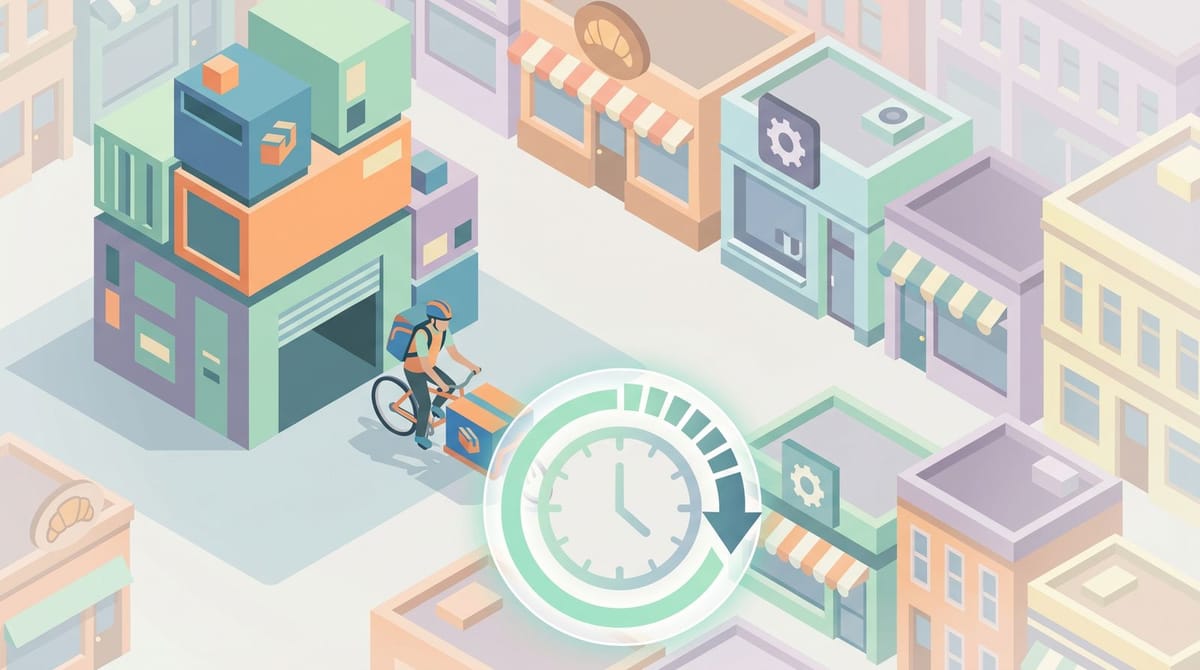
Amazon launched Amazon Now on May 12, 2026, delivering thousands of items in 30 minutes or less across Atlanta, Dallas-Fort Worth, Philadelphia, and Seattle, with rollout to Austin, Denver, Houston, Minneapolis, Orlando, Oklahoma City, and Phoenix planned this year. Prime members pay $3.99 per order; non-Prime customers pay $13.99. That $10 gap ages every "free 2-day shipping" ad creative still running in those metros.
Most coverage of the launch is reading it as a logistics story. From what I've seen, the actual move is happening one layer up: Amazon just locked in a fulfillment surface that its retail media network can monetize against an urgency window nobody else can credibly serve. The 30-minute promise is the marketing wrapper. The bid math is the durable advantage.
The fee structure works as a Prime conversion lever, not a delivery product
Read the pricing once and the strategy stops being about delivery. Prime members get the 30-minute window for $3.99. Non-Prime pays $13.99. The gap is $10, which is more than half the cost of a Prime monthly trial at $14.99. For a shopper in Atlanta or Philadelphia who needed eggs before breakfast and got hit with a $13.99 fee, the math on a Prime trial isn't comparison shopping anymore. It is a single-order break-even.
Amazon doesn't typically expose a fee gap this wide unless the lifetime value math on the converted Prime member already pencils out. They are not running the 30-minute window as a standalone profit center. They are running it as a Prime acquisition funnel with operational scale on the back end. TechCrunch's launch coverage framed it as a delivery story, which is fair, but the pricing tells you what Amazon actually cares about.
The non-obvious read: in markets where Amazon has hub coverage, the marginal customer who pays $13.99 once is a customer they expected to convert. The customers who never convert never order. Either outcome works for the unit economics.
Walmart had the fulfillment moat. Amazon went around it.
Walmart's 30-minute delivery network has been the quiet flex in retail strategy decks for two years. A 4,700-store US footprint acting as fulfillment hubs gave Walmart same-day, same-hour, and in some cases sub-10-minute delivery times that Amazon's traditional fulfillment center setup couldn't match. The store-as-warehouse model was supposed to be structurally defensible because nobody could replicate 4,700 retail leases overnight.
Amazon's answer wasn't to replicate the footprint. It was to build smaller "retail-style" hubs in dense city blocks where most of the order volume actually lives. The infrastructure is purpose-built picking and packing space, not customer-facing retail. The unit economics are better, the labor model uses Flex drivers already in market, and the inventory is curated to thousands of fastest-moving SKUs rather than the millions sitting in a full FC.
By year-end, the company expects "tens of millions" of customers in coverage. Walmart's structural advantage from physical retail just got priced down without losing the speed window. Per the US quick commerce market sizing, the segment is projected to grow from roughly $62 billion in 2025 to $85.8 billion by 2030. Most of that growth was already flowing to whichever player could hold the speed-plus-density combination. Amazon Now is the credible answer.
Your Sponsored Products bid math is now a moment-of-need bid
Here is where the implication actually hits paid teams. Sponsored Products on Amazon are projected to average $1.18 to $1.25 CPC across 2026, up from $1.12 in 2025, with Sponsored Products taking around 40% of all retail media budgets globally. That math assumes a buyer evaluating across a 2-day shipping window. They have time. They can comparison-shop. They might bounce.
A 30-minute window changes the bid surface in a way most teams haven't repriced for. The customer searching for ibuprofen at 9pm in Philadelphia isn't comparison shopping across three retailers and a 2-day window. They want it tonight. The conversion intent looks closer to a Google search ad than a typical Amazon browse session. From what I've seen in CPC patterns around similar urgent-need queries, those moments justify CPCs 30 to 60% higher than the category average without losing margin, because the alternative isn't a competitor purchase. The alternative is no purchase at all.
If you're running Sponsored Products in any category that overlaps Amazon Now's inventory (groceries, pet, baby, OTC health, personal care, alcohol where permitted), the urgent-need fraction of your impressions just gained value, and the comparison-shop fraction lost it. Most teams haven't repriced because Amazon Now hour overlap plus dayparting isn't in any default playbook yet. The opportunity is segmenting bids around urgency windows in Amazon Now metros before the rest of the auction catches up.
The shipping-time ad creative just became a demerit
This is the implication that hits non-Amazon brands hardest. "Free 2-day shipping" as a value prop in paid social, in landing pages, in checkout incentives is suddenly a downgrade signal in eleven US metros. Look at any Meta paid social brief written in the last 90 days for a DTC brand selling household goods. There is probably a creative variant somewhere that says "Free shipping in 2 days" or "Same-day pickup available."
In Atlanta, Philadelphia, Seattle, or Dallas, that copy now reads as the slow option compared to the Amazon Now button the same shopper just used. The intuitive read is to escalate the claim with "Same-day delivery!" but that's only credible if you actually offer it. The smarter read is to drop shipping-time messaging entirely and lead with something Amazon can't compete on (product story, ingredient sourcing, returns generosity, taste, brand identity). Treating speed as the value prop now puts you in a direct comparison you will lose.
The discussion on r/ecommerce in the 48 hours since launch already shifted: smaller DTC sellers are debating whether to lean harder into Amazon FBA Prime eligibility or stop competing on speed entirely. The pragmatic answer from working operators tends to be the latter, especially in categories where the margin isn't there for free 1-day. That is roughly the same conclusion I'd land on for most brands selling under $30 average order value.
Where the retail media moat actually opens up
The advertising implication is bigger than the delivery one. Amazon's retail media network commanded roughly 75 to 80% of US retail media spend in 2025. Per eMarketer's 2026 retail media outlook, total US retail media spending was $60.32 billion in 2025 and is projected at $71.09 billion in 2026, a $10.8 billion year-over-year increase. That growth was already going to Amazon disproportionately. Amazon Now adds 30-minute fulfillment as a structural feature competitors can match only through existing physical retail (Walmart, Kroger) or third-party drivers (Instacart, DoorDash).
The competitive position that erodes hardest is Instacart's. Its whole value proposition has been "fast delivery from the store you already shop at." Amazon Now does that without needing the retailer relationship, and with Sponsored Products inventory the brand is already buying. CPG brands evaluating where to put incremental dollars in 2026 are weighting Amazon higher than Instacart on incremental reach. Instacart's ad revenue growth slowed in late 2025, and Amazon Now compresses the window to re-position before that gap widens.
This sits alongside Amazon's broader retail media push. The company has been repurposing its NewFronts pitch into multi-year DSP commitments and just posted a 40-engineer agentic commerce team to hook ChatGPT-style assistants into the same checkout. Amazon Now is the third leg of the same play: own the fulfillment, own the ad surface, own the assistant interface that sends you there.
Three signals that decide where this lands by August
Three things worth watching in the next 90 days:
- Inventory expansion. Does Amazon Now's catalog widen beyond essentials into discretionary categories (apparel, beauty, electronics depth)? If yes, the addressable share of paid social budgets it threatens grows substantially.
- Small-order fee repricing. The $1.99 / $3.99 floor on orders under $15 is meaningful friction. If Amazon waives it for high-frequency Prime members, the cost of making Amazon Now the daily default drops, and basket-size data feeds back into more accurate inventory at each hub.
- Walmart and Target response. If Walmart or Target announces sub-30-minute pilots in the same metros, the speed war stops being defensible on speed alone and becomes a price and membership war. That changes which players can keep running it profitably.
I am not entirely sure where the floor on this lands. Last year I would have said 1-hour delivery was the floor most logistics teams could profitably hit on essentials. Amazon Now seems to depend on a level of fulfillment hub density that very few retailers will reach, and the ones that don't will probably spend the next 18 months bidding on Amazon's ad surfaces instead of competing with the delivery promise.
The takeaway buried in a delivery announcement
Amazon Now's most interesting feature is not the 30-minute promise. It is the urgency-window ad inventory the company can now monetize through Sponsored Products and DSP in markets where no competitor can credibly bid against the same need. Repricing for that window doesn't show up in any default Amazon Ads playbook yet. Most CPG buyers will keep their bid structures static and chalk up Q2 ROAS softness to seasonality. I'm not sure that's the right call past June, but the dashboards will probably catch up before the briefs do.
Notice Me Senpai Editorial