Google's June 15 Consent Cutover: One Site Already Lost 90% of Conversions
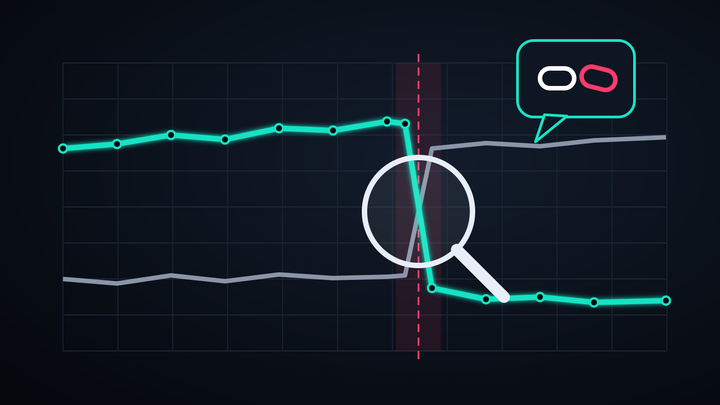
Google Signals will stop governing Google Ads data on June 15, 2026. After that date, only Consent Mode's ad_storage parameter controls whether Google Ads receives advertising cookies, device identifiers, and cross-device user recognition. One organization that hit a Consent Mode misconfiguration early already saw conversions drop 90% overnight, with only roughly 40% of the lost attribution data recoverable through modeled conversions.
What actually changes on June 15
Two systems have shared control of Google Ads data for years: the Google Signals toggle in the GA4 admin panel, and the Consent Mode parameters set through gtag. Most Ads accounts have been quietly running both, and the conflicts mostly stayed hidden because the two systems usually agreed. From June 15, ad_storage in Consent Mode becomes the sole switch for advertising cookie collection, cross-device linkage, and the signal flow that Smart Bidding actually trains on. Google Signals retains exactly one job after the cutover: deciding whether GA4 reports get demographic attributes for users who are signed into a Google account.
The four Consent Mode parameters now matter in different ways. ad_storage gates the cookie itself. ad_user_data controls whether first-party data like hashed emails can be sent to Google, which is what Enhanced Conversions actually depends on. ad_personalization will, at some point later in 2026, take over audience-building authority for personalized advertising. analytics_storage stays close to where it has been. Piwik PRO laid out the four parameters cleanly; if your CMP only flips two of the four, you are missing two levers that you cannot recover after the cutover.
Three systems will break at different speeds
Most coverage frames this as a single privacy deprecation, but the practitioner-relevant detail is that three downstream systems decay on different curves once a Consent Mode misconfiguration starts leaking signal.
Cross-device modeled conversions break first. Google's modeled layer needs the cross-device link enabled by ad_storage: 'granted'. The moment that signal stops arriving correctly, modeled conversions for users who switch between phone and desktop just stop materializing. The reports keep showing numbers, because the model fills in gaps for the first few weeks. Then the model loses confidence and the noise floor rises.
Demographic and audience reports inside GA4 break second. They keep working until they do not, because Google Signals continues to control the GA4 side of demographic association. If users have signed into Google and the new narrowed Signals toggle stays on, you still get age and gender breakouts. If a privacy review later flips that toggle off, the reports go blank, but Smart Bidding keeps spending.
Remarketing pools decay slowest, and that is the part most teams will miss. Remarketing lists stop growing the moment a denied state is recorded, but the existing audience members do not vanish. They age out over the membership window. So your 540-day cart abandoner list keeps performing for months while quietly bleeding new entries. The CPA looks fine until the list stops being big enough to spend against.
The 90% collapse PPC Land surfaced
PPC Land's writeup quoted Jerry Bierenbroodspot, CTO at Voxxy Creative Lab and a former Google Ads Implementation Specialist, on one organization that hit the wrong end of an early Consent Mode misconfiguration. Conversions dropped 90% overnight when the consent signals stopped firing in the order Google expected. Roughly 40% of the lost attribution data came back through modeled conversions and Enhanced Conversions backfill. The other 60% was just gone.
That is the worst case, not the median, and the case predates the June 15 cutover. But the structural risk that produced it is the one most accounts still carry. The gtag('consent', 'default', {...}) call has to fire before any Google tag, and the gtag('consent', 'update', {...}) call has to be wired into the CMP's accept and reject callbacks. If either is out of order, ad_storage sits on its default. On most properly defaulted CMPs in the EU, that default is denied.
Why most accounts run two consent controls without realizing it
Roar Digital put the situation cleanly: most Google Ads accounts are quietly running two consent controls at once, and most teams do not realise it. The Google Signals toggle in GA4 admin and the ad_storage parameter in Consent Mode have been making overlapping decisions for years. When they agree (both on, or both off), nothing breaks. When they disagree, you get partial data leakage that is hard to spot, because GA4 still reports numbers and Google Ads still spends.
After June 15, only Consent Mode decides. If your Consent Mode default is denied (which is the legally defensible default in the EU), and your CMP is not correctly issuing the ad_storage: 'granted' update on accept, you go from "leaky" to "blind." The reports will keep showing data because of modeled conversions for a few weeks. The bidder will not have anything real to learn from in the meantime.
The 40-day audit, in three checks
Today is May 6. June 15 is 40 days out. I would treat the deadline as June 5, not June 15, so you have a full week of pre-change baselines to compare against. Three checks, in order:
- Inspect the
gcsparameter on a real GA4 hit. Open DevTools, load your site, accept cookies, find the request togoogle-analytics.com/g/collect, and read thegcsquery parameter.G111means bothad_storageandanalytics_storagegranted.G100means the user denied advertising. If you are seeingG100after a clean "Accept all" click, your CMP is not issuing the update signal correctly and your remarketing pool is already bleeding. - Verify
gtagcall order in your tag manager. Thegtag('consent', 'default', {...})call must fire before any Google tag, including the GA4 config tag. Thegtag('consent', 'update', {...})call has to be wired to the CMP's accept and reject callbacks. Analytico Digital's checklist is the cleanest writeup I have seen for this specific check. - Cross-reference accept rates against
ad_storagegranted in BigQuery. If your CMP reports a 65% accept rate but only 40% of GA4 hits showad_storage: granted, the gap is misconfigured tags, not user behavior. This is the audit most agencies skip because it requires BigQuery access and an analyst hour. It is also the one that catches problems the other two checks miss.
The certified CMPs (Cookiebot, OneTrust, Iubenda, Usercentrics, Termly, Klaro) handle the signal mechanics correctly out of the box, and PPC Land flagged that sites already on those platforms are largely in the end state. The risk concentrates in the long tail: in-house consent banners, older OneTrust deployments that have not been updated since 2024, and any site whose banner was built by two devs and a JIRA ticket. If that describes your stack, the 40 days is probably 20 days of tag work and 20 days of QA.
Internal data flow is also worth a glance while you are auditing. Google put GA4's Conversion Performance Report on the Data API in alpha last week, which means the conversion specs you rebuild post-June 15 are the ones that will feed downstream tooling for the next cycle. Cleaning the consent signal is upstream of all of that.
What I would actually watch through July
The thing I am watching is whether modeled conversions hide the damage long enough to miss the diagnosis window. From what I have seen in past consent rollouts, modeled conversions cover the first four to six weeks of signal degradation reasonably well, then the model loses confidence and reports get noisy. If your year-over-year conversion volume looks fine through July but your CPA starts climbing in early August, that is probably not a campaign issue and it is probably not creative fatigue. It is most likely a consent signal that broke on June 15 and that you will be diagnosing 60 days late, after a quarter of bidder learning has already gone sideways.
Run the gcs check this week. The other two can wait until the audit gets prioritized. The gcs check takes about ten minutes per property and tells you immediately whether you have a real problem or just a deadline.
Notice Me Senpai Editorial