Hawaiian Tropic's 'I Touch Myself' Ad Hands the Joke to TikTok

Hawaiian Tropic released its second Alix Earle campaign on May 13, 2026, a dance spot scored to Divinyls' 1991 single "I Touch Myself" with the tagline "Touch yourself and glow." The brand is now two-for-two on the creator-plus-innuendo formula in 12 months. The risk Edgewell isn't pricing is that the audience, not the brand, decides what the joke means once the clip hits TikTok.
The playbook is identical, only the prop changed
Last year's "Tana Sutra" spot put Earle through five "tan-tric" tanning positions in a synth-scored 60-second hero. Hawaiian Tropic billed it as the largest creative campaign in the brand's history. The new "I Touch Myself" spot keeps the same Miami-coded aesthetic, the same creator at the center, and the same approach of letting the audio cue do the joke the script can't say.
The structural decision worth flagging: Edgewell didn't iterate. They re-shot the formula with a fresh innuendo prop. It's a tell about how the brand is measuring last year. They liked the numbers enough to clone the structure rather than evolve it.
One caveat worth holding. The Tana Sutra TikTok post Earle herself ran pulled 105K likes and 344 comments, which is solid for a single creator-owned post but well below the threshold where a brand should claim category dominance. Edgewell hasn't published Tana Sutra sell-through, which is conspicuous. If sell-through were category-changing, the Q1 earnings release would have mentioned it.
The song does the work, which is also the problem
"I Touch Myself" hit number four in the US in 1991. The lyrics are explicit and well-known; the song's entire premise is the title. Pairing it with a sunscreen application moment lets the spot get to a sexual reference without the script ever saying it. In a pitch deck, that's the polished version of the creative idea. Clever, low-friction, easy to sell to legal.
The reality is messier. When the audio does the work, the audience finishes the sentence. And on TikTok, "finishing the sentence" looks like duets, stitches, parody accounts, and a comment section that can take the joke anywhere it wants. Hawaiian Tropic owns the spot. It does not own the meme.
The first version of this campaign already drew organized pushback. The American Family Association called Tana Sutra family-TV-time-ruining, which is not a serious commercial threat on its own but is the kind of signal that telegraphs how a sequel reads to anyone who didn't like the first one. The sequel uses a song explicitly about masturbation. The framing fight is going to be louder, not quieter.
What the Tana Sutra numbers actually told Edgewell
Two things stand out from how Edgewell rolled the original spot.
First, paid distribution did more work than the press release implied. The campaign ran across social, online video, streaming and out-of-home. It looks more like a TV budget with a creator-shaped front door than a creator-first plan. The reason matters. SPF is a seasonal category growing at an 8.2% CAGR through 2033, and Hawaiian Tropic's positioning problem is that the brand reads as legacy mall-shelf to anyone under 30. Earle's role was to fix the demo perception. A lot of the reach was bought.
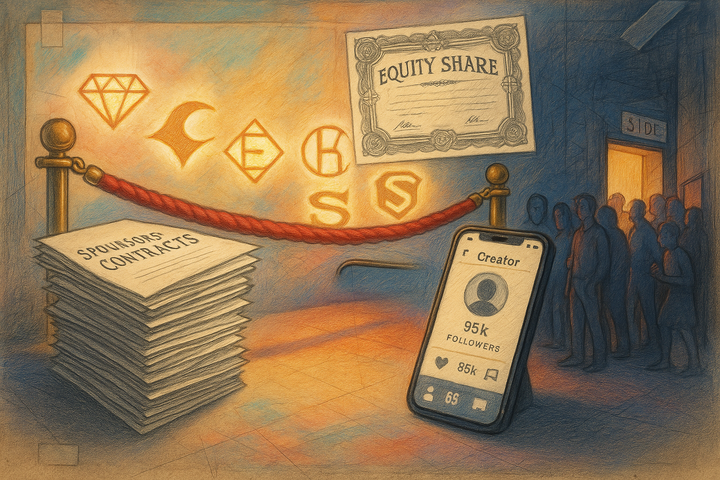
Second, the case study that gets cited around Earle is mostly the Reale Actives launch, which she built around a mysterious puzzle-rollout and a personal acne narrative that earned the product before announcing it. That work doesn't transfer cleanly. When Earle is producing for her own equity stake, the audience reads it as participatory. When she's the on-screen face of a paid Edgewell spot, the audience reads it as a celebrity buy. Those are different conversion mechanics, and the conflation is a recurring miscalibration in creator briefs.
The audience-control test most brand teams don't run
If I were sitting in the room before a sequel like this got greenlit, I'd want three questions answered. None of them are creative questions. All of them are about who finishes the joke.
- What's the dominant duet? If a parody account ran this audio with this brand tagline, what's the most-watched version a search would surface inside seven days? If you can't simulate that in a planning meeting, you're flying blind on the part of the campaign that actually compounds.
- What does the comment section look like at 50K likes? Brands rehearse the creative. They rarely rehearse the audience response at scale. The comment threshold matters because the first 10K comments shape the next 100K, and the spot is already publicly hosted on Earle's TikTok account, where comments are doing the framing in real time.
- What's the retreat plan? The American Eagle Sydney Sweeney "Great Jeans" campaign is the cleanest 2025 example of a spot that performed on its primary metrics and still cost the brand more than the lift was worth, because the team never planned for a tone-deaf read at scale. Hawaiian Tropic's retreat plan, if it exists, is not visible from the outside.
None of these are perfect predictors. From what I've seen, they're roughly the difference between a brand team that gets surprised by Twitter on Wednesday and one that doesn't. They cost a half-day of planning. Most teams skip them because creative reviews are organized around the deck, not the duet.
This is the same territory Liquid Death's escalation work and Bilt's Roomies microdramas have been mapping for the last 18 months: viral attention is a separate planning discipline from the creative review, and most brand teams still treat it as a downstream PR problem.
Where this lands by Memorial Day
A working prediction with a number on it. The "I Touch Myself" spot will outperform Tana Sutra on top-line view counts by at least 40%. Paid is heavier this year, Earle's follower count is up, and the song's cultural recall is stronger than a custom track. It will also generate the loudest organized objection Hawaiian Tropic has received from any advocacy group in 12 months. Both can be true at once. Memorial Day weekend will decide whether the sell-through math justifies the framing fight.
What this is really worth noting for anyone running a creator campaign in the next six weeks: the question isn't whether Edgewell made the right call. The question is whether your own brief has a paragraph on the duet, the comment section, and the retreat plan. I'd put real money on most briefs not having one.
The thing I keep coming back to is that the cheapest line item in any of this is the planning half-day before greenlight. Brands cut it because nothing happens in it. From what I've seen, that's the line item that quietly decides what the joke means once the spot is in the wild.
Notice Me Senpai Editorial