Microsoft Just Conceded Bing's AI Index Runs Different Signals Than Search

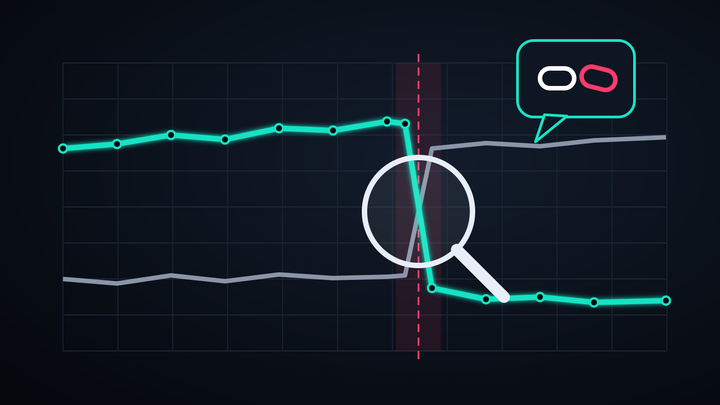
Microsoft's Bing AI team published a post on May 6, 2026 titled "Evolving role of the index," confirming that the index that supports AI answers optimizes for a different question than the one that supports search. Search asks which page a user should visit. Grounding asks which facts an AI system can responsibly cite. Microsoft names five signals where the two diverge, and freshness now produces a wrong answer instead of a stale ranking.
The post is the cleanest admission yet from a major search platform that answer-engine work and ranking work are not the same discipline. The original Bing blog post is signed by Krishna Madhavan, Knut Risvik, and Meenaz Merchant from Microsoft AI, and it lays out the framing in plain language: same crawlers, same quality signals, same web understanding, but a new optimization layer with stricter rules.
The five places where grounding leaves classic ranking behind
Microsoft's framing is that grounding builds on top of the existing search index. It does not replace it. What changes is the optimizer. The five places that layer behaves differently, in Microsoft's own ordering:
1. Unit of value. Search indexes whole documents and ranks them. Grounding indexes what the team calls "groundable information," which is discrete facts with traceable provenance. A page that ranks fine for a query can still be useless to an answer engine if the specific claim it is needed to support is buried, paraphrased, or stripped of attribution.
2. Factual fidelity. Once content gets chunked for retrieval, transformations can quietly distort the original meaning. Microsoft flags this as a measurement problem search never had to solve. Ranking tolerates approximate relevance. Grounding does not.
3. Source attribution. In search, attribution is a helpful nice-to-have. In grounding, the team explicitly calls it a "core signal." The system has to weigh a Wikipedia article against a peer-reviewed study against a marketing blog and label them with what Microsoft calls "varying evidentiary weight," or the citation chain falls apart.
4. Freshness. This is the biggest cost shift. Stale content in classic search is a ranking problem. In grounding, a stale fact "produces a misleading response," per the post. Same content, different blast radius.
5. Contradictions. Search has the luxury of returning ten conflicting pages and letting the user sort it out. Grounding cannot. Microsoft is direct about it: "An AI system that silently arbitrates between contradictory sources is one that may confidently assert the wrong thing." So the index has to surface conflicts rather than pick a silent winner.
Why this breaks most "AEO is just SEO with extra steps" playbooks
The dominant assumption in agency briefs I keep reading is that answer-engine optimization is structured data plus FAQ schema plus a few summary blocks bolted onto an existing SEO program. Microsoft's post contradicts that pretty cleanly. The optimizer changes. The unit of value changes from page to fact. Which means a content audit framed around page-level rankings is auditing the wrong layer. The classic search side of Bing still rewards traditional signals like keyword-in-title and freshness in fairly predictable ways, which is part of why this is confusing. Two indexes, two scoring functions, one platform.
If you have already been working off a multi-gate AI search audit and finding most of your fails sit in attribution, freshness, and contradiction handling, that is now a Microsoft-confirmed framing rather than a vendor framing. We covered the 10-gate audit earlier and the three gates that actually matter were attribution, freshness, and entity disambiguation. That triage holds up cleanly against what Bing just published.
Freshness has a different loss curve now
Freshness was already a search ranking factor. What changes here is the cost of getting it wrong. In classic search, a 2023 stat on a page can keep ranking and the only damage is some users seeing outdated info before they refine the query. In grounding, that same stat lifted into a Bing Copilot answer presents itself as Bing's authoritative reply, with the page cited as the source.
From what I have seen across the AEO tracking tools that rolled out this year, the citation half-life seems to be shorter than the SEO ranking half-life. Pages get pulled out of the answer set before they drop in rank. That probably depends on whether the query is factual or evergreen, but the asymmetry is real. Search Engine Journal's coverage picks up the same point: freshness is the dimension where grounding's measurement priorities diverge most sharply from search.
For paid landing pages and bottom-funnel commerce, this is a non-issue. For thought leadership and evergreen explainers funding the AEO citation pipeline, refresh cycles probably need to compress to monthly, not yearly.
The contradiction problem nobody is auditing
Microsoft's post buries a more uncomfortable line. When sources conflict, grounding has to either flag the conflict or abstain. The team frames "abstention," meaning the system declining to answer at all, as a valid outcome rather than a coverage failure.
That cuts both ways. If your content contradicts the consensus across Wikipedia, Reddit, and G2, those three sources continue to dominate AI citation share more than most first-party brand pages do. We dug into the third-party citation pattern recently and the gap is wider than most teams assume. The system may simply not cite you rather than promote your contrarian take.
This is where the freshness, attribution, and contradiction signals interact. A claim with weak provenance, fresh contradicting evidence, and no clear source label is a near-guaranteed abstention candidate. You do not get a ranking penalty. You get silence. There is no SERP impression to file under "ranks but no clicks." The page is just absent from the answer set.
A short audit you can run before Friday
Three things worth doing this week if you have any AEO-adjacent content investment:
First, pull every page you would want cited in an AI Overview or a Copilot answer. For each, identify the single most groundable factual claim and check that the source and the date are explicitly visible inline. Not a footnote, not a sidebar, inside the claim sentence. If your page says "studies show X" without naming the study and year, the grounding system has nothing to attribute to.
Second, spot-check the last 12 months of stats on those pages against the underlying source. If the source moved, was retracted, or was updated with a different number, your page is now contradicting the current consensus. That is the silent-abstention path.
Third, run the page through a chunker (or just split it at H2s) and ask whether each chunk could stand alone as a citation without losing the qualifier. If a number reads as "in many cases" but the qualifier lives two paragraphs up, the chunk is going to misrepresent you when it gets pulled out of context.
None of that is a structured-data tweak. It is content surgery, and Microsoft is essentially the first big platform to formally tell SEOs that this is the work that matters.
The honest gap Microsoft left open
What Microsoft did not say is how it is actually measuring grounding quality. The team admits it directly in the post: "We have decades of practice measuring search quality. We are still learning what it means to measure grounding quality rigorously." That is a polite way of saying the signal weights are not stable yet. PPC Land's writeup notes the same admission and reads it the same way: whatever wins citations in May 2026 may not win them in August.
From what I have seen, the teams getting cited in AI answers right now are not the ones with the cleanest schema markup. They are the ones whose individual factual claims survive being lifted out of context with the source and date intact. Microsoft just told the rest of the industry that this is the actual optimization target. The teams who internalize that early get a real head start. The ones still treating AEO as a schema-and-FAQ exercise are about to find out their citation share is plateauing for a reason.
Notice Me Senpai Editorial