Nike Direct Fell 7% While Wholesale Grew 5%. The 'Comeback' Is a Channel Story.
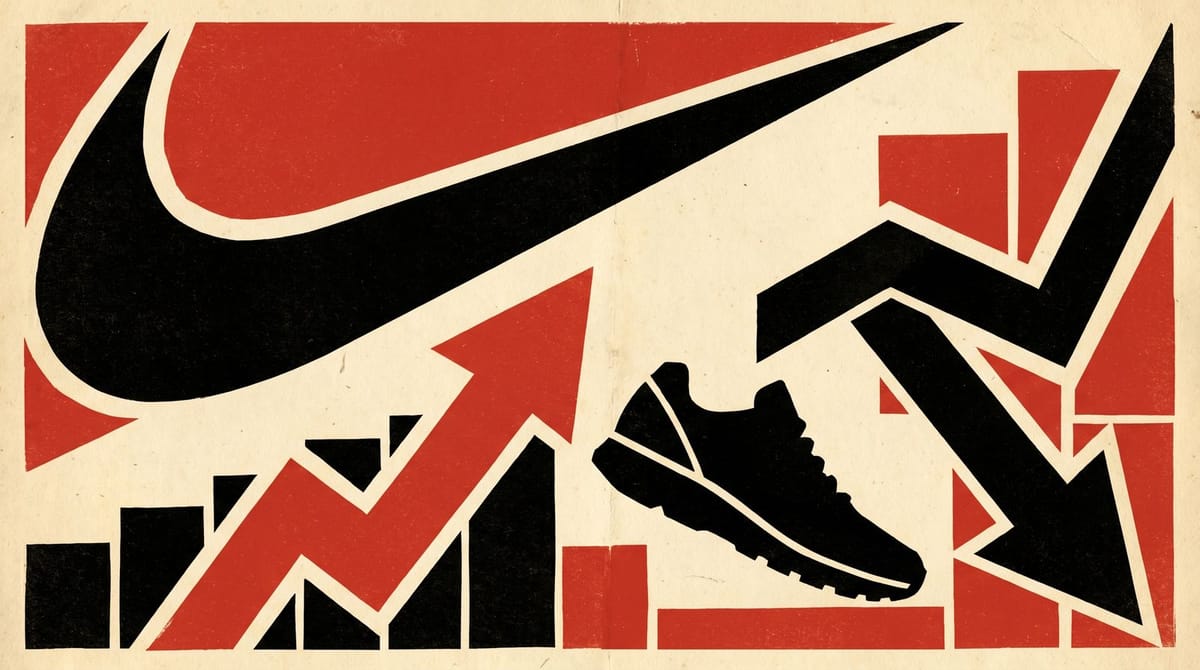
Nike reported $11.3 billion in flat Q3 FY2026 revenue on March 31, with Nike Direct down 7% currency-neutral while wholesale grew 5%. The 1,400 April layoffs and $230 million severance charge cut deepest in tech and supply chain, not marketing. The 'comeback' coverage focused on a Boston Marathon outdoor ad, missing that the channel mix is reversing.
The numbers under the headline
Marketing Dive's piece on where Nike's marketing comeback is stumbling is good, and the practitioners quoted in it are right that the creative feels uneven. But the framing puts the verdict on the creative team. The Q3 results suggest the harder shift is happening underneath them.
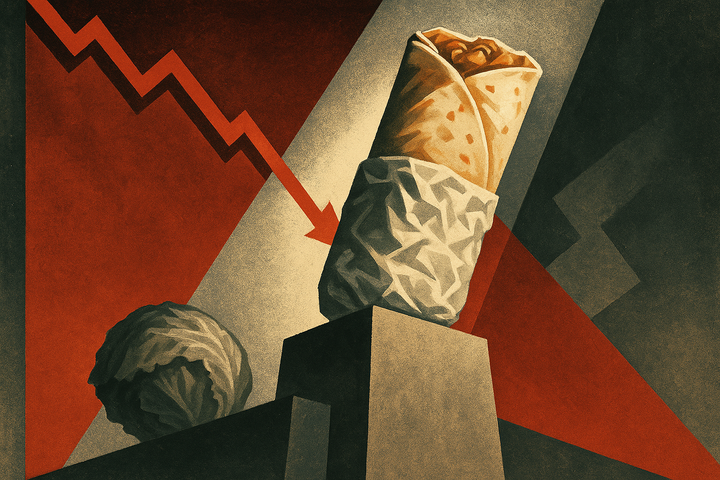
Nike Direct revenue, the DTC engine that was supposed to be the future of the brand, fell to $4.5 billion in Q3, down 4% reported and 7% currency-neutral, per Nike's own Q3 FY2026 release. Wholesale revenue, which Nike spent the back half of last decade strategically shrinking, hit $6.5 billion, up 5% reported. North America Running grew over 20% in the quarter, mostly through wholesale specialty doors. That is the line of the press release I would screenshot if you only read one paragraph of it.
This is the same company that, four years ago, was telling the trade press that the wholesale channel was structurally less profitable and that direct was the future of the brand. Today wholesale is the side carrying the growth and direct is the side shrinking. It is not a small reversal. It is the entire investor thesis from 2020 quietly running in reverse.
$230 million in severance is the marketing story too
Nike took a $230 million Q3 charge for employee-related severance, almost entirely in supply chain and technology. Stack the 1,400 cut in April on top of the 775 cut in January and Nike is roughly 2,175 jobs lighter in fiscal 2026, mostly in tech, ops, and corporate functions. The marketing org was not spared in earlier rounds either.
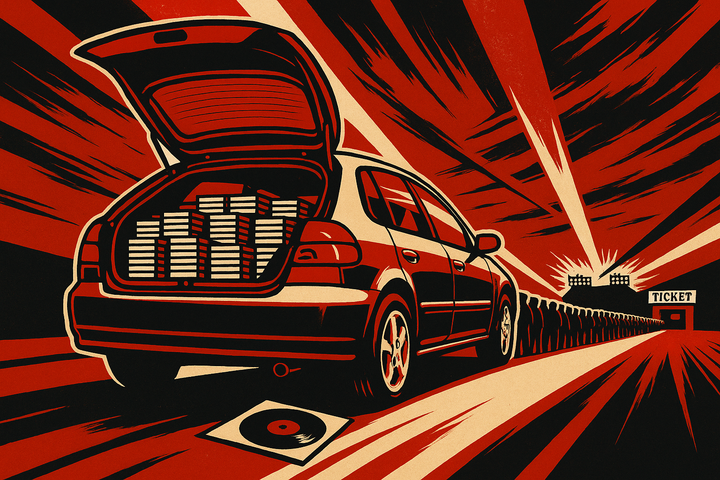
None of that shows up cleanly in a Boston Marathon outdoor ad. But marketing is downstream of who is left to ship it. Interbrand's global chief creative officer Fura Johannesdottir put it bluntly in the Marketing Dive piece: 'When you have a lot of new people coming in, and you have to train every single one, I think that's where the inconsistency is coming from.' That is the cleanest explanation I have read for why Nike's 2025 Super Bowl spot 'So Win' took the Super Clio and the very next year's marathon outdoor ad cleared every approval and lasted 24 hours.
We covered that 'Walkers Tolerated' approval chain when it broke. The failure mode there is institutional, not creative. Nobody in the room said no.
Three years ago, someone in that room would have.
An approval chain is institutional muscle memory. You can hire it back, but it costs years, not weeks, and the work you ship in the meantime is the work that defines the brand in the consumer's head right now. That is the real tax on every restructuring round.
On gave the brand to Zendaya. Nike kept its for Skims.
The most-cited comparison in the Marketing Dive piece is On Running. Specifically, On's multi-year deal with Zendaya, which produced its first co-created collection on April 16, with a Spike Jonze brand film called 'Shape of Dreams.' That is not a normal celebrity endorsement. Zendaya and her longtime stylist Law Roach designed the product. Jonze, an Academy Award winner, directed the campaign. On gave outside creative voices the controls.
Nike's analogous move has been NikeSkims with Kim Kardashian's brand, which Marketing Dive's sources flagged as one of the few collaborations actually generating heat. But the pattern with most Nike collaborations has been the brand keeping the creative reins and renting the celebrity. From what I have seen, that is the genuinely different posture. On is willing to look less like On for a campaign cycle. Nike still wants the campaign to feel unmistakably Nike, which is the right instinct for a brand of that scale, and a real constraint when culture has fragmented into smaller, faster-moving aesthetic camps.
A useful read for any brand team watching this is to ask which side of that line you would sit on with your own talent deals. If you would not let the partner change the product, the visual language, or the script, the deal is closer to NikeSkims than Zendaya on On. Both can work. They should not be measured against the same KPI.
Why women's sports is the only clean story here
Brand consideration of Nike among U.S. women rose more than nine points between April 2025 and January 2026, per YouGov data Marketing Dive published. Among Gen Z women specifically, consideration runs well ahead of the broader average. That is not a small move and it lines up with the Caitlin Clark signature deal from August 2024 and the 'So Win' Super Bowl moment in February 2025.
Then Nike skipped Super Bowl LX. The momentum was sitting on the desk and nobody picked it up. Whether that was an org capacity call, a budget call, or a creative-can't-replicate-'So Win' call is the question I would actually want answered.
I would not bet against Nike at the FIFA World Cup in June. The swoosh still has the world's most-cited cultural distribution. But the second Super Bowl in a row of women-led anthemic work would probably have moved consideration another four to six points among Gen Z women, and it did not happen. The World Cup spot will reach more people. It almost certainly will not move that specific dial.
Three lines to pull on your own account this week
If you sell into sport, lifestyle, or any DTC-heavy category that watched Nike Direct as a benchmark, three concrete reads worth running:
One. Check your own wholesale-versus-direct revenue trend over the last four quarters and read it honestly before you tell yourself 'DTC is the future.' Nike Direct shrinking 7% currency-neutral while wholesale grows 5% is a real signal about where the marginal consumer is buying. Hoka, On, and Brooks are picking off Nike's running share in specialty wholesale doors, not in their own direct channel.
Two. Pull the average tenure of your top ten marketing decisions-makers. The 'Walkers Tolerated' failure is what happens when the people who would have killed an idea on instinct have all left. If your team is closer to 18 months of average tenure than three years, the cost is going to show up in approval chains, not in OKRs, and not until something has already shipped.
Three. If you have a celebrity or creator deal in flight, write down which decisions you would let the partner overrule. Product. Visual identity. Script. Distribution. If the answer is 'none,' you have a NikeSkims-style deal, which can still work, but you should price it differently than an On-Zendaya-style one where the partner is genuinely a co-author. Different deals deserve different KPIs and different escalation paths when the partner makes a call you would not have.
Where I would put the actual verdict
Nike is not in trouble. North America was up 9% in Q2 and 3% in Q3, the women's consideration data is real, and the Converse drag is a fixable structural issue rather than a brand collapse. But the 'marketing comeback' framing the trade press is running with quietly puts the verdict on the creative team. The harder shift is a channel reversal and an internal capacity rebuild happening at the same time.
The Boston Marathon ad was the small mistake that got attention. The actual story is the one that does not screenshot well.
Notice Me Senpai Editorial