OpenAI Skipped the Agency Layer by Plugging Merchant Feeds Into ChatGPT Ads
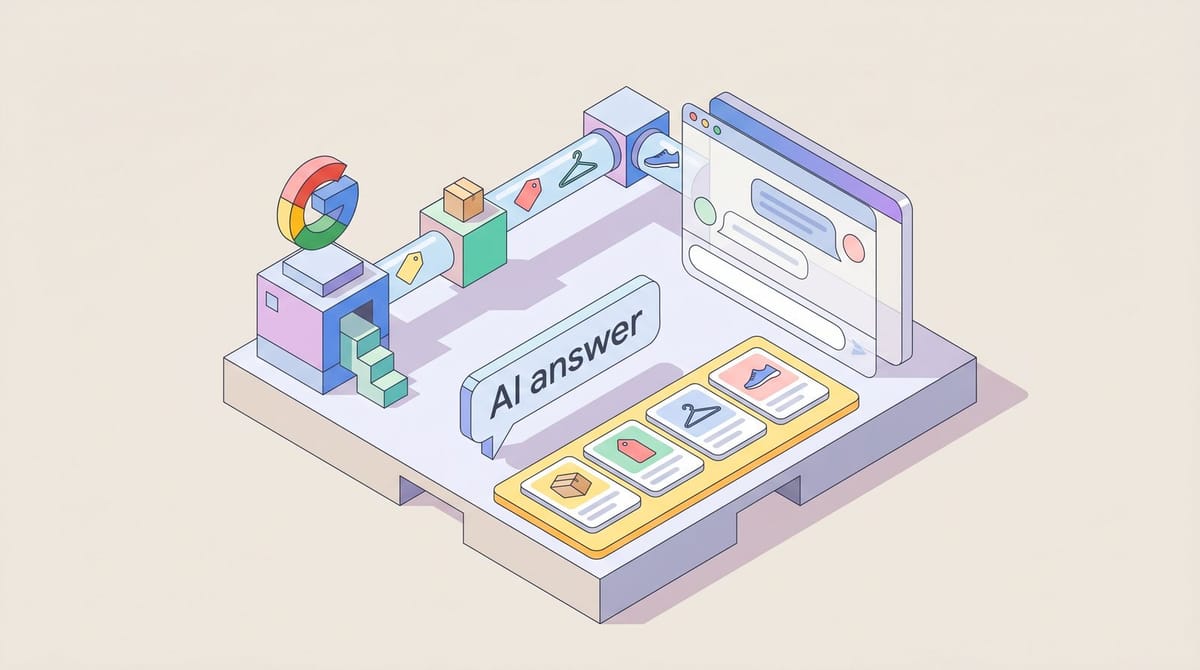
OpenAI's product feed ads went live in ChatGPT on May 12, 2026. Retailers connect a Google Merchant Center feed (or an equivalent JSONL, CSV, TSV, or Parquet file), set product-eligibility rules, and the system auto-generates sponsored placements under ChatGPT answers. The setup accepts a 100-SKU sample for validation, supports up to one million SKUs once approved, and currently bills on CPC with CPA in development.
What OpenAI actually shipped on May 12
The headline framing in Search Engine Land's coverage calls it "feed-based automation," which flattens what changed. Before this, brands running ChatGPT ads were assembling creative manually, even if the targeting was AI-driven. Now the feed itself is the creative. Product names, images, prices, and attributes get pulled straight from the catalog and assembled into a sponsored placement under the answer. The label still reads "sponsored," and placement sits below the organic recommendation, which OpenAI made a point of separating publicly.
Digiday's reporting adds the operational detail that matters: new advertisers submit a 100-product sample for validation before full catalog ingestion, and the platform caps at one million SKUs per advertiser. Bidding is CPC for now, conversion tracking is operational, and CPA bidding is in development. Third-party measurement is not yet supported, which is the line I'd watch most closely. OpenAI declined to comment for the Digiday piece, which tells you they don't want to commit publicly to a CPA timeline.
That covers the basics. What it leaves out is the part that decides who actually gets to play in the first 60 days.
Reusing the Google Shopping feed is why the agency timeline collapses
The single most consequential thing in OpenAI's spec is that the feed format sits intentionally close to what Google Merchant Center already produces. Per OpenAI's merchant portal, accepted formats include JSONL, CSV, TSV, and Parquet with zstd compression, with a 15-minute refresh cadence and a recommended Parquet shard size under 500MB for catalogs above 100,000 SKUs, according to Alhena's merchant setup guide.
For a Shopify or BigCommerce merchant, this means the catalog already piped to Google Shopping can be re-pointed at ChatGPT's SFTP endpoint with minor schema mapping. Roughly a day of engineering time, in my experience working with feed plumbing of this shape. Sometimes less if the catalog already sits in a structured warehouse table.
For an agency or holding company building a self-serve OpenAI ads roadmap, this is the part that hurts. The 18-month "we are evaluating ChatGPT as a media channel" plan was always predicated on ChatGPT requiring bespoke creative ops. It doesn't. The advertiser side has the feed. That's the only piece that was ever needed.
I think most holdcos will quietly reframe the pitch as "we will manage the optimization layer," which is fair, but the bar for being live in this channel just got pushed below the bar for a roster review. The brands that move first don't need anyone's approval.
Criteo and StackAdapt are the part most teams are skimming past
The Digiday piece names Criteo as OpenAI's first ad tech partner, and quotes StackAdapt co-founder Yang Han with a line worth re-reading: "once OpenAI supports it, we post our feed to their feed." That's a one-sentence summary of the integration philosophy. Ad tech vendors are not building bespoke ChatGPT campaigns. They are forwarding the feeds they already maintain.
If you are an advertiser already running through Criteo, you may be ChatGPT-eligible without doing the merchant onboarding yourself. Worth asking your account team this week, before the answer becomes "yes, and we are billing you for it as of last month." Same for any retail media network whose plumbing sits on Criteo's commerce media stack.
The retailer side of this story has its own roster. According to OpenAI's discovery announcements, Target, Sephora, Nordstrom, Lowe's, Best Buy, The Home Depot, and Wayfair are already integrated through the Agentic Commerce Protocol. That's the organic side, not the ads side, but the feed plumbing is shared. Once organic eligibility is set up, the paid surface is a configuration toggle, not a project. Our earlier piece on Amazon's 40-engineer agentic commerce team covers the other half of this. Both Amazon and the ACP retailers are building the same plumbing in parallel.
What 50 million daily shopping queries actually means for the auction
Alhena's guide cites 50 million shopping queries per day on ChatGPT. I'd treat that number cautiously because the methodology isn't fully disclosed, but even a generous discount lands you somewhere in the same order of magnitude as a tier-2 shopping engine. The feed refresh runs every 15 minutes rather than daily, which is a notably different operational cadence than Google Shopping (typically daily, with sometimes-hourly for large accounts).
Three implications, in rough order of how soon they bite:
- Out-of-stock SKUs that survive a Google Shopping refresh window will get clipped from ChatGPT placements faster. Net win for ad spend efficiency. Net loss for any team whose inventory feed lags warehouse reality by more than an hour.
- Pricing changes propagate to the sponsored placement at a 15-minute cadence. If you ran a promo on Google Shopping that took half a day to sync, that window just narrowed dramatically on the ChatGPT surface.
- The 100-SKU sample requirement means OpenAI is hand-validating onboarding right now. That gatekeeping is going to lift, probably this quarter, and the easy-onboarding window for non-marquee brands ends with it.
I don't know exactly when the gate opens fully. The pattern with these rollouts has been validation period, then a quiet capacity expansion, then a public self-serve push. We're at step one.
The narrow window for in-house shopping teams
Here is the part I keep coming back to. The CPC auction in ChatGPT has been running since OpenAI's January 16, 2026 confirmation of testing, and our earlier piece on the self-serve ChatGPT ads beta flagged the CPC window before holdco budgets land. Product feed ads just removed the production-time excuse for not testing.
An in-house shopping team with a Google Merchant Center feed and a willingness to spend a learning budget can be live in ChatGPT this week. Not a full agency engagement, not a media roster review, not a creative build. The same feed the team already ships to Google Shopping, plus an SFTP endpoint and a CPC bid. Honestly, the hardest part of this setup is probably getting procurement to approve a new vendor billing arrangement.
The auction is also still thin, which is the temporary part. As Criteo-routed inventory floods in over the next two months, CPC clearing prices are going to climb. Probably faster than the holdcos can model it. The brands that posted a feed in May get to write the case study about what the clearing price looked like in June, and that's the case study every CMO will be asked about by July.
I don't think this is a permanent advantage. It's a window. The window is open right now, and the cost of stepping through it is a feed re-pointing, not a campaign build.
Notice Me Senpai Editorial