Amazon Just Plugged Its Catalog Into YouTube, and Creators Get the Commission
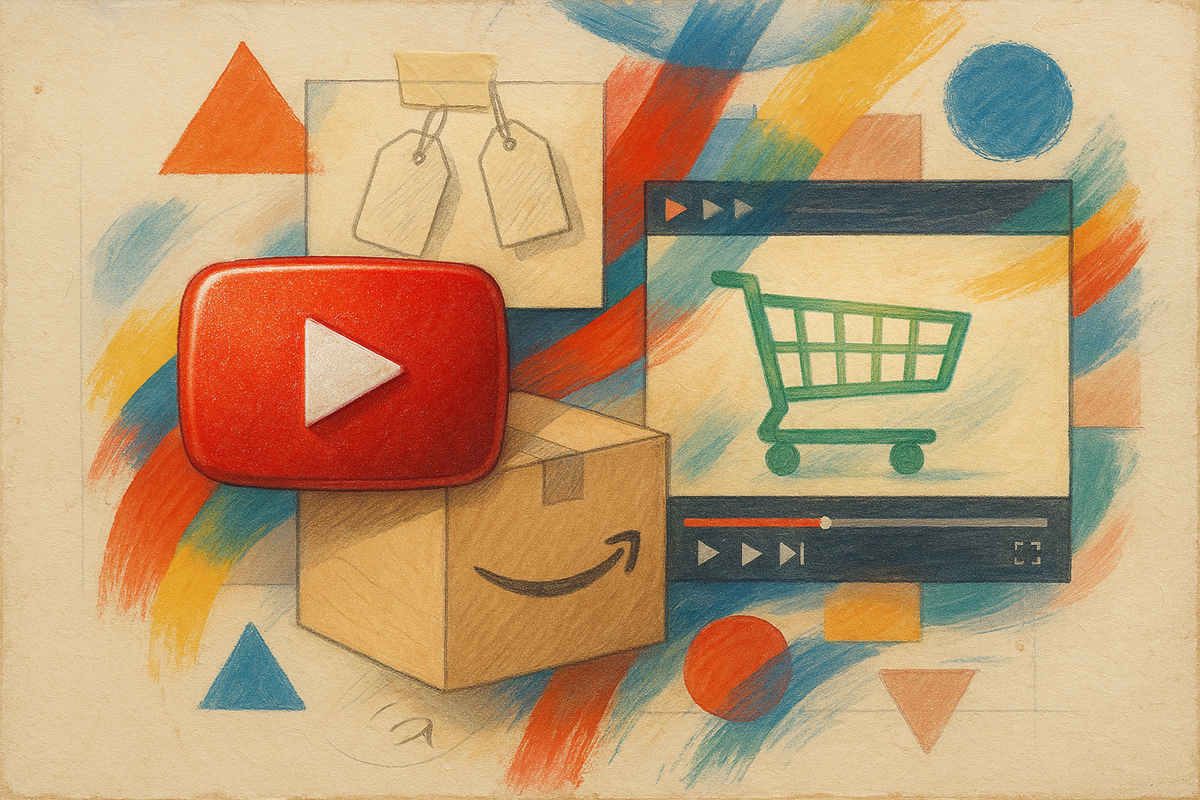
YouTube switched on Amazon product tagging for eligible US creators on August 27, 2026, covering Shorts, long-form videos, and livestreams. Commissions run through the YouTube Shopping affiliate program and pay out via AdSense roughly 60 to 120 days after purchase, with returns clawed back. Entry requirements are light: YouTube Partner Program membership, a linked Amazon Influencer or Associates account, and US enrollment.
Travis Katz, who runs shopping at YouTube, framed the launch as making it "even easier for viewers to buy the products they love from the creators they trust." Standard launch copy. The more useful way to read it: Amazon just rented shelf space inside the biggest video platform on the planet, and it's paying creators the rent instead of paying YouTube for ads.
The description link was always a workaround
For a decade the creator-to-Amazon pipeline ran through Associates links pasted into video descriptions. TechCrunch's coverage makes the point plainly: creators had to hope viewers would pause the video, open the description, find the right link among twelve others, tap it, and then actually finish a purchase on the other side. Every step in that chain leaks buyers. Anyone who has run an affiliate program knows exactly how much leaks. Most of it.
Tags collapse the chain. The product sits inside the viewing experience itself, in Shorts, long-form, and livestreams, and the viewer buys without doing archaeology in the description box. A description link works like a flyer taped to the front door of the store. A tag behaves more like an endcap display in the aisle you already walked into. Same store, wildly different conversion physics.
Eligibility is broad: you need to be in the YouTube Partner Program and the Shopping affiliate program in the US, hold an Amazon Influencer or Associates account in good standing, and have the two linked. And since PPC Land reported that the Shopping affiliate program opened to the 500-subscriber YPP tier, the pool of eligible taggers is not a curated elite. It's basically everyone monetizing.
The payout math is the part worth reading twice
Commissions land in AdSense alongside existing YouTube affiliate payments, and PPC Land's reporting on the program puts the payment window at 60 to 120 days after purchase, built in to absorb customer returns. If a viewer sends the product back, the commission comes back out. None of this is scandalous. It is standard affiliate plumbing. But it means a creator or brand testing this in September doesn't see clean, settled revenue until November at the earliest.
The reporting is thinner than the payout terms. Per TechCrunch, creators see daily Amazon earnings in YouTube Studio with no per-product or per-video breakdown. That one surprised me. You can know you made $340 on Tuesday and have no idea which video or which product did it. For anyone trying to optimize a catalog of tagged videos, that's flying on instruments that only show altitude, not heading. My guess is granular reporting ships later, but "later" is doing a lot of work in that sentence.
There's also the uncomfortable backdrop on Amazon's side. Amazon spent this spring restructuring Associates, and one analysis of the May 2026 changes found commission cuts of up to 50% in some categories, plus a rule since April 14 that onsite commissions only count purchases of the promoted ASIN or its variants, not whatever else lands in the cart. So the rate card underneath this shiny new integration got meaningfully worse a few months before launch. That timing seems unlikely to be an accident.
Auto-tagging is convenience wearing a leash
The feature everyone will actually use is auto-tagging. YouTube's systems review a creator's recent uploads and tag eligible Amazon products automatically, which for a channel with a 400-video back catalog is the difference between a weekend project and a checkbox. Retroactive monetization of old inventory is genuinely valuable, and honestly it's the part I'd turn on first.
But notice who controls the shelf. Amazon supplies YouTube with a curated catalog of what it calls highly requested and trending products, and creators who want something added have to request it through YouTube Support.
Amazon picks the catalog. Creators tag from what Amazon allows.
That's a merchandising lever with Amazon's hand resting on it. If your product isn't in the catalog, creators can't tag it no matter how much they love it. And the international wrinkle cuts the same direction: tags are viewable globally, but purchases from outside the US may route to local merchant partners or to Amazon's US site, which makes non-US conversion data murky from day one.
Run the 60-day test before you rewrite creator briefs
If you're a creator or you manage creators, the test writes itself. Take the ten videos that currently drive the most Amazon Associates clicks from description links, enable tags on them (or let auto-tagging do it), and leave the description links in place. Run 30 days. Compare tag-driven earnings in Studio against your Associates dashboard for the same period. From what I've seen with every on-platform shopping rollout, in-player placement beats description links comfortably, but the size of the gap decides whether tags become your primary channel or a nice bonus. My rough line: if tagged earnings don't beat the description links by at least 30% on the same videos, keep running both and revisit once per-product reporting exists. If they do, tags earn the top slot in every brief going forward.
If you're a brand that sells on Amazon, your products just became taggable inventory inside YouTube, possibly without you doing anything. Two moves this week: check whether your hero ASINs are in the taggable catalog (ask a creator partner to search for them), and update creator briefs to require tags on sponsored videos where you already pay for Amazon traffic. You were paying for a flyer on the door. The endcap is available now, sometimes for the same money.
If you run your own affiliate or referral program, watch your last-click share. Amazon's attribution just moved closer to the moment of intent than your program's links can get, at least inside YouTube. Some of the revenue that used to route through your program will quietly start settling as Amazon commissions instead. That shift won't announce itself. You'll only see it if you're tracking creator-referred revenue by channel before and after.
The bigger pattern here is platforms pulling the transaction inside the feed so nobody has to leave. It's the same instinct behind ChatGPT putting ads directly into answers, which we covered in our look at the early ChatGPT ads data. Attention platforms keep discovering that the exit ramp to the open web was a leak, and they keep paving over it.
One prediction with a number attached: if YouTube ships per-product reporting by Q1 2027, I'd expect tags to carry 60% of Amazon-attributed creator revenue on the platform within a year of launch. If reporting stays a daily blob, creators will keep hedging with description links and this stays a strong second channel rather than a replacement.
Either way, I wouldn't move budget or rewrite a single creator contract until the first full payment cycle clears. Two months of settled data beats two weeks of dashboard optimism. The integration looks like the future. The rate card underneath it is where the actual negotiation happened, and creators weren't in the room for that part.
Notice Me Senpai Editorial