GameStop's eBay Bid Calls Out $2.4B in Marketing That Added 1M Buyers
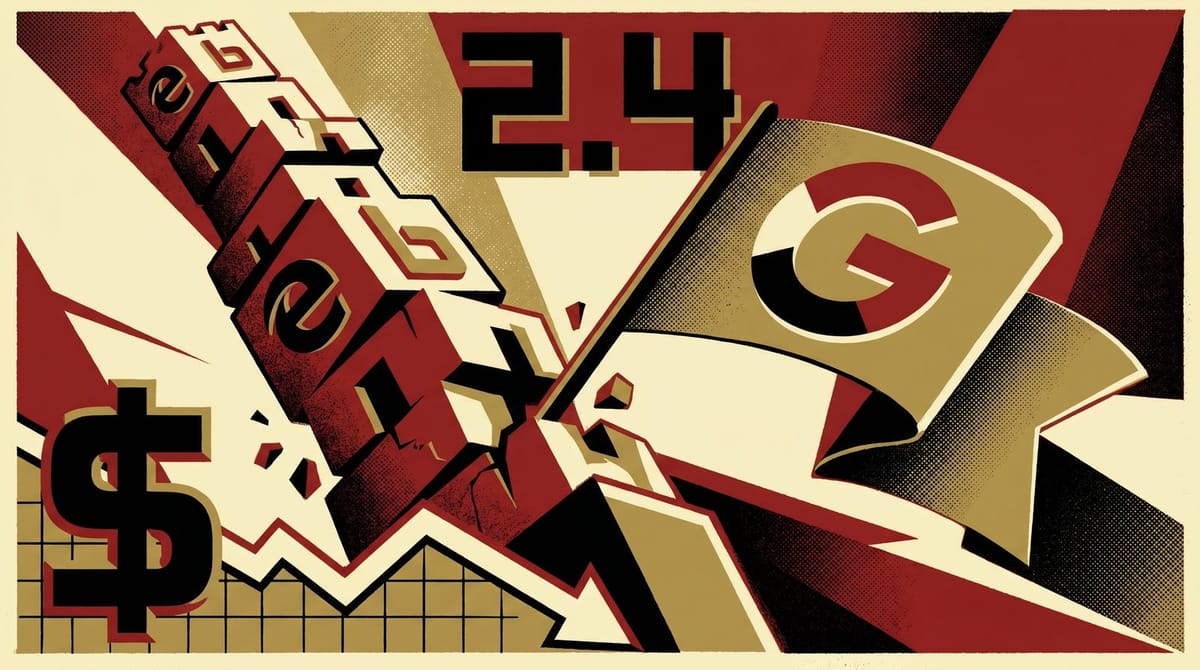
GameStop made a $55.5 billion unsolicited bid for eBay on May 4, 2026, and the pitch names eBay's $2.4 billion fiscal 2025 sales and marketing budget as the single biggest target for cuts. The bid's logic: that spend produced one million net active buyers, a net increase of less than 0.75%. GameStop wants $1.2 billion of it gone inside twelve months.
The number that turned a meme-stock bid into a marketing story
For most of Sunday and Monday, this was being written up as a meme-stock story. Ryan Cohen, GameStop, $125 a share, a $20 billion financing commitment from TD Securities, hostile bid if rejected. The line that actually deserves marketer attention sits halfway down GameStop's official letter to eBay's board: eBay spent $2.4 billion on Sales and Marketing in fiscal 2025 and grew net active buyers from 134M to 135M, a net increase of less than 0.75%.
GameStop's framing is blunter than anything a public-company executive normally says about an ad budget. The exact line in the proposal: "More spend is not producing more users on a marketplace with near-universal brand recognition."
Whether or not Cohen ever ends up running eBay, an activist investor just put a flag in the ground. If a marketplace has 100% awareness and is spending billions on growth and not getting buyers, the spend is the bug, not the feature. That sentence is going to get screenshotted into a lot of marketing slide decks this quarter.
"Near-universal brand recognition" is the trap, not the moat
The eBay defense is going to be GMV. eBay posted 7% GMV growth in 2025 and an 18% jump in Q1 2026, and on the surface that is a marketing line item doing its job. The problem hides one layer down. Existing buyers are spending more, or buying more expensive things. The funnel above them isn't opening at the same rate.
eBay's "Enthusiast Buyers" cohort, the high-frequency, high-spend group that anchors marketplace economics, has been stuck at roughly 16 million since Q4 2022. That's a 14-quarter plateau through hundreds of millions in marketing spend per quarter. From what I've seen, when a CMO faces this pattern they almost always reach for the same answer: more spend, better creative, new channels.
Cohen's letter is a public refutation of that reflex. He's saying that when brand recognition is already at ceiling, growth-marketing budget converts to a tax on an existing audience, not a path to a new one. I don't fully agree the line item is zero-value, eBay almost certainly needs some defense against Amazon and Walmart, but the directional read is hard to argue with. Roughly $2,400 per net new buyer wouldn't survive 30 minutes in a paid-social ZBB review at most agencies.
The retail-store pitch is the part that should worry agencies
The most overlooked part of the bid is the operational pitch, not the price. GameStop is offering eBay's marketplace something it has never had: about 1,600 US physical stores set up as a "national network for authentication, intake, fulfillment, and live commerce." That's a real differentiation vector against Amazon, which had to build out FBA from scratch over a decade and still doesn't have an authentication-first storefront.
Personally, I think this is the part of the deal Cohen actually cares about. The marketing cut is the proof for shareholders. The store network is the operational thesis. He's saying eBay's growth wall isn't an awareness problem, it's a trust and convenience problem, and no marketing budget can fix it. Authentication for sneakers, watches, trading cards, electronics, the categories where eBay competes with Amazon plus StockX plus Goat plus Whatnot, has never been solvable from a TV ad.
If the bid succeeds, the second-largest US e-commerce marketplace ends up under a brand whose growth has historically come from grass-roots community, not paid acquisition. (We covered the same dynamic in our piece on what brands like Liquid Death and CeraVe did to grow on near-zero ad spend.) That changes the conversation about marketplace-level ad inventory over the next two years.
What this would do to eBay's $555M first-party ad business
eBay's first-party advertising delivered $555 million of revenue in Q1 2026, up 33% year-over-year, roughly 2.6% of GMV. That's a real line item, and it almost entirely comes from sellers paying to surface their own listings to eBay buyers.
If a Cohen-led eBay reviews "selling and marketing" the same way his letter reviews it, the ad business is the easy keeper. Sellers paying to acquire buyers eBay already has costs eBay almost nothing to deliver, and the customer is the seller, not the marketplace. The piece that gets cut is the pull side: the budget aimed at acquiring new buyers who, per his own thesis, aren't responding to it.
For brand teams that already buy eBay placements, this is probably stable. For agencies running cross-marketplace strategies, the more interesting move is to watch whether the ad load on eBay search results changes. A new owner with no patience for buyer-funnel spend has every reason to push more inventory into the existing seller-side surface, and that gets margin out of the same audience without buying any new ones.
The diagnostic any high-awareness brand should run this week
There's a pattern here that any marketer at a high-awareness brand can run this week, regardless of how the bid lands.
The diagnostic is one line: what did our growth-marketing spend produce in net new customers (not GMV, not engagement, not impressions) over the last twelve months? Calculate cost per net new buyer. If it's bigger than the LTV of that cohort, the budget is paying for retention dressed up as acquisition.
For eBay the math comes out around $2,400 per net new buyer based on the public numbers. That figure is almost certainly flattering, since "net" hides churn and the 1M figure already absorbs whatever paid acquisition actually delivered. On more honest cohort math the number is probably 3-5x that.
Where this isn't applicable: newer brands without scaled awareness genuinely do need marketing to build a base, and starving that line is one of the classic ways a DTC business dies (we wrote about the Allbirds collapse and the four-act DTC failure pattern a few weeks back). The diagnostic test is whether your unaided awareness number is already in the 70-90% range. If yes, growth-marketing budget is probably misallocated and a chunk of it should move to product, fulfillment, or trust signal.
What CNBC didn't ask Cohen
In Cohen's CNBC interview after the bid went public, he was unusually combative when asked how GameStop would actually finance the deal. He pointed reporters back to the offer letter and called the question already answered. eBay said it would "carefully review and consider" the proposal, the standard response from a board that doesn't yet want to commit.
I'm not going to predict whether the deal closes. The bid has obvious problems: regulators, the GameStop balance sheet outside of cash, and eBay's incumbent management not exactly in a hurry to hand the keys to Ryan Cohen. But the question Cohen baked into the bid will outlive the deal either way. If eBay's board says no, their next earnings call has to face it: what is the marketing budget actually buying you? An answer that begins with "GMV" won't be enough this time.
The CMO question worth printing and putting on a wall
The most useful artifact of this bid for working marketers isn't the takeover terms, the financing, or the hostile-bid tactics. It's the question Cohen forced into the open: at what level of awareness does growth-marketing spend stop being acquisition and start being a regressive tax on an existing customer base?
Run the calculation on your own numbers this week. If you've been adding budget every year and your net new customer count is roughly flat, GameStop just published the next slide of your zero-based budget review for free.
Notice Me Senpai Editorial